Showing posts with label 2016. Show all posts

Tuesday, April 4, 2017

The Essential Home-Ground Flour Book

The Essential Home-Ground Flour Book
Author: Sue Becker
Publisher: (2016)

As someone working off a teaching assistant (and soon to be university student)’s income, I don’t often go out of my way to purchase tools with only a single use or purpose. I grew up making bread at my mother’s hip, and since I was blessed with a high powered professional stand mixer as a gift, making bread (almost) every week has remained my passion. I’ve always loved artisan-crafted baked goods, and used to buy stone-ground flour from a local mill – which tasted fantastic but commanded a hefty price. When Sue Becker’s book The Essential Home-Ground Flour Book arrived on my doorstep, I was intrigued – although devoid of a mill. Luckily, this book managed to help solve that problem (and many others) along the way, all while offering inspirational recipes I couldn’t wait to try.

So, you’ve decided to mill your own flour. Why, what type of mill should you choose, and just how do you go about it? Part One of Home Ground Flour is 93 pages worth of information on the subject, from the benefits of doing it at all (read: cost, nutrition and flavour) to the history of milling, suitable grains and finally the actual devices themselves. It was Chapter 4 – Tools and Equipment for Home Flour Milling (p.37) – that intrigued me the most. I knew about burr mills for coffee and spice grinding, but never used micronizing ones. If I win the lottery, one of those super-powered, lightning fast beasts is definitely on my wishlist! Instead, I lucked out with a great deal on a Mockmill, a stone-grinder style of attachment for my mixer – and the purchase of a (relatively) high priced tool is something no cookbook, blog or cooking show has ever convinced me to consider.
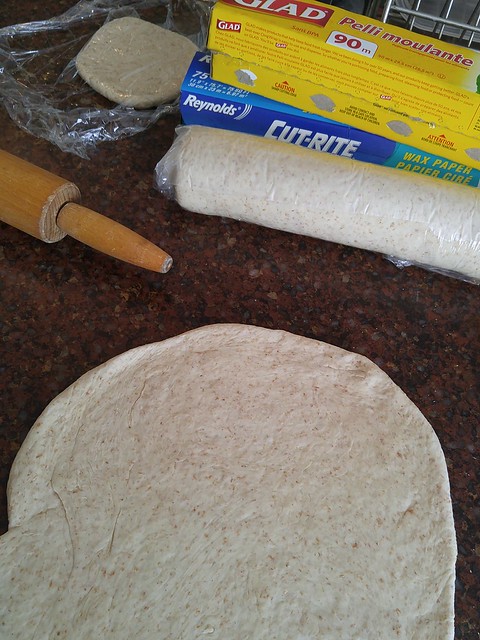
Home Ground Flour Pizza Dough
Basic Whole Grain Pizza Dough (p. 174)
Once equipped, and having read the entire first part (including the incredibly beneficial tip boxes lining the margins), I armed myself with a kilo of barley grains and got to work. According to Becker, I had enough grain to mill 6 cups of flour – which was almost dead on. I also tried my hand at grinding farro, spelt, brown rice and even lentils (note: don’t grind anything not approved by your mill’s manufacturer!). I transformed a bunch of the barley flour into various loaves of bread that weren’t found in this book, but immediately noticed a difference in the way the dough behaved and tasted. Freshly milled flour, provided the grains aren’t stale, made for a slightly sweeter, more tender loaf in my experience, and with cookies you could really taste the nuttiness of the grain all the way through (perfect with oatmeal doughs!).

Finally, I got around to a few of my ear-marked choices in Home Ground Flour. The first was a batch of Apple Cinnamon Muffins (p. 182). I used a combination of locally milled sprouted wheat flour and home ground farro, which was a lovely complement to the flavours of the (again, local) honey that exclusively sweetens them. Each bite was peppered with bits of apple and the spice wasn’t overwhelming, which is always refreshing for a muffin recipe! Next, as a preparation for one of my upcoming Home Economics classes, I made a few batches of Basic Whole Grain Pizza Dough (p. 174). If you need convincing as to how much yeast loves freshly exposed endosperm, this is the recipe – the dough rises impressively fast, and doesn’t taste unpleasantly “yeasty”. Even though there’s no sugar in the dough, the baked crust had a hint of malty, almost honey-like flavour. Definitely a keeper in my book.
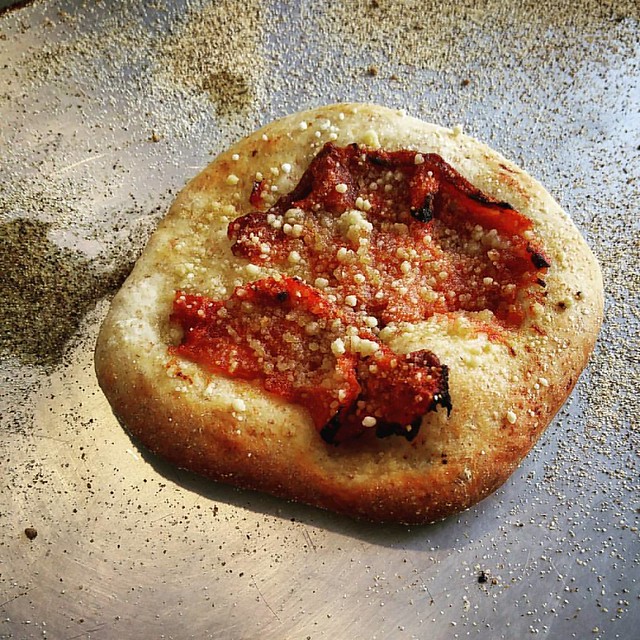
Tomato Confit Mini Pizza
Mini-Pizza with Basic Whole Grain Pizza Dough (p. 174)

I can’t wait to keep experimenting with Sue Becker’s The Essential Home-Ground Flour Book. It has not only provided a solid base of information to start me off on my home grinding journey, but also opened my eyes to the true differences between the bag from the store and right from the grain. If you appreciate bread (making and eating), want to support local grain farmers or simply have a desire to eat more nutritiously, check this book out. You will not be disappointed.
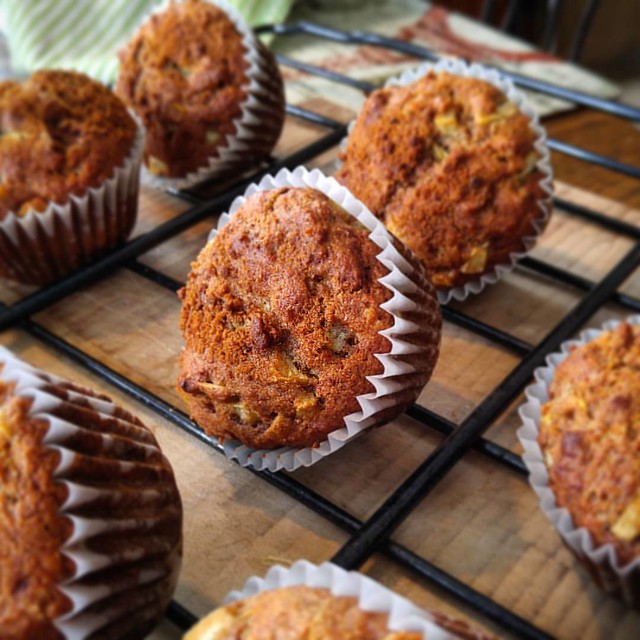


Apple Cinnamon Muffins
Apple Cinnamon Muffins (p. 182)

Friday, December 23, 2016

The Chile Pepper Bible: From Sweet to Fiery and Everything in Between

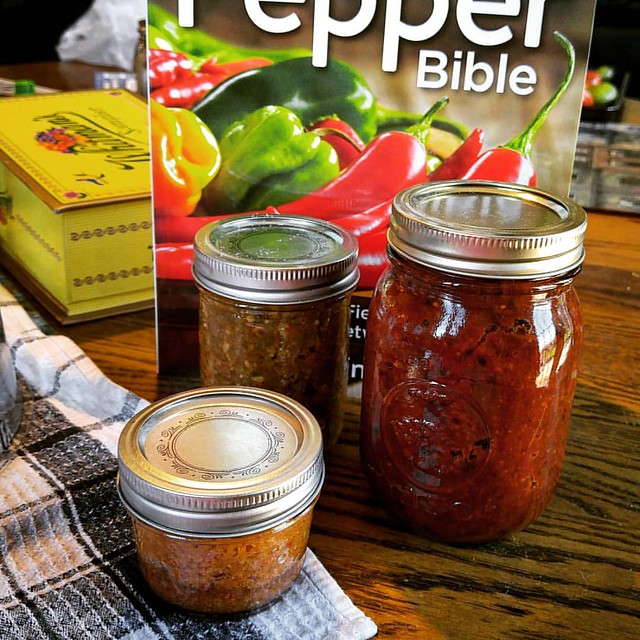
A trio of fire 🔥🔥🔥 inspired by the Chile Pepper Bible- clockwise from the right:  Dakkous (Arabian Style Tomato Sauce), Chili Dipping Sauce for Potstickers and Harissa. #vegetarian #vegetables #tomatoes🍅 #spicy #food #cooking #cookbo
Counter-clockwise, from back: Harissa, Potsticker Sauce (not from the book) and Dakkous

The Chile Pepper Bible: From Sweet to Fiery and Everything in Between
Author: Judith Finlayson
Publisher: (2016)

Hot, sweet or in between – however you slice, dice, roast or pickle them, peppers are one of the most personality-packed vegetables (fruits?) out there. Whether you prefer the sweet crunch of mild, raw bell peppers in a salad or the flame of habanero hot sauce in your rice, there is at least one variety out there for everyone. I’ve been a chile-head for years, but only ever relied on prepared hot sauces or pickled peppers for my fire – aside from chili, what do you do with the spicy and moderate peppers out there? Well, author and food researcher Judith Finlayson sets out to enlighten us cooks in her book The Chile Pepper Bible.

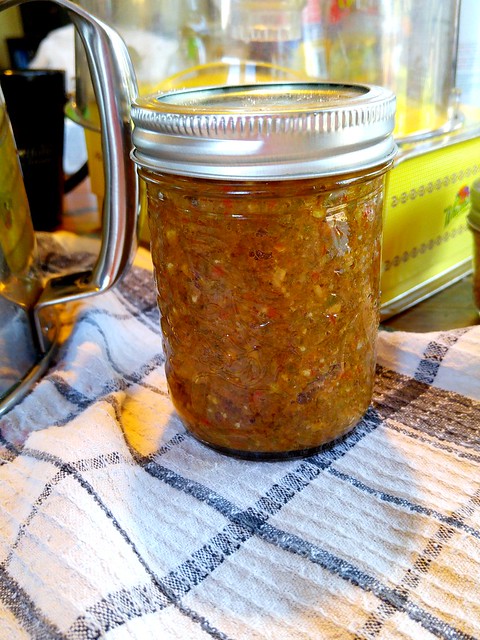
Harissa made with a load of habanero and jalapeno peppers, homegrown tomatoes and Ontario garlic.
Harissa

Chile Pepper Bible is true to it’s name – this rather comprehensive encyclopedia / cookbook in one details information on dozens of chiles – hot and sweet – from their histories and growing regions to their Scoville units and health benefits. Once you’ve read up on the “whys” of the pepper world, the author opens the back end of the book up with 250 recipes that span the globe, from Chinese and Thai to Balkan, Indian and Mexican. The recipes include everything from appetizers to desserts, and include both meat and vegetarian main dishes as well as a wealth of sauces to use immediately or store for when the occasion demands. 

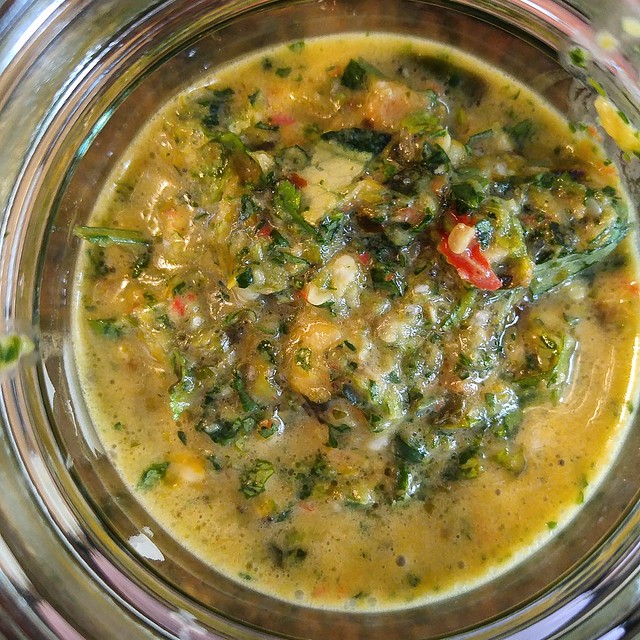
Piri piri sauce
Piri Piri Sauce

I couldn’t wait to get started – and with four hot pepper plants producing en masse in my garden (not to mention another 12 hot and sweet seedlings in my mom’s), I was spoiled for choice. My first creation from the book was Dakkous (p. 382), an Arabian-inspired tomato sauce flavoured not only with a hint of spicy peppers but the heady aroma of cinnamon. The combination was unexpected but no less delicious, and I not only used it for mixing into long grain rice but as a dipper for warmed pocketless pitas. I can only imagine how good it would be as a simmering sauce for chicken too. Nam Prik Num (p. 364), a Thai sauce with roasted peppers, came next – warning, if you’re cooking the peppers indoors, use good ventilation! Watering eyes aside, the spicy, chunky sauce was well worth it, and paired beautifully with roasted fish. I also had to try Finlayson’s version of one of my favourites – Harissa (p.390). This one, unfortunately, fell short of what I was hoping for (which was a recreation of one a friend brought me from Morocco), missing the rich, slightly sweet tomato notes, pop of sour from sumac (or lemon) and spicy garlic kick I knew. That said, when added to a tomato-based recipe (I used it in roasted tomato and potato soup), the flavours fleshed out somewhat and it wasn’t as obvious. I’d be interested to see how it fared in hummus too. Piri Piri Sauce (p. 314) also fared so-so on its own, but drove a ton of flavour into plain chicken breast when used as a marinade.

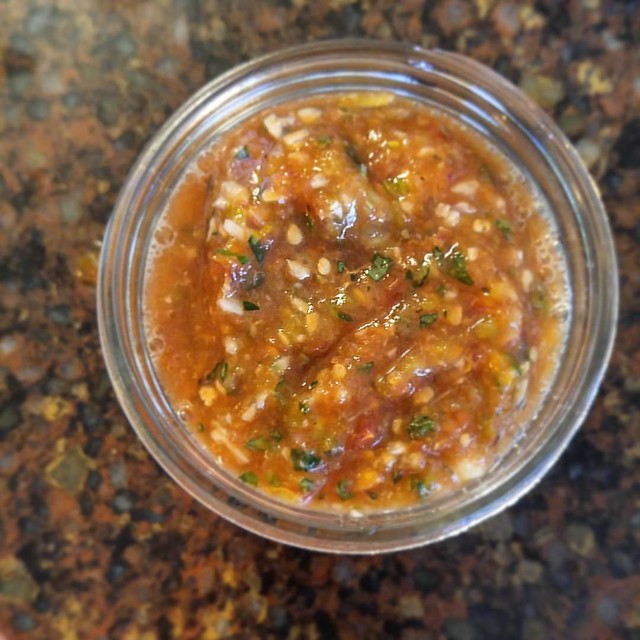
Nam Prik Num (Thai grilled chile salsa) made from the Chile Pepper Bible #yum #spicy #vegetarian #vegetables #tomatoes🍅 #homegrown #vegan
Nam Prik Num

Not relegated to face-on-fire Scotch bonnets or scorpion chiles, the world of peppers is vast, varied and full of flavours from around the globe. Judith Finlayson has done a wonderful job of opening the door for culinary adventurers in The Chile Pepper Bible, and I encourage you to step through and savour what she has to offer.

Available on Amazon

Sunday, November 6, 2016

Eat Wheat: A Scientific and Clinically-Proven Approach to Safely Bringing Wheat and Dairy Back Into Your Diet

Eat Wheat: A Scientific and Clinically-Proven Approach to Safely Bringing Wheat and Dairy Back Into Your Diet
Author: John Douillard
Publisher: Morgan James Publishing (2016)

From LifeSpa: 

Eating gluten and dairy-free has taken the health food industry by storm. Food manufacturers are realizing that unless they offer a gluten-free version of their product, it is increasingly difficult to be competitive. Studies show that within a single year, as many as 100 million Americans consume gluten-free products. Non-dairy foods and milk substitutes have also become increasingly common: in 2015, the U.S. dairy alternatives market was worth 2.09 billion, and growing.

---
 
Eat Wheat is a book that invites even the most skeptical wheat- and dairy-phobes to begin exploring the roots and realities of popular food sensitivities. Starting from the ancestry of the human diet (humans have been eating wheat and other grains for 3.4 million years, making flour for the past 30,000) and continuing with the trends of gluten-free / dairy-free diets today, Douillard asks the question repeatedly: "Are these types of elimination diets really necessary?"

Much like my own beliefs (developed through years of nutrition school and practical practice), the author reasons that it is the refining and processing of the common foods we eat today (not the least wheat and dairy based items) that form the root of most chronic health and digestive concerns, not the basic food item itself. After all, when was the last time you ate wheat berries for dinner, or drank whole, raw milk?

Building on a background of  600 scientific studies, Douillard sets out to retrain the brains and bodies of modern man, beginning by changing attitudes towards "bad" and "good" foods, followed by flushing the lymphatic system so as to "reset" it to the way it was at birth, balancing blood sugar by following digestive cycles and providing self-care instructions to keep your overall health at its peak. While I've never liked the "fad diet" theme of whole food group eliminations, this book further solidified my belief that unless there is a concrete medical (i.e. autoimmune) disorder contributing to the need for avoiding wheat, dairy, eggs, etc, there is always a way to "have it all", including your well-being inside and out.

Available on Amazon