Showing posts with label vegetables. Show all posts

Tuesday, December 24, 2019

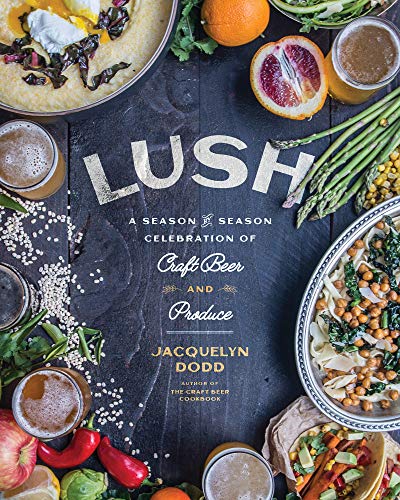
Lush: A Season-by-Season Celebration of Craft Beer and Produce

Lush: A Season-by-Season Celebration of Craft Beer and Produce
Author: Jacquelyn Dodd 
Publisher: Agate Surrey (2019) 


From the publisher:
Beer today is increasingly as seasonal as produce; its ingredients come from the soil and are harvested at peak freshness, just like the offerings at local farmers markets. Lush is perfect for fresh produce lovers and craft beer lovers alike. The cookbook translates complex flavor profiles into easy-to-follow recipes for at-home kitchens. Dodd's beautiful, insightful recipes—which also happen to be vegetarian—open the door to deliciously complex flavors that evolve with the seasons, and respond perfectly to food-world trends, such as the surge of seasonal farm-to-table eating, the push to support local businesses like breweries and farmers markets and, of course, our ever-growing appreciation
great craft beer. 

My review:
In college, beer was my drink of choice (until I discovered my multiple allergies, at least). But aside from in chocolate cake or fish n' chip batter, I never really considered it as an ingredient - beer went with a meal, not in it! However, after reading through Lush: A Season-by-Season Celebration of Craft Beer and Produce, I've changed my tune. This book is not simply a "cooking with beer" volume for college students who yearn to add alcohol to everything (they know who they are!). Rather, this book delves deep into seasonal cooking and eating, and just happens to be using the beer varieties that are appropriate for each. Dodd makes great use of produce that is available (and usually at a great price) for each of the four seasons the book is divided into, from Summer peaches (which are pickled in summer ale (p. 115)) to Winter squash, onions and hearty greens that are stars on top of a stout-infused pizza crust (p. 195). Every course is covered in the book, and recipes are always innovative. Full colour pictures range through the book and entice the reader to try at least one or two a season.

One of my favourite things about this book - even as a non drinker - is the break down of the seasonal produce in each section that is correlated with the various recipes. For instance, Spring is known for artichokes - along with a short paragraph as to how to select and store them, the reader will be able to see that they can find recipes for Beer Braised Artichokes Wrapped in Puff Pastry on page 36 and Beer-Steamed Artichokes with Roated Garlic Hummus on page 38. Every dish in the book is vegetarian, and many can be made vegan with simple substitutions if need be. That said, due to the nature of beer being brewed with barley, gluten-free cooks will likely want to skip this book (I do know there is gluten free beer available, but I can't speak for it's results in the recipes).

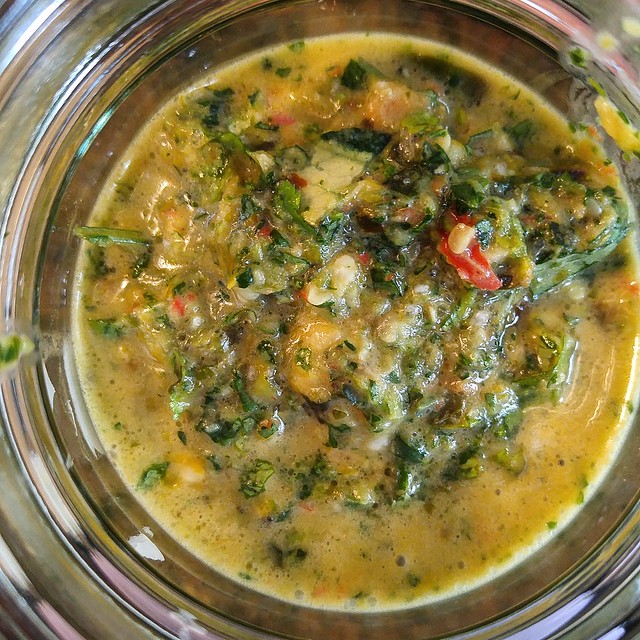
For the more experienced home cook, none of the techniques used by the author are strange or complex, but even for the beginner cook the directions are straightforward and broken down into easy to follow steps. Most of the recipes are multi-part, meaning that the reader can pick and choose elements from each to make meals their own. For instance, this holiday season we were looking for a hearty, vegetarian side dish to go with the seafood mains. We loved all the elements that went into Roasted Butternut Squash and Barrel-Aged Stout Caramelized Onion Pizza (p. 195), but thought that pizza would be too messy for a cocktail hour. Instead, we took the topping and folded it into cooked farro (you could also use barley for an extra "nod" to the beer) and used the vinaigrette from the Beer-Braised Leeks with Lemon and Parmigiano-Reggiano Vinaigrette (p. 205) as a dressing (see the photo above). The pizza dough recipe did not go to waste, though - it turned into delicious, chewy-soft breadsticks glazed with egg and sprinkled with Cabernet-infused sea salt (my addition). The combination of flavours worked wonders (and those leeks are on my bucket list), and the dish was one that worked perfectly hot, cold or room temperature (our favourite way to eat it).

I have yet to try any of the sweet recipes from this book in particular, but based off my previous experience from the author's website offerings I doubt I'll be disappointed. The language in this book is easy to comprehend even for non-cooks, and recipes don't call for oddball or hard-to-find ingredients. That said, if you aren't in the habit of buying beer - and especially craft beer - some of the recipes may seem challenging, and at the very least, expensive! I equate it to using wine in a dish, though - you will taste the nuances of the beer where it's being used for the most part, and for special occasions a $4 bottle of local craft ale is worth it. I would not be one to cook from this book weekly, but when I need to pull out a showstopper dish I will have no problem cracking open my copy of Lush: A Season-by-Season Celebration of Craft Beer and Produce.


Available on Amazon
Friday, December 23, 2016

The Chile Pepper Bible: From Sweet to Fiery and Everything in Between

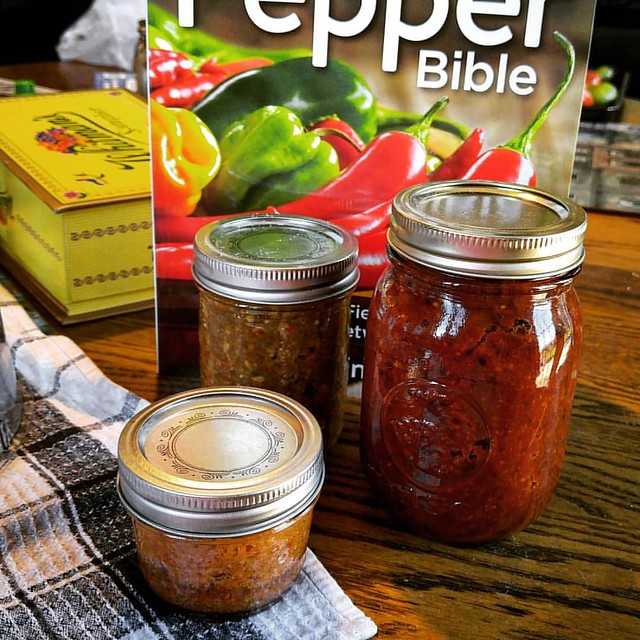
A trio of fire 🔥🔥🔥 inspired by the Chile Pepper Bible- clockwise from the right:  Dakkous (Arabian Style Tomato Sauce), Chili Dipping Sauce for Potstickers and Harissa. #vegetarian #vegetables #tomatoes🍅 #spicy #food #cooking #cookbo
Counter-clockwise, from back: Harissa, Potsticker Sauce (not from the book) and Dakkous

The Chile Pepper Bible: From Sweet to Fiery and Everything in Between
Author: Judith Finlayson
Publisher: (2016)

Hot, sweet or in between – however you slice, dice, roast or pickle them, peppers are one of the most personality-packed vegetables (fruits?) out there. Whether you prefer the sweet crunch of mild, raw bell peppers in a salad or the flame of habanero hot sauce in your rice, there is at least one variety out there for everyone. I’ve been a chile-head for years, but only ever relied on prepared hot sauces or pickled peppers for my fire – aside from chili, what do you do with the spicy and moderate peppers out there? Well, author and food researcher Judith Finlayson sets out to enlighten us cooks in her book The Chile Pepper Bible.

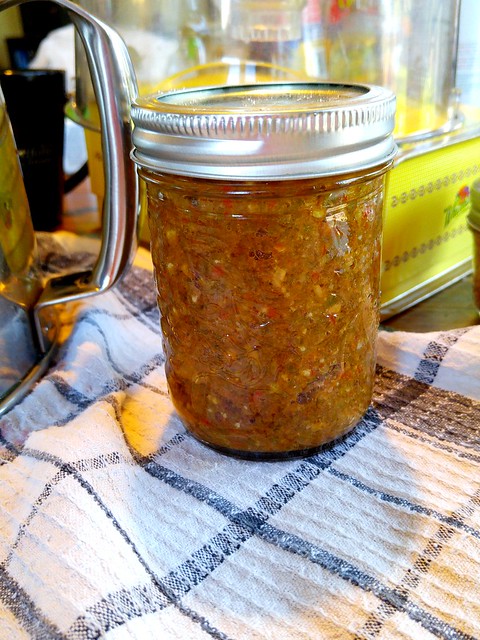
Harissa made with a load of habanero and jalapeno peppers, homegrown tomatoes and Ontario garlic.
Harissa

Chile Pepper Bible is true to it’s name – this rather comprehensive encyclopedia / cookbook in one details information on dozens of chiles – hot and sweet – from their histories and growing regions to their Scoville units and health benefits. Once you’ve read up on the “whys” of the pepper world, the author opens the back end of the book up with 250 recipes that span the globe, from Chinese and Thai to Balkan, Indian and Mexican. The recipes include everything from appetizers to desserts, and include both meat and vegetarian main dishes as well as a wealth of sauces to use immediately or store for when the occasion demands. 

Piri piri sauce
Piri Piri Sauce

I couldn’t wait to get started – and with four hot pepper plants producing en masse in my garden (not to mention another 12 hot and sweet seedlings in my mom’s), I was spoiled for choice. My first creation from the book was Dakkous (p. 382), an Arabian-inspired tomato sauce flavoured not only with a hint of spicy peppers but the heady aroma of cinnamon. The combination was unexpected but no less delicious, and I not only used it for mixing into long grain rice but as a dipper for warmed pocketless pitas. I can only imagine how good it would be as a simmering sauce for chicken too. Nam Prik Num (p. 364), a Thai sauce with roasted peppers, came next – warning, if you’re cooking the peppers indoors, use good ventilation! Watering eyes aside, the spicy, chunky sauce was well worth it, and paired beautifully with roasted fish. I also had to try Finlayson’s version of one of my favourites – Harissa (p.390). This one, unfortunately, fell short of what I was hoping for (which was a recreation of one a friend brought me from Morocco), missing the rich, slightly sweet tomato notes, pop of sour from sumac (or lemon) and spicy garlic kick I knew. That said, when added to a tomato-based recipe (I used it in roasted tomato and potato soup), the flavours fleshed out somewhat and it wasn’t as obvious. I’d be interested to see how it fared in hummus too. Piri Piri Sauce (p. 314) also fared so-so on its own, but drove a ton of flavour into plain chicken breast when used as a marinade.

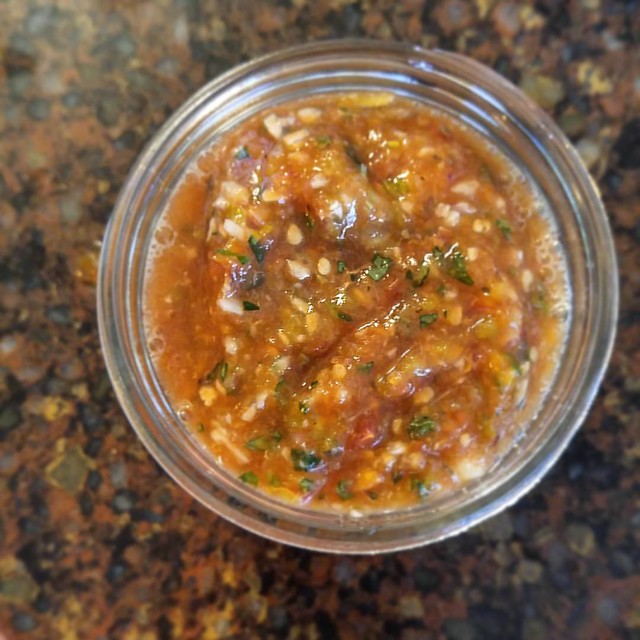
Nam Prik Num (Thai grilled chile salsa) made from the Chile Pepper Bible #yum #spicy #vegetarian #vegetables #tomatoes🍅 #homegrown #vegan
Nam Prik Num

Not relegated to face-on-fire Scotch bonnets or scorpion chiles, the world of peppers is vast, varied and full of flavours from around the globe. Judith Finlayson has done a wonderful job of opening the door for culinary adventurers in The Chile Pepper Bible, and I encourage you to step through and savour what she has to offer.

Available on Amazon

Wednesday, September 21, 2016

250 Best Beans, Lentils & Tofu Recipes

250 Best Beans, Lentils & Tofu Recipes
Publisher: (2012)

Beans, lentils and tofu…for most people, seeing these in someone’s grocery cart is a signal that they are a card-carrying vegetarian. After all, why would anyone who ate meat need to pick up these alternative proteins? Well, in 2016, the reasons can be much more than ethical in nature. Economics and health concerns are pushing more and more people away from meat-centric meals, forcing them to confront the previously outré ingredients seen only in Asian restaurants or chili pots. What was missing was a comprehensive guide to making legumes worthy of a dinnertime staple. Judith Finlayson’s book 250 Best Beans, Lentils & Tofu Recipes is designed to fill that niche, with meals for all occasions both with and without meat.

Beans, Lentils & Tofu is a library’s worth of inspiration, and whether you’re a bona fide vegetarian or just want to reduce the meat you eat you’ll find something to tempt your palate. Most of the main dishes are hearty enough to satisfy even the most ravenous eaters and generally store and/or freeze well, making eating “on the cheap” even easier. I was pleased to see some of my favourite veggie staples – notably Harira (p. 64) and Caribbean Chickpea Curry with Potatoes (p. 161) – as well as some tempting ideas for the family like Cheater’s Cassoulet (p. 194) and Roasted Vegetable Lasagna (p. 230).  For the baked bean addicts out there, Finlayson has included no fewer than six variations – five of them containing meat, which was a bit of a disappointment. While I understand the desire to appeal to the greatest audience possible, there are so many hearty, delicious and nutritious meals that can be made completely vegetarian. By giving the book a title such as 250 Best Beans, Lentils & Tofu Recipes, I expected the author to place more emphasis on those ingredients for main courses and less of the “well, let’s toss in some lentils to fit the book” approach. Also missing are any legume based desserts – of which there are many, and I expected to see at least a black bean brownie or tofu cheesecake in the pages. However, the meatless recipes that are mentioned sound delicious – and while photos are fairly scarce in the book, if they taste as good as they look readers will be well fed and loving it.

For those new to a life of legumes and who still want to include meat in their diet, 250 Best Beans, Lentils & Tofu Recipes by Judith Finlayson is a great place to start. While it’s not a book for the die-hard vegetarian or vegan, for the flexitarian or omnivore each page holds a delightful option for that day’s nosh.


From the publisher:

A collection of delicious recipes that offers not only good health but great food.
Everyone knows that beans, lentils and tofu are good for you, but did you know that you can enjoy tantalizing gourmet food using these very ingredients? You absolutely can, and this enticing collection of recipes compiled by bestselling author and editor Judith Finlayson proves it.

These varied and internationally influenced recipes will give you a whole new perspectiveon the humble legume. Bean recipes range from elegantly continental dishes to authentic meals that take you back to the days of the Wild West. You’ll discover appetizing expressions with lentils, which are a staple of Middle Eastern and Indian cooking. And tofu? Sure, it’s not much on its own, but paired with other ingredients, it becomes something magical.

In a single collection, you can enjoy 250 of the best recipes created by the bestselling authors of Robert Rose, along with nutrition information, preparation tips and serving suggestions. These recipes will appeal not only to vegetarians and vegans, but also to the ever-growing number of people who simply wish to eat less animal protein in favor of healthy alternatives. You’ll no longer have to prepare several different meals for one family — everyone, regardless of their leanings, will enjoy this incredibly satisfying food.

Saturday, June 11, 2016

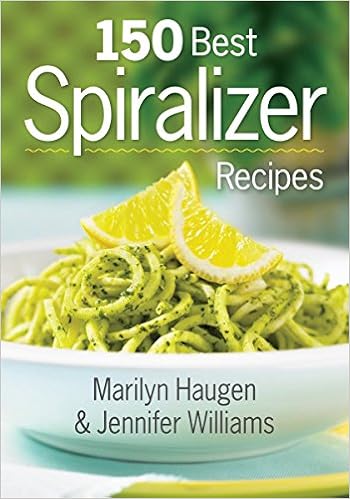
150 Best Spiralizer Recipes

150 Best Spiralizer Recipes
Authors: Marilyn Haugen and Jennifer Williams
Publisher: Robert Rose (2015)

I’ve owned my share of kitchen gadgets over the years. Some, I use regularly – my microplane, a food mill, canning set (tongs and funnel) and a spice grinder, to name a few – not to mention my mini-arsenal of small appliances, including my heavy duty stand mixer and food processor. Other stuff I either bought or was gifted but almost never use. Things like our garlic press, julienne peeler, egg separator, icing comb and pie divider make honourable mentions there, no doubt. Then there’s the awkward “middle children” of my culinary collection – the motley crew of mandolin, potato ricer, cake leveler and instant read thermometer that are used just enough to warrant their existence in my household but not enough to be included in my most convenient cupboards or on my counter. I’ve had to become nothing short of nit-picky when selecting new items to buy, trying to anticipate just how much I’d use them and how versatile they’d be, given that I cook and bake both at home but also as a Home Economics teacher. When the Spiralizer (and it’s various spinoffs) became a craze, I initially held off – at least until our garden started mass-producing zucchini. Suddenly, veggie-noodles didn’t sound too bad! Luckily, about the time we had ratatouille and zucchini-breaded ourselves out of existence, my review copy of 150 Best Spiralizer Recipes by Marilyn Haugen and Jennifer Williams showed up on my doorstep.

Spiralizer is true to it’s title, being filled with 150 (mostly delicious-sounding) recipes suitable for almost everyone. The book is organized largely by diet style, rather than recipe type – from Paleo and Raw to Gluten Free and Vegetarian / Vegan. For those of you who are completely new to the art of making vegetables into twirly works of art, Haugen and Williams have compiled a 13 page primer in the book’s beginning. Spiralizing Basics (p.8) covers the parts of a generic machine as well as listing a few other tools that are handy for most applications. Next is The Spiralizing Pantry (p. 10), a comprehensive listing of how to spiralize what as well as suggestions for preparing and storing finished spirals. The Pantry also includes suggestions for flavourings and oils as well as a basic tip-sheet, all of which combine with the rest of the intro to create a “safety net” that will let any reader break out their machine with confidence.

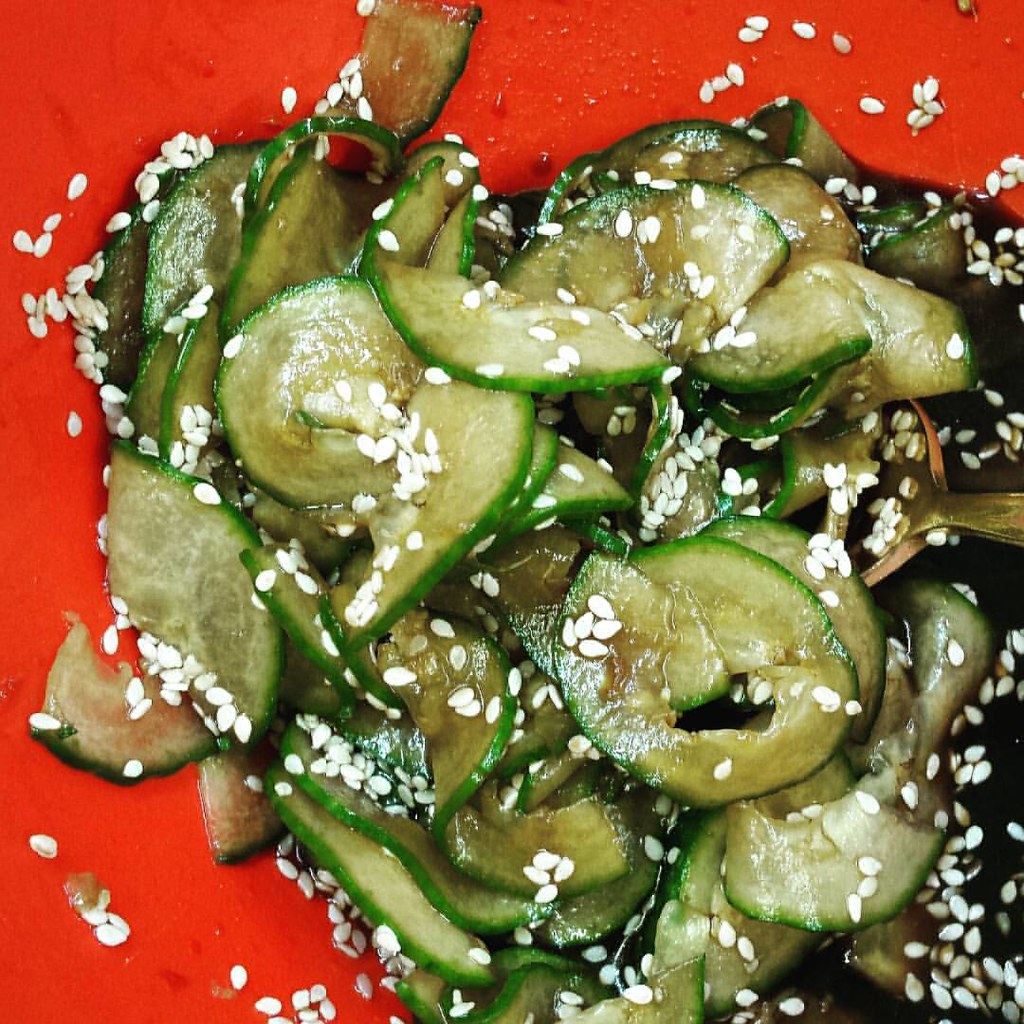
Japanese Sunomono - a light and refreshing #vegan cucumber salad perfect for #summer (and #SundaySupper )! #yum #food #vegetarian #glutenfree #vegetables
Sunomono
The recipes are easy to read, with bold titles and a standardized format that includes introductions, metric and imperial measures. I say the recipes are “delicious-sounding” because, in Robert Rose fashion, there aren’t photos available for all the recipes. Two pockets of full-colour pictures were slotted in – albeit a bit randomly in the middle of a recipe section rather than in between chapters. The text of each recipe is no-nonsense, with easy to follow, numbered directions and handy “tip boxes” accompanying most items. The directions themselves are a clear sign that the authors took their proofreading and editing seriously, even as a new reader skimming through.

On the cooking and eating side, the Spicy Shoestring Jicama Fries (p. 184) were amazing and crisp, albeit a bit too salty for my taste and a true struggle for my Spiralizer to manage. Sweet Potato Noodles with Mushroom Marinara (p. 152) sounded delicious but a trial to spiralize, a tad salty and with a very oily – I found myself wanting much more mushroom. If I made it again, I would add some dried mushrooms and let them soften in the sauce. I haven’t attempted any of the “dessert-style” offerings yet, but it is good to know that the gadget’s not just for savoury things. It’s important to note, as well, that these authors are not doctors or nutritionists, and that many of the recipes, while technically “fitting into” the category they’ve been assigned to, are imbalanced. For instance, most of the vegetarian and vegan recipes lack protein – a key fact they will realize but those trying such a diet as a “fad” may not. When in doubt, researching any or all of the listed eating styles will help readers modify the recipes t suit themselves.

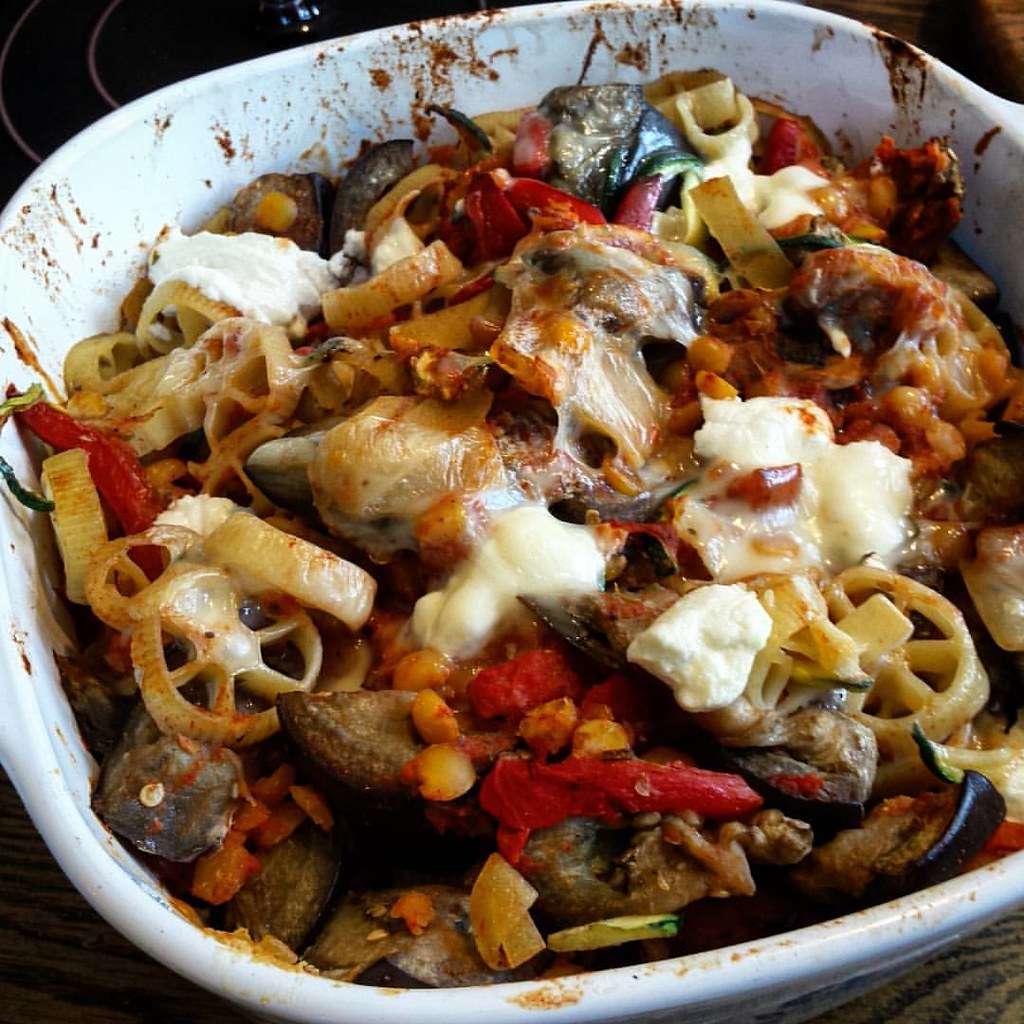
Pictures don't do this Pasta-touille justice. TONS of #vegetables, split peas and a teeny bit of #chicken, laced with goat and fresh mozzarella #cheese ! #yum #food #cooking #baked #SundaySupper #tomatoes #foodie #dinner
Pasta-Touille
Possibly the best part about this whole book is that it’s a fantastic source of inspiration. While it’s not a recipe given in Spiralizer, I dreamed up (and devoured) a version of a Japanese cucumber salad for my Home Economics class to try. They loved the salad, and the gadget, and it’s given me reason to bring it out again for other treats. At home, the device mowed through zucchini and red pepper to make a version of ratatouille pasta that was filling but light on the waistline. While the appliance is still not a “must have” fixture in my kitchen, the book makes using it more approachable and I won’t be throwing it out anytime soon. No, like many hidden gems, it will remain one of my “middle children” until I find the right way to make it (and lots of assorted veggies) bloom.

Available on Amazon

Monday, November 23, 2015

Vegan Everyday: 500 Delicious Recipes


Vegan Everyday: 500 Delicious Recipes
Author: Douglas McNish
Publisher: Robert Rose (2015)

Veganism isn’t the easiest diet for many people to get their heads around – considering that animal-based ingredients are everywhere (from supplements to “fortified” orange juice and even soy-based cheese and meat alternatives!) consumers almost need a university science degree to adhere to the “cruelty free” standards of living these days. While there is compelling evidence s,that a meat free (or mostly meat free) diet is better for your heart, liver, kidneys and digestive system, a lot of new vegetarians and aspiring vegans tend to turn to meat and dairy analogues for the bulk of their diet. The occasional soy burger or “unchicken” stir fry is rarely an issue, and is a convenient, quick meal mid week – however, forgetting the basic fruits, vegetables, legumes and grains out there that are not only cheaper, but more nutritious, is the pitfall most of the “mainstream”, non-chef vegans I know fall into. Toronto-based vegan chef and author Douglas McNish is aiming to bridge the gap between time consuming, nutritious ingredients and delicious, simple meals in his new book Vegan Everyday: 500 Delicious Recipes.

Vegan Everyday is relatively unique in that it’s not simply a vegan cookbook. McNish is also a supporter of gluten-free eating, and one of the few chefs in Canada who combine the two. Vegan Everyday is perhaps a bit of a misleading title in this respect, since the recipes are both vegan and gluten free – and while generally available, affordable (and whole- food) vegan ingredients are almost exclusively called for, many consumers in smaller cities may have a harder time sourcing certified gluten free items to make recipes to the letter. This book, however, doesn’t directly demonize gluten nor wax poetic about how animal products are harming everything we hold dear, and unless medical reasons are a determining factor using “standard” versions of foods like oats and pasta do not have any bearing on the outcome of the recipes themselves.

One of the things I like about Vegan Everyday is how McNish manages to demonstrate the importance of a well stocked pantry – not only for restricted diet cooking, but in general as well. Most of the time, nutritious cooking methods are also employed, with the author relying heavily on fresh and dried herbs, whole spices and whole food flavour combinations rather than refined salt and sugar to make delicious and filling meals. The fact that this book is so restricted in its focus means that it’s not overly child- or allergy-friendly in design – only a handful of the recipes would be suitable for a “standard” American household, and for those with allergies to nuts or coconut, a different book entirely would make more sense. Those of us who thrive on visual references when cooking will find that this book is sorely lacking photos as well – more so than many other books by this publisher. The two meager inserts in the middle of the 480-page tome are only partially filled with pictures of the recipes themselves – the rest of the pages are “beauty shots” of various fruit and vegetables that have little bearing on what the book represents.

The recipes in Vegan Everyday are delicious in theory – and while paging through the book I earmarked several whose flavour combinations echoed my own tastes (like Baked Chana Masala (p. 349) and Deep Chocolate Brownies (p. 444)). However, when it came to making the dishes in question, my success rate diminished to roughly half. In general, the simple, low- or no-cook items (like Singapore Summer Rolls (p. 93) and Spinach Sautéed in White Wine and Garlic (p. 292)), while not overly original, were great successes with vegans and non-vegans alike. The soups I tried were for the most part delicious (and all certainly passable) – in fact, the Roasted Cauliflower and Garlic Soup (p. 328) has become one of my favourites with a dash of smoked paprika whirled in, and while the texture of the vegan Mozzarella called for in the French Onion Soup (p. 316) was off-putting, the broth underneath was rich and definitely worth a repeat. With the holidays coming around, the Triple Ginger Cookies (p. 428) and Lemon Vanilla Biscotti (p. 437) are on my shortlist too!

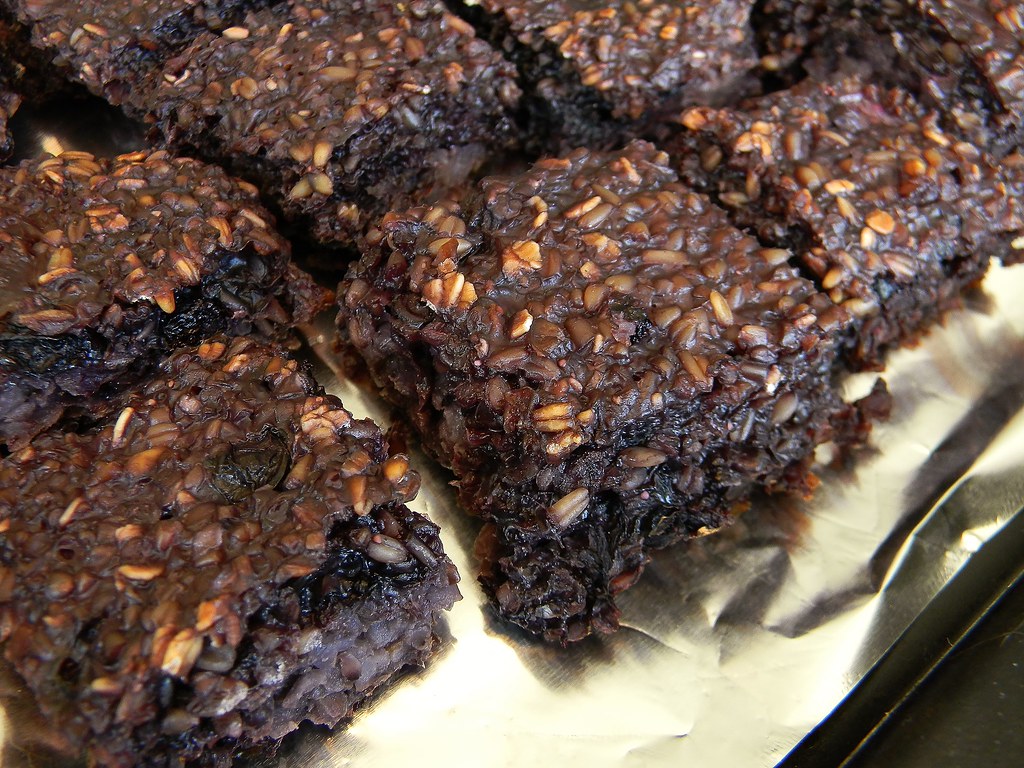
Berry Oat Bars
Berry Oat Bars (p. 157)

Unfortunately, many other dishes simply fell short of being worth the time and effort to make them. The namesake protein in the Jerk Tofu, Avocado and Plantain Wraps (p. 360) was closer to a holiday spice cookie than an Island dish in flavour, lacking any hint of jerk’s trademark fire. Berry Oat Bars (p. 157) managed to be both mushy and granular in texture – the steel cut oats retained a bit too much structure after chilling and felt like overly chewy tapioca pearls between my teeth. The presentation of the bars also left a lot to be desired, as they first fell apart when I tried to remove them from the pan, then re-baked into dark, crusty cubes even after following the directions to the letter. Penne a la Vodka (p. 265) looked promising but tasted of nothing but alcohol and gummy cashews.

One of the common misconceptions about veganism is that it’s a guaranteed weight-loss diet that is automatically healthy. While I applaud Douglas McNish’s passion for choosing generally nutritious ingredients, I definitely won’t call this a “low calorie” cookbook for dieters! Vegan Everyday uses a generous amount of various sugars (usually agave nectar, which is itself a refined sweetener) and salty ingredients like miso, neither of which should have a starring role in anyone’s daily menu. Many recipes call for high amounts of naturally fatty nuts, seeds and oils as well – and while these choices also tend to provide added nutrients like Omega fatty acids and vitamins, again moderation should be exercised. With a few modifications to the recipes (which could be as simple as reducing the amount of oil, agave and/or salty ingredients) this book would better suit it’s “everyday” moniker.

You don’t have to be a 24/7 meat-avoider to enjoy vegan fare at least a few nights a week – nor do you need gourmet training to create filling, balanced and healthy dishes. Books like Douglas McNish’s Vegan Everyday: 500 Delicious Recipes are a great resource when it comes to basic recipes and cooking methods, as well as ideas for making up your own stellar meals. With a few stars under your belt, you’ll be ready to tackle any breakfast, lunch or dinner situation.

Available on Amazon

Sunday, September 8, 2013

The Leafy Greens Cookbook

The Leafy Greens Cookbook
Publisher: Ulysses Press (2013)

Everyone knows that dark leafy greens are a nutritious, low-calorie option that should be included more often than not in our diets. However, their positives – vitamins, minerals, antioxidants and varieties – are often overshadowed by their “negatives”. In this day of over-sweetened, over-oiled, over-salted meals, our palates are trained to perceive the taste of a beautiful leaf of rainbow chard, a head of kale or a pancake-like collard as too bitter to eat. As a result, many home cooks no longer know how to cook them well, or cook them at all. Chefs that put the greens on their menus are divided between the “raw vegan” camp and those who adhere to the Southern style of cooking, adding copious quantities of pork meat and fat before stewing for hours. There is a happy medium in all of this, though, and it’s one that Kathryn Anible strives for in The Leafy Greens Cookbook.

Leafy Greens has 100 recipes ranging from smoothies to salads, soups and suppers. Some are relatively tame and “conventional”, like the Arugula Salad with Strawberry Balsamic Vinaigrette (p. 8) and the currently haute Kale Chips (p. 50) – both excellent introductions to the world of culinary greenery. More adventurous palates are catered to as well, with offerings like Sautéed Radicchio and Endive with Quinoa and Capers (p. 52) and Arugula Hummus (p. 34). Those who are well accustomed to the taste and (somewhat strange) composition of green juices and smoothies will find no shortage of inspiration, with 14 concoctions such as Super Greens Juice (p. 93) – made with spinach, kale, parsley and cucumber amongst other things – and a Spinach, Peanut Butter and Banana Smoothie (p. 96). I was let down slightly by the fact that there was no use of the greens in sweet applications, as they can work quite well and many parents (and picky adults) would find these a good way to “sneak in” some extra nutrition. Each recipe is accompanied by a brief introduction, and while there are no photos (a sad oversight) the recipe titles are eye-catching and descriptive enough to warrant a look. Unfortunately, the photos on the cover are not of actual recipes in Leafy Greens, but rather shutterstock purchases – something I discovered when scouring for the kale-pine nut- and cranberry dish on the back (called Sautéed Kale by Andi Berger).

For anyone brand new to eating more than iceberg lettuce salads, Leafy Greens comes complete with a detailed introduction and glossary covering the types of edible leaves as well as a few paragraphs on their health benefits as a whole. I particularly liked the practical details of the vegetables’ appearances (handy when shopping!) as well as the note that “[w]hile not every green will become a favourite, they are all worth trying” (p. 5). This is good advice for any new ingredient and definitely worth remembering in the kitchen!

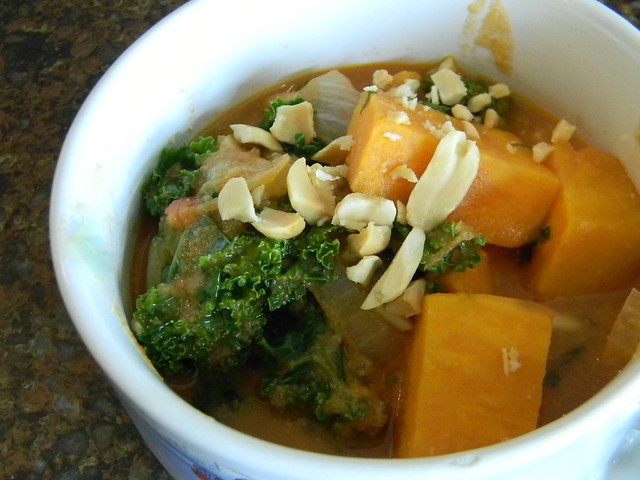
My favourite thing about this book is that the recipes are so varied that it’s impossible to say you hate all forms of all greens. I still detest any green in smoothies, but give me a plate of Spinach and Ricotta Stuffed Shells (p. 65) or a side of Roasted Shaved Brussels Sprouts with Parmesan (p. 42) and it is gone in a flash. Likewise, my mother would never serve up a bowlful of Black Bean, Corn and Kale Salad (p.17) for lunch, but I finally convinced her that the green was delicious in African Peanut Stew (p. 29). The stew recipe is not for those sensitive to heat, however, since even after accidentally quadrupling the peanut butter and using a milder chili than the habanero called for, my curry was just barely edible. I can’t imagine what it would be like as written, but I doubt there would be a discernible flavour after all that powerful flame. The Saag Paneer (p. 69) was far more palatable – spicy but flavourfully so – even though it looked less than appetizing on the plate. It was also a dish easily made lighter by using skim milk for the cheese in the recipe or purchasing pressed non-fat cottage cheese and skipping the cheese-making altogether.

African Peanut Stew
African Peanut Stew (p. 29)

Needless to say, there is something for everyone to be found in The Leafy Greens Cookbook. Whatever your preference, the book makes it easy – and tasty – to add the nutrient-dense produce to your table in forms from the predictable to the outlandish, and Kathryn Anible’s recipes will turn many preconceived notions of bitter leaves on their heads. It just goes to show you that it can be easy being green!

Available on Amazon

Thursday, July 25, 2013

Mr. Wilkinson's Vegetables: A Cookbook to Celebrate the Garden

Mr. Wilkinson's Vegetables: A Cookbook to Celebrate the Garden
Author: Matt Wilkinson
Publisher: Black Dog & Leventhal (2012)

When the growing season comes around, there’s nothing I love more than coming into the kitchen with an armful of vegetables. Whether it’s from one of the local farmers’ markets or right outside my back door, fresh vegetables in season are at their peak of flavour, nutrition and economy. More and more chefs are embracing dishes and menus developed based on the seasonality of ingredients, rather than importing from far and wide, and Matt Wilkinson is no exception. Wilkinson is the chef at Pope Joan, known for its use of seasonal produce, in Melbourne, Australia as well as an ambassador of the Victorian Farmers’ Markets Association, and thrives on partnering with producers to provide accessibility to the tastiest food for communities. His passion translates into the cookbook world now, with Mr. Wilkinson's Vegetables: A Cookbook to Celebrate the Garden.

Mr. Wilkinson's Vegetables is more than a simple cookbook in that it incorporates not just recipes, but facts about the 24 vegetables he includes. A preamble of 2 or so pages precedes each chapter, which is dedicated to one particular vegetable – providing insight as to the Latin (“official”) name, native origin, history and even how to grow and harvest. This is fascinating for the trivia fan or gardener, but unfortunately this wealth of extra information inhibits the volume and variety of recipes Wilkinson includes. In the 300 pages of Mr. Wilkinson's Vegetables, there are slightly over 80 recipes (approximately 3 per vegetable) – and some of the “produce specific” offerings (such as Simple Roast Potatoes (p. 217), Irene’s Tzatziki (p. 117) and Heirloom Radishes in a Salad (p. 244) are overly simple and better suited for the “Basics” section at the back or simply omitted entirely. Wilkinson also ignores the now-popular class of Asian produce – likely due to it’s limited locality and season.

That said, Mr. Wilkinson's Vegetables does promote vegetables as a main element in the diet and not simply a side. The recipes respect the foods for themselves, making them the stars of the dinner plate. While the book is useful to vegetarians looking for new twists on their meals, many recipes use meat in an accompanying role – and in most cases it can be omitted without much consequence. This book is refreshing in that while Wilkinson’s passion is evident in his food, it also doesn’t come across as a vegetarian, organic or health food manifesto.

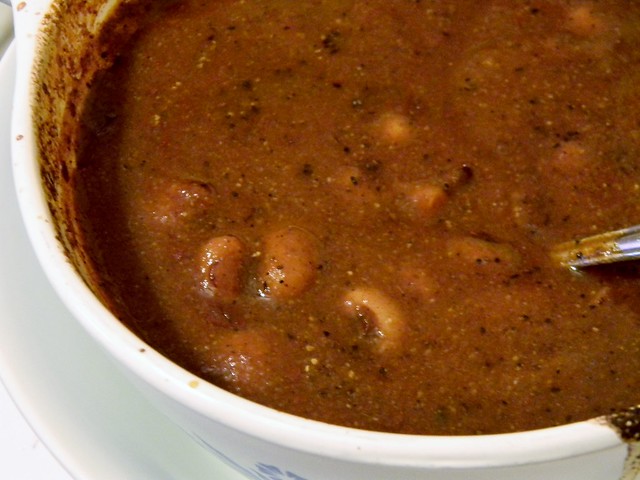
Sweet n' Spicy Baked Beans
Baked Beans (p. 14)
One thing that this book has no shortage of is dishes worthy of a four-star restaurant. Some of them (like Spinach, Mustard Greens, & Baked Ricotta Cheese (p. 176), Baked Beans (p. 14), and Horseradish Wafers (p. 162)), are easy and accessible enough for most home cooks to recreate, and are relatively “safe” to attempt in terms of taste expectations. Others in Mr. Wilkinson's Vegetables sound delicious but intimidating, requiring specialty ingredients (truffle oil, certain spices and meats like goat neck) or processes like stovetop smoking. I’m looking forward to trying variations on some of these, however, namely the deceptively simple Sautéed Tuscan Cabbage & Matsutake Mushroom Pasta (p. 63) (though I’d have to substitute shiitakes for the Matsutake or Saffron Milk Caps called for), and the exotic, spicy Tomato Kasundi (p. 263) (using far less oil than the ¾ cup indicated for toasting the array of spices). I’m bookmarking the rich-looking Carrot Cake (p. 80) as well as the Foil Roasted Big Beets with Ricotta & Mint (p. 32) for Fall, when my backyard veggies come to fruition.
For those looking to expand their vegetable-cooking horizons, impress honoured guests or simply use what you grow or buy locally, you can certainly do a lot worse than Mr. Wilkinson's Vegetables: A Cookbook to Celebrate the Garden. While not an exhaustive resource, Matt Wilkinson tempts and inspires with his recipes, and the collection brings to light the need to embrace vegetables in more than a fleeting embrace. From simple to gourmet, the seasons determine the supper as it has always been – what will be on your plate tonight?
 
Available on Amazon

Monday, December 3, 2012

Bean By Bean: A Cookbook

Bean By Bean: A Cookbook 
Author: Crescent Dragonwagon
Publisher: Workman (2011)

Being, for the most part, a very-low-fat vegan, beans have been part of my pantry and kitchen for years. I haven’t met a bean I didn’t like (excepting fava and lupini), and will gladly spend summer afternoons tending, harvesting and eating the fresh Romano and string beans growing in the garden. However, I appreciate that standard bean recipes can become a bit “boring” and tedious to make and eat – there is only so much minestrone, dhal and chili one can have before dinner becomes “beans again?”.

Enter vegetarian “comfort cook” and author Crescent Dragonwagon and her latest book Bean By Bean. This book provides readers of all tastes and ability levels with over 175 recipes, most of which featuring the humble legume in pride of place. The book starts off with a lengthy, intensive essay of sorts covering the basics of beans, even including nutrition and history notes which are more generally interesting than relevant to the cookery. What most readers (especially those new to beans as a staple food) will appreciate is the section titled Unmasking the Mischief of the Musical Fruit (p. 6). Not only does Dragonwagon include “pharmaceutical” remedies such as Beano (though it should be noted that the specific variety she suggests is no longer produced), but includes a list of factors that affect the legume’s digestibility and potential to cause gaseous side effects. The author also provides some helpful herbs and spices that can be added to cooking beans to minimize discomfort – including summer savory (great in Bean & Barley Salad (p. 141)) and cumin (prevalent in chili powder and curries like Dahl (p. 81)). Finally, Bean by Bean’s introduction offers basic cooking instructions and tips for every type of bean available – green (like wax beans), shell beans (which the author terms “semi-mature”) and the most common form – dried. Soaking, “de-gassifying” and a discussion on using canned and home cooked frozen beans for speed and ease are also included and definitely worth a read if you are a novice to this food. For specifics as to the treatment, substitutes and common usage of almost any bean or lentil you could want to try, the Appendix (p. 344) provides a helpful chart that is easy to read and follow.

One of the enjoyable elements of Bean By Bean is the peppering of quotations and trivia throughout the pages. While Dragonwagon’s colloquial, conversational style of writing and humour can be a bit wearing at times (especially in large quantities like this 370-page tome), the quotations are from a variety of sources, such as my personal favourite from the Yoruba people of western Africa:
"Mofere ipa eiye na!" / "Aki ofere li obbe"
"I almost killed the bird!" / "But no one can eat 'almost' in a stew"
 (p. 71)
I also liked the fact that many recipes offer variations on the theme. Changing out one or two ingredients or spices transforms the standard All-Day Baked Beans (p.216) into a global kaleidoscope of flavour (from Vermont to England and even the Caribbean). This book includes recipes for vegan, vegetarian, gluten free and meat eating (or as Dragonwagon writes, “meatist”) diets, and while a recipe may contain meat, dairy or gluten verbatim the options to modify are almost always given.

Not all the recipes in Bean by Bean include the legume itself. Most of the chapters offer bean-free side dishes, condiments and breads designed as a complement to the main ingredient. Dragonwagon previously wrote a book comprised of nothing but cornbread, and three cornbread recipes do find themselves in this book as well as biscuits and steamed brown bread. Vegetable sides like Roasty-Toasty Carrots & Onions (p.37) and sweet-savoury items like Mixed Fruit Salsa (p. 181) break up the carb-heavy dishes and are very tasty on their own as well.

“Don’t Hurt Yourself” Bean Pie (p. 327)
The book’s major strength is it’s ability to take a potentially boring ingredient and showcase it in every form imaginable. Far from the standard soup and chili you’d expect to find in a book like this, Dragonwagon also includes what may be the most comprehensive bean-centric dessert chapter in any published work to date. In fact, it is in this section that my favourite recipe falls – the cheekily named “Don’t Hurt Yourself” Bean Pie (p. 327). This 1897 recipe is very similar in flavour and texture to a pumpkin pie, but features navy beans as the main filling agent. Everyone I served it to enjoyed it – including children (though I didn’t tell them what was in it!). On the savoury side of the plate, I adored the simple flavours of Oven-Roasted Green Beans (p. 229), especially the variation with tomatoes and garlic. The CD’s Chili Mole (p.170) would be a perfect comfort food mid February, as would the Four-Star From-the-Cupboard Red Bean Stew (p.188). I was looking forward to trying Dragonwagon’s version of Vegetarian Cassoulet (p.234), but was turned off by the heavy use of meat analogues in place of other natural flavouring agents. It is worth noting that Dragonwagon is not shy with her use of these items, especially flavoured soy sausages and tempeh. Also, for those readers who are motivated more by photos than words, bear in mind that this book contains no photography whatsoever.

With a host of health, economic and ecological benefits, the versatile bean  is a food that should be on our plates more often than not. Luckily, authors like Crescent Dragonwagon have provided us with tomes of ideas and recipes to play with at home. With Bean By Bean, it’s possible to travel the world through your tastebuds, and save a few pennies for a plane ticket too.