Showing posts with label Basic Cooking. Show all posts

Wednesday, August 25, 2021

The Unofficial Hogwarts Cookbook for Kids

The Unofficial Hogwarts Cookbook for Kids: 50 Magically Simple, Spellbinding Recipes for Young Witches and Wizards
Author: Alana Al-Hatlani
Publisher: Ulysses Press (2021) 

Official Press Release:

Perfect for any young fan of Harry Potter, The Unofficial Hogwarts Cookbook for Kids by Alana Al-Hatlani will have aspiring witches and wizards brewing potions, baking stellar treats, and cooking creative dishes in no time. From breakfast all the way to dessert, this book makes any meal or snack extra special (and educational!), with recipes like:
Rock Cakes
Granola Bars “Owl Food”
Magic Star Fruit Salad
Pumpkin Pasties
Cauldron Cakes
Acid Lollipops
Sticky Toffee Pudding
Butterscotch Beer, and much more!

The Unofficial Hogwarts Cookbook for Kids is the perfect primer to get the young chefs-in-training active in the kitchen with their parents. As a family, you’ll have fun learning cooking terms and kitchen skills with recipes that range in complexity so that all kid chefs and their potions masters (or parents) can whip up something amazing.


Review: 

I grew up with the Harry Potter book and movie series, and one of the most prevalent images woven throughout it is that of food. There is such an emphasis on meals and treats that it made me want to recreate the magical food even as a young adult. But where to start?
Alana Al-Hatlani has compiled 50 recipes inspired by the Harry Potter universe that are geared for children and their parents to make and enjoy together, and this seemed like a good place to start exploring.

Having taught cooking lessons to children ages 5-13 over the last 7 years, I am always on the look out for comprehensive children's cookbooks. To me, it's important that cookbooks geared for children not only have simplified recipes with ample photos (kids are visual beings after all!) but some educational component to them - what does it mean to simmer, whisk, fold? This book contains a section with safety and getting started cooking called "In the Home Kitchen: How to Cook Without a Magic Wand" (p. 10) which is arguably one of the most comprehensive chapters of it's kind that I've seen in any cookbook, let alone a children's one. The tips and guidelines in this section closely mirrored the rule list I gave out in my classes, so that made me smile. The second part of the introduction was Common Recipe Terms (p. 12) which again is well-written in language that children can understand (or parents can easily explain). 

Onto the recipes - here is where it is abundantly clear that this is a children's cookbook, though there are some drastic outliers which brought me pause. The recipes in this book range from the incredibly simple "non-recipes" such as Fruit Skewer Wands (p. 42) - sticking pre-cut pieces of fruit on a wooden skewer - or Orange Juice (p. 122) which (you guessed it) involves juicing oranges -  to those that require extensive use of the stove or oven. For instance, I personally would not be making the Easy Marmalade recipe (p. 27) if I had to keep an eye on a child, let alone letting them take the reins cooking it to a setting point of 220F (the recipe uses the cold-plate set test as well, which adds an extra layer of risk in my opinion). The fact there are instructions to make toast made me chuckle, though I can concede some children do need explicit instructions. The marmalade that I made (without children running around) was good, and simple as far as other marmalade recipes go, but I will dice the peel more should I make it again as "slices" were far too chewy.


Then there are recipes that make no sense at all within the Harry Potter universe, and feel like they were simply page-fillers to get the recipe count to 50. I read the books avidly (as our completely beaten up first edition of Philosopher's Stone can attest) and not in a single one do I remember Grilled Cheese (
p. 50), Pizza (p. 54), Quesadillas (p. 58), Macaroni and Cheese (p. 61) or pretty much anything in the Dinner section being mentioned. I'm not saying the recipes are not worth making - the Macaroni and Cheese as well as the Shepherd's Pie (p. 71) both look quite enticing - but since this is a Harry Potter themed cookbook they just seem thrown in there without reasoning.

The photos in this book are fantastic and draw the eye, though it is important to note that with a few exceptions they are stock images and may not reflect what the recipes actually look like. Side by side, the quality difference is noticeable between the author's photos and the professionally taken and edited ones, though when viewed independently they are still clear and informative. 

In general I would recommend this book as a standard children's cookbook intended for littles to cook alongside their parents, do basic prep work and clean up. I wouldn't say this is truly a Harry Potter cookbook though, since the bulk of the non-snack recipes are not featured anywhere in the series and they seem a little misplaced with the theme. However, for learning to read recipes and dabble in the mundane magic that is the kitchen this book is absolutely worth a look - and who knows, maybe it will inspire a few more kitchen magicians to follow their culinary dreams!

Available on Amazon

Wednesday, September 26, 2018

YOU CAN HAVE IT! More Than 125 Decadent Diabetes-Friendly Recipes


YOU CAN HAVE IT!
More Than 125 Decadent
Diabetes-Friendly Recipes
by Devin Alexander
New York Times Bestselling Author
March 20, 2018
u Can Have It! by Devin Alexander
Whether you’re managing diabetes, want to lose weight, or just plain want to be fit while eating insanely scrumptious meals, weight-loss expert Devin Alexander is here to assure you, “You Can Have It!” The celebrity chef on the hit series The Biggest Loser and the author of the New York Times bestselling The Biggest Loser Cookbook series and The Most Decadent Diet Ever!, Devin Alexander has created a collection of easy, diabetes-friendly recipes that seem simply too good—and too decadent—to be healthy.
I've cracked the code for how to make decadent recipes that are actually approved by doctors, dietitians,and now the American Diabetes Association! These recipes are not the "diet food" I tried to eat when I first knew I needed to make a lifestyle change. These are recipes that I actually look forward to making and eating! And I know you will too!
                    — Devin Alexander
Using her chef secrets, tips, and techniques that helped contestants on the show lose weight and wowed customers in her restaurants, Devin has crafted easy, diabetes-friendly recipes that bust the myth that eating well means giving up the comfort foods you love. YOU CAN HAVE IT!: More Than 125 Decadent Diabetes-Friendly Recipes includes beautiful photographs, easy-to-follow tips and techniques, affordable ingredients, and mouthwatering meals; this is the cookbook every person who cares about their health (whether they have diabetes or not!) will want to own.
A small sample of the sumptuous recipes inside includes:
  • Gingerbread Overnight Oats
  • Waffle Fry BBQ Bites
  • Scrambled Eggs With Sautéed Shrimp
  • Crockpot Chipotle Steak Simmer
  • Bacon Ranch Flatbread Pizza
  • Pulled Chicken Tacos with Papaya Slaw
  • Cheesy Lasagna Rollups
  • Bánh Mì Burger
  • Sweet & Spicy Pomegranate Pork
  • Perfect Pumpkin Pie-lets
  • Watermelon Cupcakes
  • Passionila Cocktail
YOU CAN HAVE IT!: More Than 125 Decadent Diabetes-Friendly Recipes runs the gamut from savory snacks to delicious desserts with more than 125 recipes that celebrate pizza, burgers, and rich chocolate pudding—and help those who have diabetes live richer, fuller, more delicious lives. Whether you're managing diabetes, heart health, or trying to lose weight, no meal is "off limits" and no favorite is forbidden. With small tweaks and the right approach, Devin is here to tell you: You Can Have It!


vin Alexander
DEVIN ALEXANDER is a media personality, healthy comfort food chef, weight loss expert, and New York Times bestselling author. She was the chef of NBC’s The Biggest Loser and the author of 9 cookbooks including The Biggest Looser Cookbook series and The Most Decadent Diet Ever. Devin’s unique approach to healthy cooking and her motivational personal story have landed her regular appearances on talk, news, and weight loss and fitness shows for over a decade, making her America’s go-to expert for decadence without consequence.

Devin has shared her secrets through frequent appearances on The Today Show, Good Morning America, The Biggest Loser, Dr. Oz, Dr. Phil, The View, FOX, CNN, and others, and through over 500 magazine features including those in Prevention, Men’s Health, and Shape. She’s coached thousands of pounds off others and has maintained her own 70-pound weight loss for close to 30 years. Devin truly lives and eats her message: you don’t have to deprive yourself to be fit and healthy.
About the American Diabetes Association
The American Diabetes Association® is leading the fight to STOP DIABETES® and its deadly consequences for those affected by diabetes. The Association funds research to prevent, cure, and manage diabetes; delivers services to hundreds of communities; provides objective and credible information; and gives voice to those denied their rights because of diabetes. Founded in 1940, its mission is to prevent and cure diabetes and to improve the lives of all people affected by diabetes. For more information please call the American Diabetes Association at 1-800-DIABETES (1-800-342-2383) or visit www.diabetes.org. Information from both of these sources is available in English and Spanish.
Social Media Coordinates
itter   @chefdevin
YOU CAN HAVE IT!
More Than 125 Decadent Diabetes-Friendly Recipes
by Devin Alexander
March 20, 2018
American Diabetes Association

$22.95 Trade Paperback
ISBN: 978-1-58040-683-3

Review: 
I had the chance to test out a few recipes from this book. The lasagna roll-ups were a huge hit, and while nothing was a hue "miss" the pomegranate pork didn't pack the flavour punch I expected with such expensive ingredients. By for the best recipe in my household's opinion was the  Thai Lime Quinoa Salad - bright and fresh, making it perfect for Summer. To make the meal more complete (since quinoa isn't really that rich in protein), I added a block of baked marinated tofu to the mix. It packs well for lunches or picnics and never gets soggy like greens can - I highly recommend dressing it warm so the quinoa can soak up the dressing.

My main complaint with this book was the lack of dessert or sweet options. The diabetics in my family have unabashed sweet teeth, and I was hoping this book would provide some ideas as to how to satisfy them while keeping their health in check. Unfortunately, most of the options were "immediate consumption only", and I was not able to logistically try them in my ever-mobile family.

Wednesday, September 21, 2016

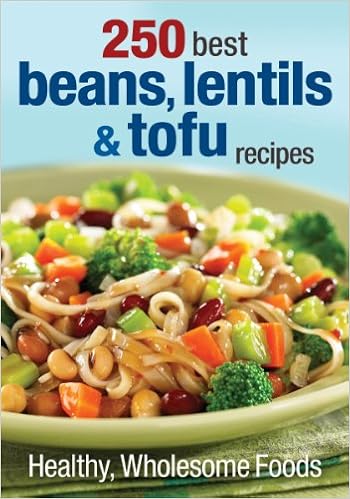
250 Best Beans, Lentils & Tofu Recipes

250 Best Beans, Lentils & Tofu Recipes
Publisher: (2012)

Beans, lentils and tofu…for most people, seeing these in someone’s grocery cart is a signal that they are a card-carrying vegetarian. After all, why would anyone who ate meat need to pick up these alternative proteins? Well, in 2016, the reasons can be much more than ethical in nature. Economics and health concerns are pushing more and more people away from meat-centric meals, forcing them to confront the previously outré ingredients seen only in Asian restaurants or chili pots. What was missing was a comprehensive guide to making legumes worthy of a dinnertime staple. Judith Finlayson’s book 250 Best Beans, Lentils & Tofu Recipes is designed to fill that niche, with meals for all occasions both with and without meat.

Beans, Lentils & Tofu is a library’s worth of inspiration, and whether you’re a bona fide vegetarian or just want to reduce the meat you eat you’ll find something to tempt your palate. Most of the main dishes are hearty enough to satisfy even the most ravenous eaters and generally store and/or freeze well, making eating “on the cheap” even easier. I was pleased to see some of my favourite veggie staples – notably Harira (p. 64) and Caribbean Chickpea Curry with Potatoes (p. 161) – as well as some tempting ideas for the family like Cheater’s Cassoulet (p. 194) and Roasted Vegetable Lasagna (p. 230).  For the baked bean addicts out there, Finlayson has included no fewer than six variations – five of them containing meat, which was a bit of a disappointment. While I understand the desire to appeal to the greatest audience possible, there are so many hearty, delicious and nutritious meals that can be made completely vegetarian. By giving the book a title such as 250 Best Beans, Lentils & Tofu Recipes, I expected the author to place more emphasis on those ingredients for main courses and less of the “well, let’s toss in some lentils to fit the book” approach. Also missing are any legume based desserts – of which there are many, and I expected to see at least a black bean brownie or tofu cheesecake in the pages. However, the meatless recipes that are mentioned sound delicious – and while photos are fairly scarce in the book, if they taste as good as they look readers will be well fed and loving it.

For those new to a life of legumes and who still want to include meat in their diet, 250 Best Beans, Lentils & Tofu Recipes by Judith Finlayson is a great place to start. While it’s not a book for the die-hard vegetarian or vegan, for the flexitarian or omnivore each page holds a delightful option for that day’s nosh.


From the publisher:

A collection of delicious recipes that offers not only good health but great food.
Everyone knows that beans, lentils and tofu are good for you, but did you know that you can enjoy tantalizing gourmet food using these very ingredients? You absolutely can, and this enticing collection of recipes compiled by bestselling author and editor Judith Finlayson proves it.

These varied and internationally influenced recipes will give you a whole new perspectiveon the humble legume. Bean recipes range from elegantly continental dishes to authentic meals that take you back to the days of the Wild West. You’ll discover appetizing expressions with lentils, which are a staple of Middle Eastern and Indian cooking. And tofu? Sure, it’s not much on its own, but paired with other ingredients, it becomes something magical.

In a single collection, you can enjoy 250 of the best recipes created by the bestselling authors of Robert Rose, along with nutrition information, preparation tips and serving suggestions. These recipes will appeal not only to vegetarians and vegans, but also to the ever-growing number of people who simply wish to eat less animal protein in favor of healthy alternatives. You’ll no longer have to prepare several different meals for one family — everyone, regardless of their leanings, will enjoy this incredibly satisfying food.

Sunday, January 31, 2016

For the Love of Food and Yoga: A Celebration of Mindful Eating and Being

For the Love of Food and Yoga: A Celebration of Mindful Eating and Being
Publisher: (2015)

I can’t tell which I fell in love with first – yoga or food. There’s a certain zen to each craft – be it working towards inner peace through daily asanas or allowing the flavours of a perfectly balanced meal dance across the tongue. While many people think the practice of yoga is ascetic and the enjoyment of delicious cuisine is overly decadent, separating each other with a distinct wall, the fact is that the two can work in glorious harmony. Authors Liz Price-Kellogg, a trained yoga instructor, and her student Kristen Taylor, embody this philosophy in their book For the Love of Food and Yoga: A Celebration of Mindful Eating and Being.

Food and Yoga is a combination of photo album, yoga guide and cookbook. The pages are packed with 100 recipes, each either vegan or vegetarian, and are peppered with inspirational quotations (“YogiBites”) from the likes of people such as Einstein, the Dalai Lama, Julia Child and even Steve Jobs. Asanas are shown in glorious full-colour photographs taken along the St. Lawrence River and are titled in both Hindi and English, with an (English) description as to the benefits of that pose. For instance, one of my favourites (Bhujangasana or Cobra Pose (p. 161)) “strengthens upper body, elevates mood, opens heart center” and is photographed with a glorious view of the river and its shores. Recipes are also artfully captured by either the authors, Blake Price-Kellogg or Jonathan Taylor, each enticing readers to try the cleverly-titled recipes like Restful Rosemary Potatoes (p. 80), Seated Spinach (p.134) and Chakra Fruit Salad (p. 254). In fact, even non-foodies will find this book is worth buying for the photography alone, more suitable for keeping on coffee tables or open shelves rather than closed-door pantries.

Vasisthasana III (Advanced Side Plank) - All Rights Live Yum LLC

The recipes themselves are a great combination of simplicity and complexity – both in ingredients and flavours. Realized Roasted Tomatoes (p. 68) call for only a handful of ingredients and steps, but lend considerable depth to a simple pasta dish or warm grain salad. Likewise, Buddha Brussels (p. 64) will turn almost anybody onto the flavour of roasted sprouts thanks to their perfect marriage of garlic, Dijon and just a hint of cayenne. The innocuously named Liberating Lentil soup (p. 108) is full of complexity thanks to a generous helping of both umami, tart and sweet ingredients – each in harmony with the other and creating a satisfying, yet crave able, bowl of comfort. It’s impossible to pick just a single favourite from the book, but both the vegan Asian Style Wealthy Wonton Purses (p.230) and the Sinfully Sublime Mousse Mountains (p. 244) are in demand with those who taste them!

Napoleon - All Rights Live Yum LLC

For those days when body and soul nourishment is lacking, Liz Price-Kellogg and Kristen Taylor’s book is more than satisfying food for the soul. Whether you’re a Zen master, five-star chef, master photographer or simply someone who loves the art of balance, you’ll find something to love in the pages of For the Love of Food and Yoga: A Celebration of Mindful Eating and Being.

Available on Amazon

Wednesday, December 30, 2015

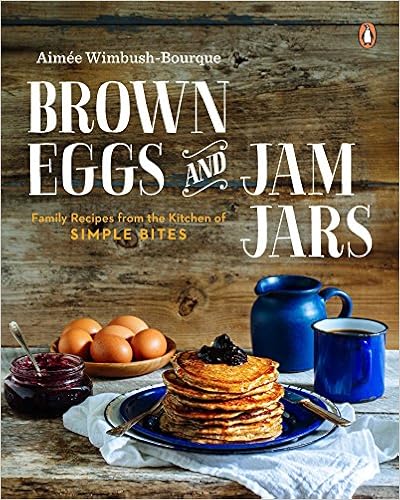
Brown Eggs and Jam Jars

Brown Eggs and Jam Jars
Author: Aimée Wimbush-Bourque
Publisher: Penguin Canada (2015)

I often joke that I live on a farm – between the spacious backyard packed with various gardens to the literal cattle and sheep over the back fence, it’s easy to forget that I’m actually in a fairy major suburb of Toronto. That said, I’m still mentally a rural girl and have a passion for the art of homesteading – particularly making my own pantry items like jams and sauces, baking my own bread, and dehydrating leftover garden or local produce. Those techniques are about as far as I can go, but fellow Canadian, food blogger and now author Aimée Wimbush-Bourque takes it a step farther – both online on her website Simple Bites (www.simplebites.net/) and in her new book (named for two of my favourite things): Brown Eggs and Jam Jars.

Brown Eggs is definitely a season-oriented cookbook, with distinctly marked chapters for each quarter of the year as well as a preface of Useful Ingredients (xvi) and Helpful Tools and Equipment (xxii). These sections are further broken down into richly photographed sub-chapters with recipes prefaced by a heart-warming story from Wimbush-Bourque’s family life. Even if the particular dish never makes it to your own table, reading why the author adores it herself is entertaining and truly captures your heart. The recipes themselves are everything I’ve loved about her blog since finding it – no fuss, whole-food concoctions that don’t “preach” a certain diet or lifestyle. Brown Eggs is simply a book full of good food to feed your family. All this said, most dietary lifestyles can enjoy at least some of the dishes in this book, although modification will be required for vegetarians and vegans for the majority of the main courses.

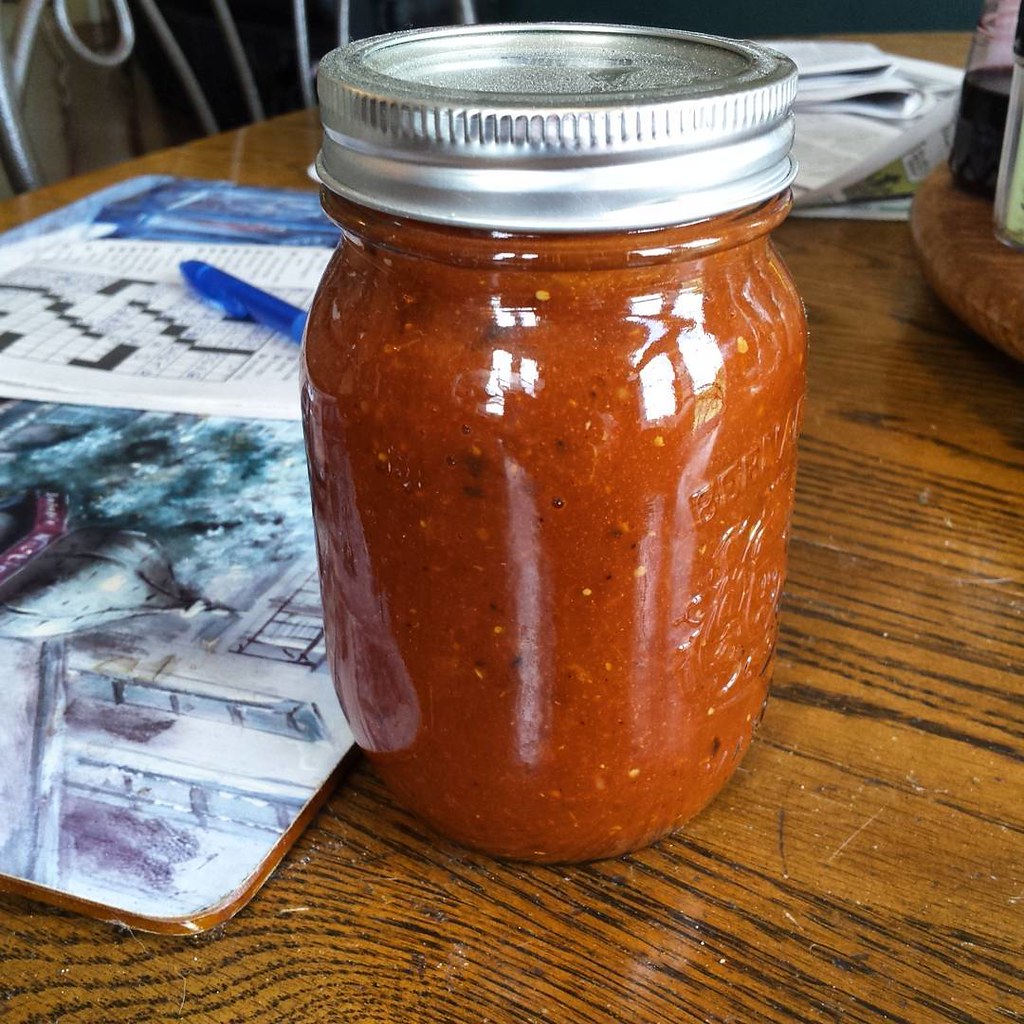
Roasted Ontario Peach BBQ Sauce!
Roasted Peach BBQ Sauce (p. 81)
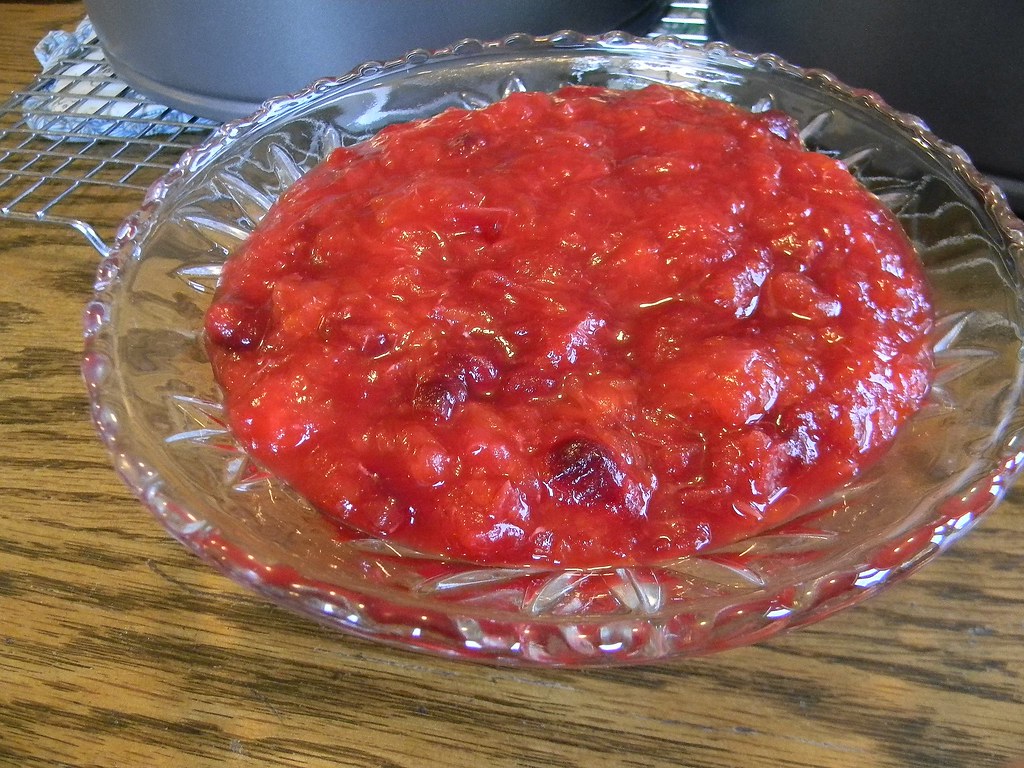
Given the author’s location in rural Quebec (on a third of an acre of land backing onto a maple forest), it is not surprising that a large quantity of honey and maple syrup is utilized – a fact that can cause some items like the delicious looking Chocolate-Beet Sheet Cake (p. 204) to be rather expensive for “city folk” to pull off. It is worth noting, however, that most of the maple syrup Wimbush-Bourque calls for is only in the “sugaring off” seasons, where most sugar shacks offer decent prices. Desserts aside, total sugars in Brown Eggs are kept to a minimum – usually no more than a few tablespoons, if any). Instead, fruit and naturally sweet vegetables are brought forward – a hearty serving of Honey Ginger Sweet Potato Puree (p. 225) only has ¼ tablespoon of the namesake sweetener, but it is worth noting that a dark, flavourful variety (chestnut is my favourite, while buckwheat is my mom’s) really shines through. Even the rich, smoky sweetness of the book’s Roasted Peach BBQ Sauce (p. 81) is almost exclusively from the caramelized, nectar-oozing fruit, augmented with apple juice and just a whisper of honey. I particularly enjoyed Wimbush-Bourque’s take on traditional cranberry sauce – Cranberry Clementine Relish (p. 224) – because it wasn’t cloyingly sweet, and was bright with the citrus, berries and a touch of vinegar. All the recipes I tried in this book were easy to follow, albeit slightly difficult to find in the sense that they are not organized within the sub-chapters by type (i.e. appetizers, mains, desserts). I haven’t tried any of the “basic” pantry items like the Mayonnaise (p. 35) or Strawberry-Honey Jam with Orange Zest (p. 152), but if the need arises I’ll know where to turn.

Cranberry Clementine Relish
Cranberry Clementine Relish (p. 224)
While full-on homesteading life is not for everyone, anyone can do one or two things to bring less processed, more local and overall delicious food to their table. Brown Eggs and Jam Jars by Aimée Wimbush-Bourque is definitely a fantastic place to start, and is gorgeous enough for any coffee table too!

Thursday, June 4, 2015

Bob's Red Mill Everyday Gluten-Free Cookbook: 281 Delicious Whole-Grain Recipes

Bob's Red Mill Everyday Gluten-Free Cookbook: 281 Delicious Whole-Grain Recipes
Publisher:  (2015)

Muffins. Cookies. Waffles. Burgers. All fundamental parts of day to day Western eating, and all packed chock full of the latest nutritional “baddie” – gluten. While the protein, found  in wheat, barley, spelt, rye, Kamut and triticale, is no danger to most people, for the 1% of the worldwide population living with celiac disease that pesky little molecule becomes a big, life-altering problem. Thankfully, the increased (if misguided) popularity of gluten free diets has opened up a whole world of whole grain flavour and nutrition, and companies like Bob’s Red Mill are doing their part to bring naturally gluten-free grains and pseudograins safely to the table. Their latest endeavour is a cookbook full of healthy, hearty fare, all written by Camilla V. Saulsbury of the blog Power Hungry: Bob's Red Mill Everyday Gluten-Free Cookbook: 281 Delicious Whole-Grain Recipes.

Everyday Gluten-Free focuses on giving readers the opportunity to enjoy great-tasting, satisfying and nutritious meals and snacks without relying on overprocessed stand-ins for bread and pasta. Noodles, in fact, are completely absent from the pages of Everyday Gluten-Free, and with the exception of two burgers, store-bought bread products are eschewed as well. Saulsbury relies instead on the array of gluten-free whole grains and whole grain flours Bob’s Red Mill offers to create treats like Olive Oil Cake with Cherries and Dark Chocolate Chunks (p. 304), Mushroom Quiche with Teff Crust (p. 202) and even French Crepes (p. 56). Most of these, especially the ones involving baked goods or batters, use Bob’s Red Mill’s signature packaged  “all purpose flour” blend – however, a quick websearch will point you to any number of satisfactory flour combinations you can make at home and keep in stock (personally, I recommend these two).  

Something I particularly like about Everyday Gluten-Free is that the recipes are not only celiac-friendly but generally nutritious as well. While I wouldn’t suggest cooking a brand new recipe from the book in the middle of a hectic weeknight – learning some of the more unusual ingredients, methods and spices is a task more suitable for a lazy weekend – once you find a few favourites  dinner can be just as fast as “regular” meals. An extra bonus is that the book’s recipes tend to contain more fibre and whole foods than the Standard American Diet, so you can have your meal and eat it too! This book is not a vegetarian tome, but there is a sizeable chapter of Meatless Main Dishes (p. 179) is included and many other chapters feature a majority of vegetarian items as well. I even had success with converting a few baking recipes in Everyday Gluten-Free to vegan or eggless goodies, making the goods safe for the other food allergies in my taste-tester group.

Like most other books published by Robert Rose, Everyday Gluten-Free has limited photography. The photos that are present in the book are curated into four “blocks”, which are worth a perusal on their own. While not every recipe is photographed, Colin Erricson manages to cram enough mouth-watering images into such a restricted space that it tempts the reader into trying the others as well. After spotting the Chorizo, Kale and Teff Soup (p. 118) mug (bowl?) shot, I was inspired to cook up a few batches of soup myself. 

Bob's Red Mill Split Pea Soup
Split Pea Soup with Chia Chutney (p. 103)

I was pleasantly surprised by the flavour and texture of Saulsbury’s take on Split Pea Soup with Chia Chutney (p. 103) – split pea soup is a favourite around here and the zippy elements of lime, ginger and cilantro elevated it to another plane. Since transport and easy enjoyment of these soups was the name of the game for us (who took Thermoses to work), I swirled the elements of the Chia Chutney into the whole pot at the end, adding an extra layer of oomph in every spoonful. I also used some pre-roasted and frozen beets from last year’s garden to whip up the Amaranth Beet Soup (p. 83) with some flair of my own – blood orange juice and shawarma spices. While these recipes were delicious, what was strongly lacking in both was salt. Most of the recipes in Everyday Gluten-Free lack this ingredient, which is a disservice to the flavour potential the whole grains, legumes and produce offer. I’m not asking for heaps of sodium chloride, but a hefty pinch of Kosher salt really turned the soups I made from vegetable water into a hearty, flavourful meal. The other issue I found with the savoury dishes, at least, was with the stated yields – the soup recipes created 10-12 respectable main course servings, rather than the 6 Saulsbury documents. Luckily, we are a family who enjoys leftovers, but if your household is more into one-shot cooking, keep the scaling of recipes in mind!

Beet and Amaranth Soup
Amaranth Beet Soup (my version)(p. 83)

Everyday Gluten-Free is somewhat more than a run-of-the-mill cookbook, even a gluten free one. The introduction is a hefty 32 page exploration of gluten-free grains, including their history, flavour, cooking techniques and nutrition, as well as a section on fleshing out the pantry with staple goods and even measuring ingredients properly. For those who already follow a gluten-free diet due to celiac or gluten intolerance, this read is mostly review. However, for those just jumping on the gluten free trend or  who simply want to cook with more whole grains, it is a fabulous beginner’s resource. What I particularly liked was that the author gave a few different methods of cooking the grains, and included important ingredients for any healthy pantry such as legumes, nuts and seeds.

There are so many tempting treats in Bob's Red Mill Everyday Gluten-Free Cookbook: 281 Delicious Whole-Grain Recipes that it is hard to pick a single favourite. Moreso, this book is a fantastic point of inspiration and basic methodology for readers to develop their own spins on old favourites. Who knows, the language of delicious, nutritious whole foods may just become your (gluten free) bread and butter!

Thursday, February 26, 2015

The Vegan Pantry: More Than 60 Delicious Recipes for Modern Vegan Food

The Vegan Pantry: More Than 60 Delicious Recipes for Modern Vegan Food
Author: Dunja Gulin
Publisher: Ryland Peters & Small (2014)


My family, like so many these days, is a mixed bag of backgrounds, traditions, habits and – not the least – diets. The “man of the house” (who is the only man in the house!) is a true omnivore. He loves almost every fruit or vegetable out there, but is hard pressed to call a plate of animal-free food a “meal” no matter how hearty it is. My (not so) little sister would happily live off pancakes and pasta every day, but for my mom and I vegetable-based main dishes are the rule rather than the exception. Neither of us are “true” vegetarians (we both eat fish, and she eats meat in small amounts), but we are not opposed to vegan food as the bulk of our dining routine. Part nutritional, part economical and part sustainable, a totally vegan diet can also be completely delicious, varied and manage to fill any craving you might have. Dunja Gulin, author of The Vegan Baker, sets out to prove this very fact in her cookbook The Vegan Pantry: More Than 60 Delicious Recipes for Modern Vegan Food.

Without manifesto, pomp or harassment as to the “evils” of a meat-inclusive diet, Vegan Pantry is precisely the same style as any other cookbook in terms of it’s organization and language. Shying away from overly processed meat and cheese analogues, Gulin shows how vegetables, whole grains and legumes can form delicious and filling frameworks for a variety of meals – including comfort fare such as Lentil Moussaka (p. 61), elegant Polenta Tarte Flambee (p. 65) and even a hearty Goulash (p. 53). Many of the recipes in this book are gluten-free as well, giving this book an added bonus for people cooking for mixed company. It’s hard to believe that any of the dishes are missing anything – and truly, they aren’t, since the choice to live any sort of dietary lifestyle is one that should be filled with enjoyment, not focused on sacrifice.

Of course, healthy (or “alternative”) food doesn’t always look too gourmet – but William Reavell does the recipes in Vegan Pantry justice with his stunning, full-colour photographs. Even tofu-phobics will crave a colourful Tofu Scramble (p. 35) or Curry (p. 49), and the Vegan Caesar Salad (p. 93) looks decadent enough to make anyone crave a bowl of greens. I can’t promise that every dish that came out of my kitchen while cooking through this book looked as spectacular, but then again, the taste had me coming back for more!

He major stumbling block that most would-be vegan cooks face is the sheer amount of time that most whole-food preparations take. Vegan Pantry is not immune to this, unfortunately, as many of Gulin’s recipes require advance soaking, grinding, chopping or even secondary recipe preparations before a relatively brief “final assembly”. While I would never discount the book entirely based on that detail alone, some simpler and more approachable items would benefit busy households or working parents who are considering this lifestyle.

I thoroughly enjoyed making and tasting a host of things from Vegan Pantry, including the Pure Energy Bars (p. 39) and the Strong Flavoured Tomato Sauce (p. 99). The Gooey Chocolate Cookies (p. 127) are on my must-make list as well without question, since even with the time constraints they look decadent enough to eat off the page. The success of everything I’ve made so far also gives me confidence that more complex projects will turn out equally well. One of the major “pluses” of Gulin’s recipes is that most of them make fantastic leftovers (or freezer meals) as well. He filling in the Soft-Shell Veggie Tacos (p. 62) lasts a week in the fridge and is divine mixed with rice or pasta, as well as being reheated in its original “taco” form. The deserts themselves last in the fridge or freezer too, and if they aren’t gobbled up the second they’re served, a serving makes a fabulous snack or weeknight treat.

Whether you’re a long-term plant based foodie, or simply trying out a few meat-free menus during the week, you’re sure to find something to tempt you in Dunja Gulin’s The Vegan Pantry: More Than 60 Delicious Recipes for Modern Vegan Food. From breakfast to dessert, delicious, nutritious and relatively simple meals are just a page-turn away.

Sunday, February 15, 2015

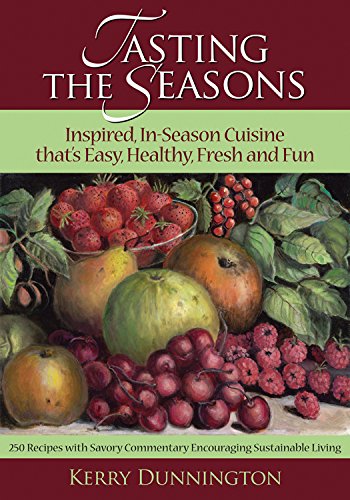
Tasting the Seasons: Inspired In-Season Cuisine That's Easy, Healthy, Fresh and Fun

Tasting the Seasons: Inspired In-Season Cuisine That's Easy, Healthy, Fresh and Fun
Author: Kerry Dunnington
Publisher: Artichoke Publishers (2014) 

I am a huge fan of local, seasonal cooking, placing an emphasis on whole foods and sustainable goods over those labeled "organic". Cookbooks are capitalizing on the idea that seasonal eating often means better-tasting, less-expensive food, including Kerry Dunnington's new book Tasting the Seasons: Inspired In-Season Cuisine That's Easy, Healthy, Fresh and Fun. The book shares 250 recipes and is designed to inspire a sustainable approach to cooking and, in particular, entertaining.

The chapters in Seasons include appetizers, "enhancers" (essentially sides), breakfast and lunch, hearty as well as light soups, vegetarian and pescatarian main dishes, red meat, chicken and pork dishes, cold and warm vegetable dishes, baked goods and desserts. There is also a resource list, as well as a section on choosing and preparing food with an ecological mindset.

Looking through this book, it is clear that Dunnington is more of a catering chef and tree-hugging environmentalist than a true seasonal cook. While the majority of the recipes could certainly be prepared with some seasonal and locally fresh items, the message is mixed due to her inclusion of hard-to-find or specialty store-bought ingredients that are impossible to substitute. Two recipes, for example, call for "Winter Sippers Hot Buttered Rum Mix" - a prepackaged mixture of mystery ingredients that you have to order online, and only during certain months of the year. While I can appreciate that it may lend flavour to a certain dish, I would have appreciated an easy to find ingredient list with a suggestion of a pre-mix, rather than providing no alternate at all. I also applaud the author's clear belief in local eating, but a certain amount of globally available components need to be included, since it's impossible to assume every cook has reliable access to Dunnington's marketplace. 

The dishes in the book are certainly flavourful and easy to prepare - in particular, the soup dishes in Seasons pack a punch and are perfect for this time of year. However, the organization of the book could use some work (for example, using the labels "Fish" and "Vegetarian" for two separate chapters of recipes rather than a catch-all "Pescetarian" title) and since recipes are not organized according to the seasons (a reasonable assumption, given that the book is internationally distributed), the premise of the book is somewhat lost. Truly, this could just be another cookbook of delicious, entertaining-friendly fare, which while perfectly deserving of appreciation is not necessarily helping the reader with "Tasting the Seasons" as implied.

Available on Amazon

Saturday, March 15, 2014

Homemade Condiments: Artisan Recipes Using Fresh, Natural Ingredients

Homemade Condiments: Artisan Recipes Using Fresh, Natural Ingredients
Publisher: Ulysses Press (December 3, 2013)

Most people can’t bear the thought of being without their condiments. The ability to doctor up the taste of relatively bland foods like chicken, tofu, pasta and rice, or disguise unwanted flavours (think of children and their vegetables) opens up a world of possibilities. With a simple change of sauce, a dish can travel from the United States to Russia, Germany, Thailand, France and Argentina without ever leaving the ground. However, most sauces and seasonings you find in the stores these days are laden with ingredients you’d rather not have – from long-maligned MSG to HFCS and a host of other acronyms and chemicals, it’s a wonder we haven’t all turned into the pickles we enjoy on our burger. In response to our super-processed life, a new trend has started towards homemade ingredients. Food writer Jessica Harlan is one of the promoters of this movement and dishes up 75 delicious, wholesome alternatives to the grocery store in Homemade Condiments: Artisan Recipes Using Fresh, Natural Ingredients.

Homemade Condiments is definitely not a book dedicated to doctoring up storebought food, nor is it limited to simple fare. The 123 pages run the gamut from Ketchups (p. 9) to Salad Dressings (p. 77), Sweet Sauces and Spreads (p. 103) and even Ethnic and Specialty Ingredients (p. 89). In each chapter are a multitude of recipes – for example, eight different ketchups (from Fresh Tomato (p.10) to Southwestern Tomatillo (p. 19)) and six types of mustard (my favourite being the Grainy Porter (p. 37)) are all unique in their ingredients and methods and all suit different purposes. Readers may discover a new love where the idea never existed before, or be able to re-create an old standby remembered from the Mom & Pop shops, before mass processing took away many of the small producers. Like all responsible “canned food” cookbook authors, Harlan includes an Appendix with notes on Food Safety and Canning (p. 116), Resources (p. 122) and Conversion Charts (p. 123). She also provides a brief but highly useful Introduction with sections regarding Setting Up Your Pantry (p. 3) and A Well Equipped Kitchen (p. 5), something that should be required reading for all budding home sauce-makers.

One of the best things about this book is that Harlan is realistic in terms of ingredients. Even in my small-town grocery store, I was able to find all the components I needed to make Asian Quick Pickles (p. 52) and Hoisin Sauce (p. 97), and it only took a quick trip to the Asian grocery one town over to find mirin (rice wine) for the Teriyaki Sauce (p. 96) recipe. However, if I was unable to find mirin, or found the fresh produce used throughout Homemade Condiments lacking in terms of quality, quantity or economy (which often happens in the winter!), Harlan offers substitutes that may be easier to find or more cost effective while maintaining the best flavour possible – including the use of high-quality canned tomatoes or individually quick frozen fruit. Thanks to those options, there is no reason to put off trying a recipe in Homemade Condiments that piques your interest.

If you’ve been longing to find that “secret ingredient” to jazz up your weeknight meals, take a browse through Jessica Harlan’s book Homemade Condiments: Artisan Recipes Using Fresh, Natural Ingredients. You’ll be sure to find at least one new fridge staple to call your own, and check off your shopping list permanently.

Available on Amazon