Showing posts with label Robert Rose. Show all posts

Tuesday, March 27, 2018

Aquafabulous!

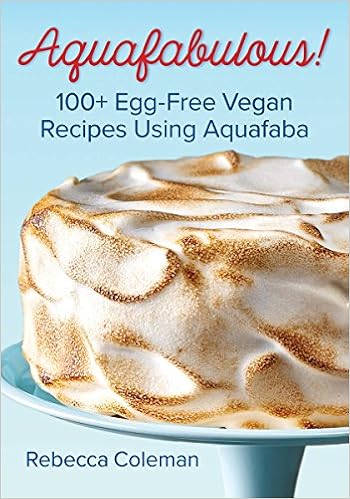
Aquafabulous!: 100+ Egg-Free Vegan Recipes Using Aquafaba
Publisher: (2017)

Vegans and egg-free foodies are singing the praises of a new egg substitute. Aquafaba – also known as bean liquor or the brine found inside cans of legumes like chickpeas or cannellini beans – is versatile, low-calorie and found in almost every home. Instead of draining beans down the sink, aquafaba converts have turned the liquid into meringues, waffles, crepes and even mayonnaise. Rebecca Coleman has compiled a collection of vegan recipes using both aquafaba and the beans that make it in her book Aquafabulous!: 100+ Egg-Free Vegan Recipes Using Aquafaba.

As can be expected from any Robert Rose book, Aquafabulous! begins with a highly detailed introduction to the topic, including manufacturing and storing homemade aquafaba. Coleman also includes a “vegan pantry” listing of ingredients common in her recipes, including miso paste, nutritional yeast and tofu. While the book is exclusively vegan, even cooks new to the cuisine will be able to turn out flavourful and satisfying meals once they peruse the chapter. Each chapter has it’s own table of contents, making browsing through the book simple, and a well-referenced index helps users look up a specific recipe. The chapters are categorized by meal type (e.g. Breakfast, Baked Goods and Mains), although the author mentions her own three classifications of recipes in the introduction. Aquafabulous!, according to Coleman, can first be categorized into vegan “basics” – things like making your own aquafaba, non-dairy milks and other “recipes for recipes” that form components for meals later in the book. Second, there are recipes using the aquafaba itself – either in breading preparations (e.g. Grown-Up Tater Tots (p. 76)), as a binder (e.g. Vegetable Fritters (p. 60)) or for leavening (e.g. Chocolate Mousse (p. 173)). These recipes are what readers generally search for when they pick up a book on aquafaba – it’s one thing to loud the possibilities of this bean liquid, but quite another to put it to use practically. Lastly, Coleman provides recipes to use up the “by product” of aquafaba procurement: the beans themselves. Chickpea Curry (p. 100) is a bright, not-too-spicy main dish that uses exactly 1 (16 oz.) can of chickpeas – although those of us in Canada are more used to the 19 oz. cans, which work just fine.
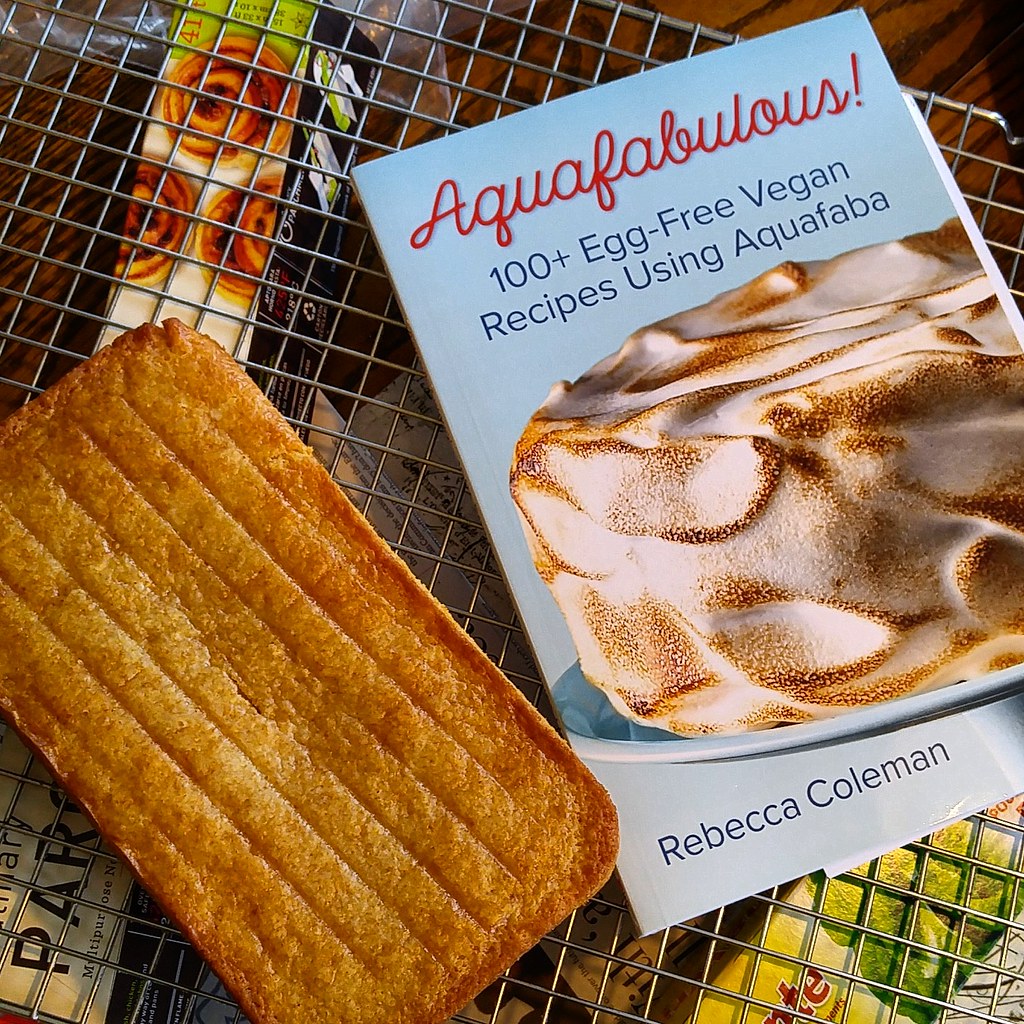
Aquafabulous!

The book is clear about where aquafaba’s strengths are: the baking world. The whipped foam was miraculously like beaten egg whites in cakes and muffins, adding lightness and a rather fine texture in most cases. Meringues (p. 144) were ethereally light – provided they were made on a dry day and not in the middle of a snowy winter day. Heavier batters, like the Lemon Rosemary Polenta Cake (p. 150), just weighed the foam down however, becoming a dense, somewhat oily but nevertheless tasty snack suitable for afternoon tea or as a sweet-savoury dessert after a heavy meal. However, I should note that with simple, relatively one-note flavours such as those in meringues, it is critical that a light, low-flavor bean is chosen. Cannellini and chickpea brine is ideal for most applications, as it adds neither colour nor any perceptible “bean” flavor. Black or kidney bean brine can be used, regardless of what mainstream aquafaba converts say, but they are best suited for richer flavours like chocolate (in Decadent Chocolate Brownies, p. 160) or spices (Carrot Cake, p. 152).
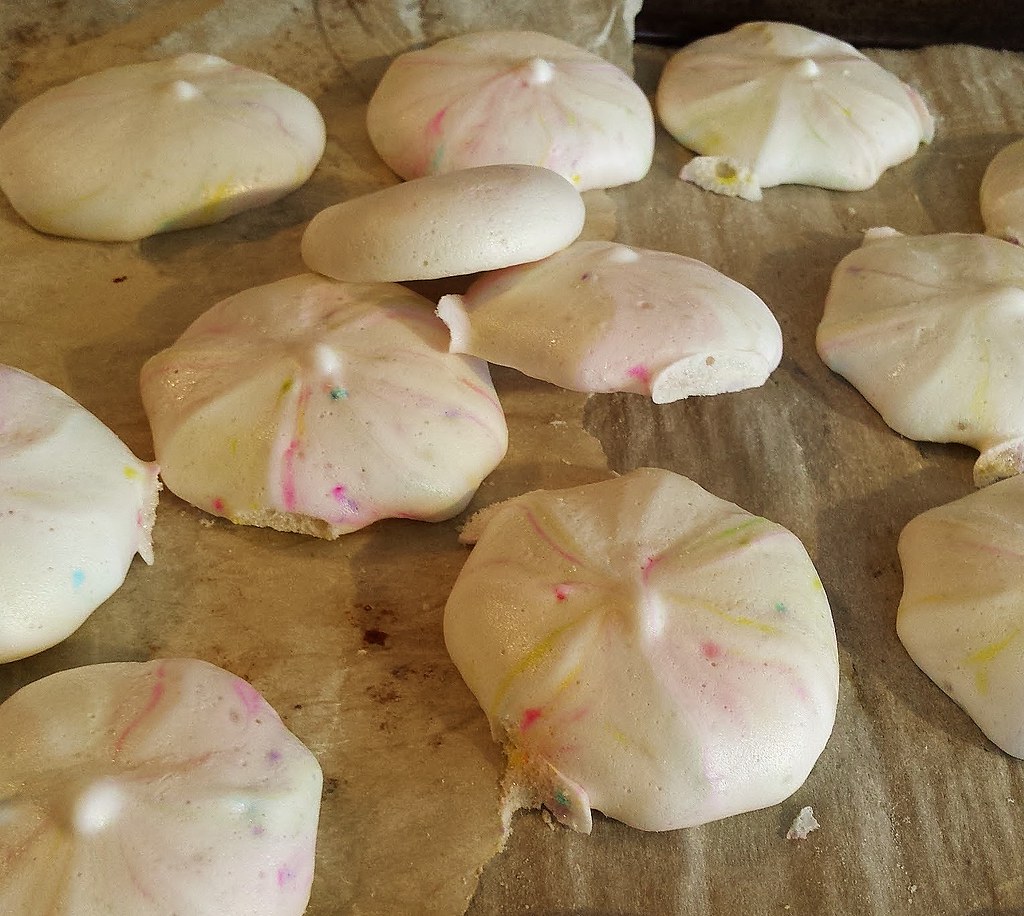
"Cake Batter" Aquafaba Meringues

While there are certainly many aquafaba-containing recipes in this book, the star ingredient can be difficult to locate at times. Some recipes have the aforementioned “basic” components made from aquafaba as a condiment, others have no aquafaba or beans at all, which is highly confusing. If I am going to buy a book about a subject, I would expect a compilation of information and practical applications for the topic at hand. In this respect, Aquafabulous! is best described simply as a vegan cookbook, not one dedicated to the craft of cooking with the title ingredient.

Aquafabulous!: 100+ Egg-Free Vegan Recipes Using Aquafaba is definitely a good buy for those embracing a vegan diet, or who wish to find an innovative way to bake egg-free. There are enough aquafaba recipes to be useful for beginners, but those looking for a more in-depth manual will find the information and innovation lacking. Rebecca Coleman shows promise as a cookbook author and I look forward to seeing further cookbooks from her.
Thursday, July 20, 2017

175 Best Small Batch Baking Recipes

175 Best Small Batch Baking Recipes
Author: Jill Snider
Publisher: (2017)

My family is not huge on sweet things. Sure, they’ll have the occasional cookie or slice of pie on a special occasion, but “dessert” most nights is a bowl of yogurt with honey, cocoa and berries. That said, I love to bake more than anything else – and finding a compromise between assuaging my desires and having the freezer overflow is tricky. That’s why I was excited to try out Jill Snider’s book 175 Best Small Batch Baking Recipes, which claims it makes “[t]reats for 1 or 2”.

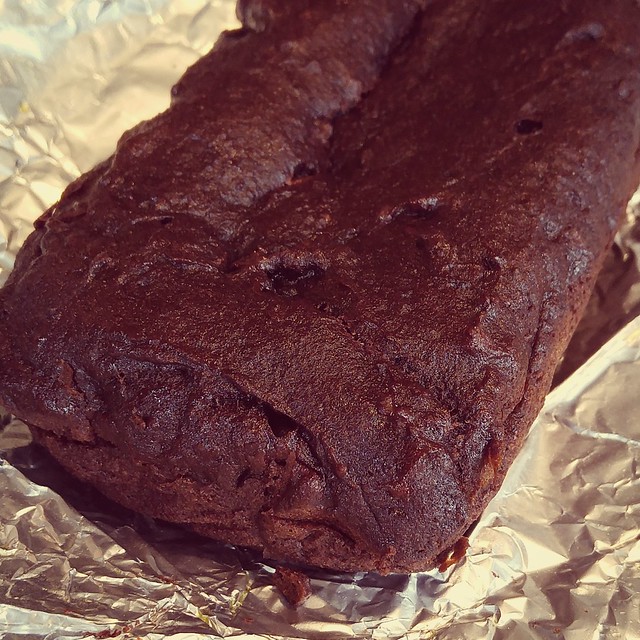
Gluten Free Chocolate Banana Cake
Gluten Free Chocolate Banana Cake (p. 246)
Small Batch Baking has everything a “sweet kitchen” baker could ask for in a cookbook. Myriads of cookies, from biscotti to shortbread, no bake bars to brownies and fruit squares, muffins and loaves are all part and parcel here. There are also mini pies and crumbles, gluten free options, and even cheesecakes are presented in adorable miniature. For the most part, Snider does not ask for specialty baking pans (the cheesecakes, however, need a 6” springform) and the ingredients are common and generally inexpensive. I enjoyed the fact that brownies, bars and cakes here use loaf pans for form, making slicing even easier and making everything look like a “Bûche de Noël” when frosted. The ability to make just 6 or 8 cookies, instead of 40, was also greatly appreciated – and it allowed me to offer more than one variety in a gift basket!

The first treat I made from this book played highly to my love of cooking and baking for specialty diets. The last recipe in the book, Gluten Free Chocolate Banana Cake (p. 246), was easy to put together (even for my mom, a novice in allergy-free baking) and didn’t call for specific flour mixtures that can be tricky to find. Snider even gives a tip on substitution in the sidebar (and experienced gluten free bakers will be able to swap things in and out on their own). Many such sidebars are peppered throughout the book, and are always worth a read. The cake was, in a word, decadent – perfectly chocolatey, with a hint of banana flavour (if I wanted more of the fruit to shine I would roast the banana first) and a moisture that survived freezing, thawing and traveling for hours in the car. I opted not to frost the cake since I was transporting it, but the Banana Butter Frosting (p. 186) that was suggested (again in the sidebar) sounded divine. That frosting was just one of the six frostings and glazes offered in the book, again scaled down to practical use size.

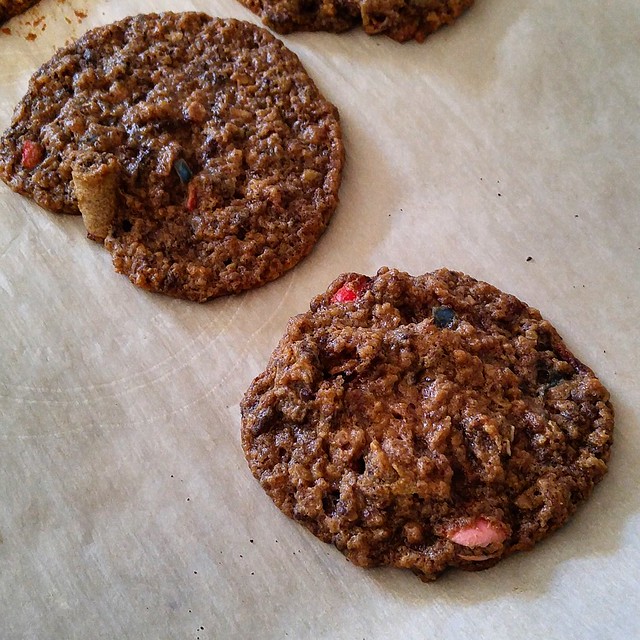
I also tried another unique recipe from Small Batch Baking – Judie’s Chocolate Chip Cookies (p. 63). The recipe called for lard, which I substituted for home-rendered tallow, giving the cookies a slightly “doughnutty” aroma. The author states that the cookies are “soft”, but I found that even at the minimum bake time they spread and became crispy, almost wafer-like. The recipe never called for chilling the dough, as most cookie recipes do these days, and in retrospect I should have given the oats that were also in the batter. The flavour, however, was delicious and rich, if a tad greasy, and they were a hit with both adults and kids alike.

"Judie's Chocolate Chip Cookies"
Judie’s Chocolate Chip Cookies (p. 63)

I’m happy that a baking book exists for small families and people who (like me) just can’t stay out of the kitchen. 175 Best Small Batch Baking Recipes will definitely be put to use during the holiday gift-giving and potluck season, and I look forward to picking out some favourites for my household in the meantime.

Available on Amazon

Tuesday, April 4, 2017

The Essential Home-Ground Flour Book

The Essential Home-Ground Flour Book
Author: Sue Becker
Publisher: (2016)

As someone working off a teaching assistant (and soon to be university student)’s income, I don’t often go out of my way to purchase tools with only a single use or purpose. I grew up making bread at my mother’s hip, and since I was blessed with a high powered professional stand mixer as a gift, making bread (almost) every week has remained my passion. I’ve always loved artisan-crafted baked goods, and used to buy stone-ground flour from a local mill – which tasted fantastic but commanded a hefty price. When Sue Becker’s book The Essential Home-Ground Flour Book arrived on my doorstep, I was intrigued – although devoid of a mill. Luckily, this book managed to help solve that problem (and many others) along the way, all while offering inspirational recipes I couldn’t wait to try.

So, you’ve decided to mill your own flour. Why, what type of mill should you choose, and just how do you go about it? Part One of Home Ground Flour is 93 pages worth of information on the subject, from the benefits of doing it at all (read: cost, nutrition and flavour) to the history of milling, suitable grains and finally the actual devices themselves. It was Chapter 4 – Tools and Equipment for Home Flour Milling (p.37) – that intrigued me the most. I knew about burr mills for coffee and spice grinding, but never used micronizing ones. If I win the lottery, one of those super-powered, lightning fast beasts is definitely on my wishlist! Instead, I lucked out with a great deal on a Mockmill, a stone-grinder style of attachment for my mixer – and the purchase of a (relatively) high priced tool is something no cookbook, blog or cooking show has ever convinced me to consider.

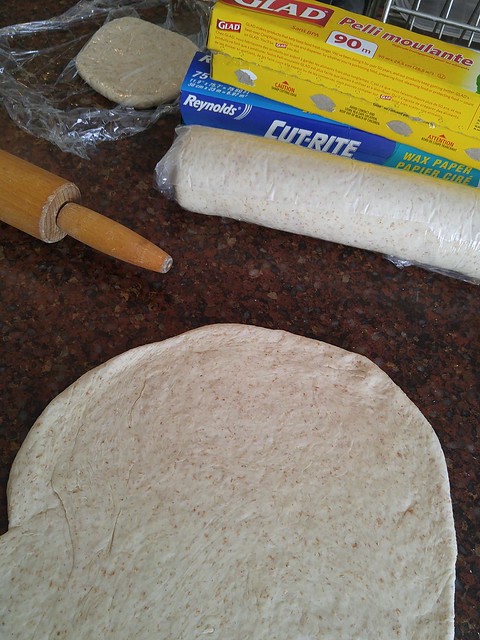
Home Ground Flour Pizza Dough
Basic Whole Grain Pizza Dough (p. 174)
Once equipped, and having read the entire first part (including the incredibly beneficial tip boxes lining the margins), I armed myself with a kilo of barley grains and got to work. According to Becker, I had enough grain to mill 6 cups of flour – which was almost dead on. I also tried my hand at grinding farro, spelt, brown rice and even lentils (note: don’t grind anything not approved by your mill’s manufacturer!). I transformed a bunch of the barley flour into various loaves of bread that weren’t found in this book, but immediately noticed a difference in the way the dough behaved and tasted. Freshly milled flour, provided the grains aren’t stale, made for a slightly sweeter, more tender loaf in my experience, and with cookies you could really taste the nuttiness of the grain all the way through (perfect with oatmeal doughs!).

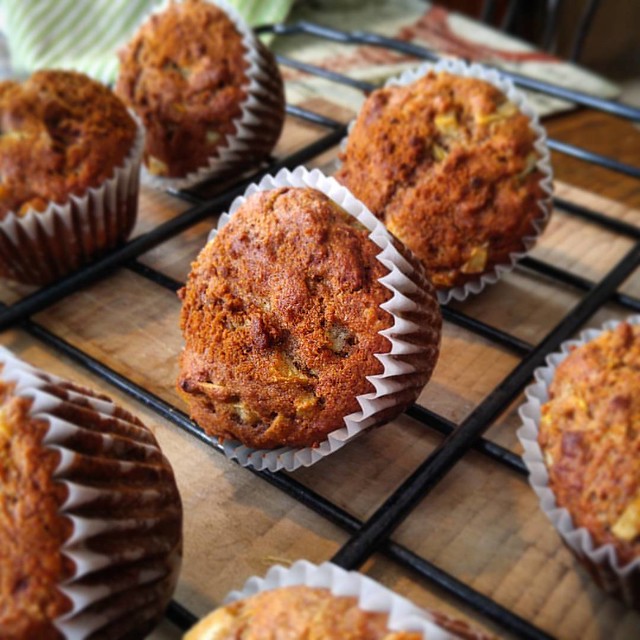
Finally, I got around to a few of my ear-marked choices in Home Ground Flour. The first was a batch of Apple Cinnamon Muffins (p. 182). I used a combination of locally milled sprouted wheat flour and home ground farro, which was a lovely complement to the flavours of the (again, local) honey that exclusively sweetens them. Each bite was peppered with bits of apple and the spice wasn’t overwhelming, which is always refreshing for a muffin recipe! Next, as a preparation for one of my upcoming Home Economics classes, I made a few batches of Basic Whole Grain Pizza Dough (p. 174). If you need convincing as to how much yeast loves freshly exposed endosperm, this is the recipe – the dough rises impressively fast, and doesn’t taste unpleasantly “yeasty”. Even though there’s no sugar in the dough, the baked crust had a hint of malty, almost honey-like flavour. Definitely a keeper in my book.

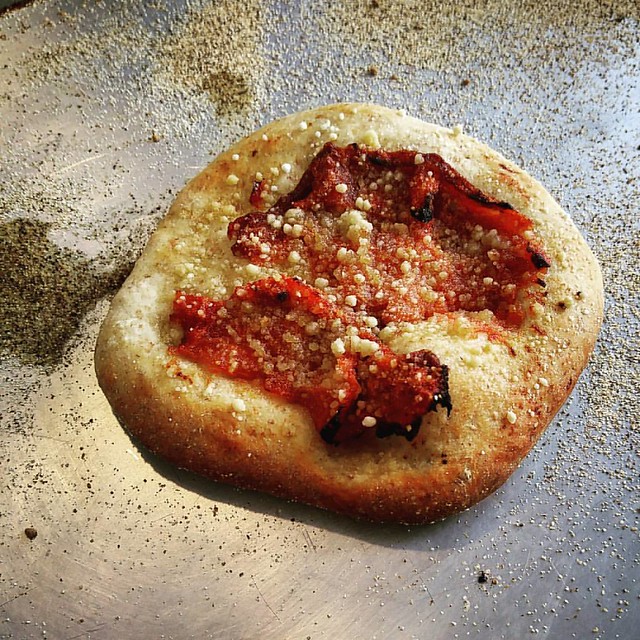
Tomato Confit Mini Pizza
Mini-Pizza with Basic Whole Grain Pizza Dough (p. 174)

I can’t wait to keep experimenting with Sue Becker’s The Essential Home-Ground Flour Book. It has not only provided a solid base of information to start me off on my home grinding journey, but also opened my eyes to the true differences between the bag from the store and right from the grain. If you appreciate bread (making and eating), want to support local grain farmers or simply have a desire to eat more nutritiously, check this book out. You will not be disappointed.


Apple Cinnamon Muffins
Apple Cinnamon Muffins (p. 182)

Tuesday, March 14, 2017

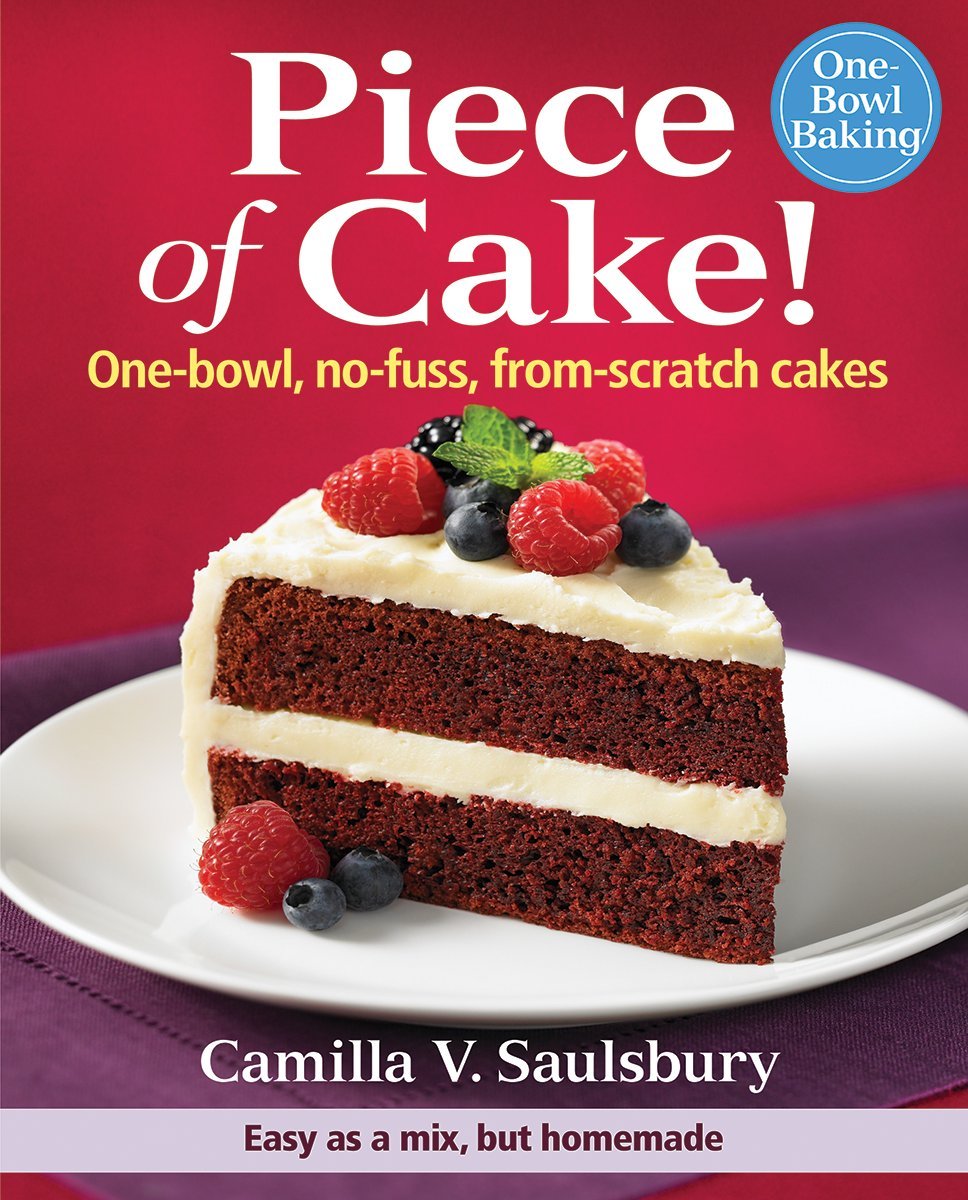
Piece of Cake!: One-Bowl, No-Fuss, From-Scratch Cakes

Piece of Cake!: One-Bowl, No-Fuss, From-Scratch Cakes
Publisher: (2011)

I pride myself on making cakes from scratch. A few times a year, I’m able to get really fancy and go all-out with an elegant layer cake with homemade frosting, or a super-rich cheesecake that fills a craving with only a sliver. The rest of the year, though, I like to bake low-fuss, low-mess cakes with minimal adornment – and no box mixes. Camilla Saulsbury seeks to fill this niche with her book Piece of Cake!: One-Bowl, No-Fuss, From-Scratch Cakes.

This book claims to alleviate many of the sticking points that prevent home bakers from making cakes from scratch – recipes here don’t need multiple bowls, creaming, separating eggs, alternating dry and wet addition or sifting. In fact, the roughly 240 pages of recipes in Piece of Cake kick off with the classic, almost never-fail Wacky Cake (p. 12). The cakes are, for the most part, designed to be incredibly simple in their presentation, although Saulsbury does include over 50 recipes for various topping (i.e. icings, glazes, and sauces). For the truly new cake-bakers, this book contains a lengthy introduction covering ingredients, equipment and techniques. Reading this section is 100% optional for those who have baked at least a few times in their lives, but if not, I strongly suggest a perusal.

My favourite part about this book is that Saulsbury includes homemade cake mixes for both “conventional” and “vegan” cakes. While almost any cake can be converted into a dry mix (just by mixing the dry ingredients in a bag separately), Saulsbury’s recipes also include the solid fat component, so much like a conventional baking mix all you’d have to do is add eggs, milk and a touch of oil to have cake any time. I tried the Yellow Cake Mix (p.42) and have to say a food processor is definitely the best way to go here. I did find the cake a little denser than storebought mix, and it took a little more time in the oven than I’m used to – I think this is the result of the book’s mix only calling for 2 eggs instead of three.

My problems with the cake outcomes continued when I went to make a classical favourite here: lemon cake. Titled grandly as Luscious Lemon Loaf (p.73), I had high hopes for this as a perfect accompaniment to tea with guests. Unfortunately, all the liquid in the cake (3 eggs, 1 cup of sour cream and ½ cup of oil) simply caused the “luscious lemon cake” to turn into mush, which burned on the outside while never baking through. After that failure, and my previous experience with the cake mix, I was very wary about trying anything else from this book as I don’t want to waste ingredients. However, I will continue to use the recipes as bases for my own modifications and ideas, as they are plentiful here.

While I may not have found cooking from this book to be easy, Piece of Cake!: One-Bowl, No-Fuss, From-Scratch Cakes does contain solid knowledge of basic baking techniques and plenty of fodder for would be bakers to build on. I highly suggest learning what batters and ratios should look like before attempting anything in this book so as to avoid disappointment.

Available on Amazon

Wednesday, January 4, 2017

Bake Something Great! – 400 Bars, Squares & Cookies

Bake Something Great! – 400 Bars, Squares & Cookies
Author: Jill Snider
Publisher: (2011)

I’m a bona fide baker – not only is it my passion to whip up cookies and brownies on the weekends for friends, family, and sometimes complete strangers, but I bring that joy every week to my classroom when I teach Home Economics for grades 1-8. I even trained in baking at one of the renowned Toronto culinary colleges. Suffice it to say, sugar and flour live in my bones. So of course, the possibilities of a cookbook declaring it’s “great” recipes excited me – after all, for me the only thing better than eating baked goodies is actually making them! Jill Snider seems to agree with those of us who are baking-crazy, and penned Bake Something Great! – 400 Bars, Squares & Cookies to prove it.

Bake is packed front to back with recipes designed to suit almost everyone’s tastes. Chapters range from Brownies and Drop Cookies to Nut Bars and Squares and Shaped Cookies and Biscotti. There are even special sections for Cake Mix, Holiday, kid-friendly and “Good for You, Too” treats, and each recipe has a handy tip in the sidebar for success in baking. Many of the recipes also offer variations to try or suggestions for “jazzing up” a baked good as well. Truly novice bakers will appreciate the thorough introduction, including a 6-page primer on “Baking for Success” (p. 6) which covers everything from baking pan composition (shiny vs. dark vs. glass), small appliances like mixers and food processors and parchment paper (indispensable in my kitchen) to the methods of cooling, cutting, storing and freezing. My personal favourite area of this chapter is a chart that details just how many bars or squares you can get out of the most common pan sizes – the multiplication is done for you!

With such a strong introduction, and being packed with full-colour photographs, I couldn’t wait to see what I could make. I started with Classic Peanut Butter Cookies (p. 342) – which definitely had more ingredients than the classic, back-of-the-jar one I’m used to but also had the added interest of chopped peanuts in the dough. While I liked the flavour the cookies had, they were too sweet for my taste, spread a fair bit and also left a greasy mouthfeel. If I was to make these again, I would drastically reduce the butter and cut the granulated sugar in half, possibly cutting both sugars in half if I used honey-roasted nuts as well. The cinnamon seemed out-of-place here as well, but that could be personal preference. 

Date-Fig Bars
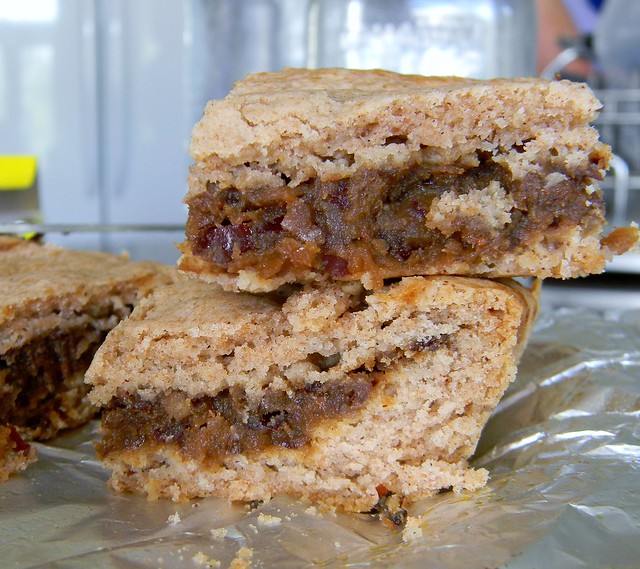
Fabulous Fig Bars (p. 200) - original on top, modified on bottom
Next, I went for one of my personal favourites from childhood – Fabulous Fig Bars (p. 200). Encouraged by the photo (featuring equal thicknesses of cookie and fig layers) I set out creating them. However, the ingredient amounts for the cookie component did not yield nearly enough dough for a bottom and top crust, even when I rolled it thinner than the photo showed. It was also very hard to work with – dry and crumbly, not so much a cookie dough as a crumb topping – and I needed to add milk to the recipe to get it to come together. Later, I made a second batch (doubling the crust mixture, reducing the total sugar to ¾ cup and adding about 3-4 tablespoons of milk) which fared much better. Again, the flavours were present, but overall the experience was disappointing.

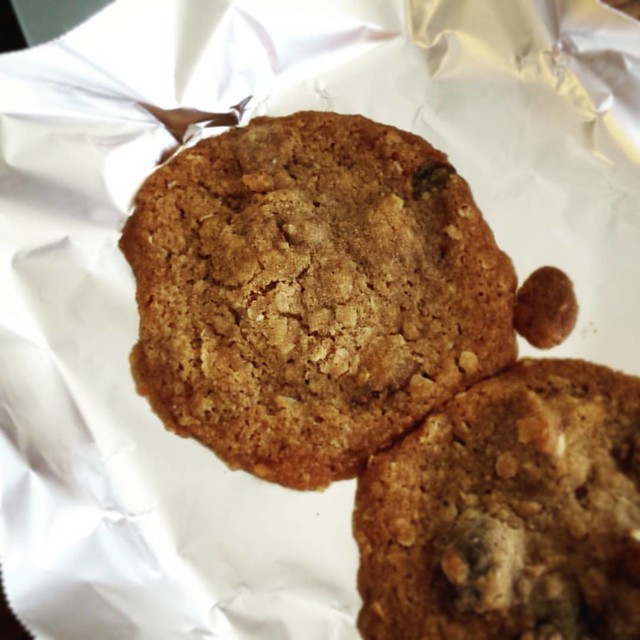
Hmm... not what I expected #followingarecipetoatee #semifail #cookies #chocolate #chips #chocolatechip #yum #food #cooking #baked #baking
Judie’s Chocolate Chip Cookies (p. 359)
Not to be completely deterred, I settled on making one of the basics found in every baking book – the chocolate chip cookie. Specifically, I tried to make Judie’s Chocolate Chip Cookies (p. 359), which looked promising and incorporated oatmeal for a hint of texture and flavour. I also liked this recipe because it utilized shortening – something my mom swears by in her chocolate chippers and an ingredient I partially use in mine. I figured the shortening, and lack of white sugar (it’s all brown) would keep a control on any potential over-spread. However my first batch – baked right away rather than chilled as I normally do for cookies – spread all over the cookie sheet into a crunchy, greasy mess. Frustrated, I chilled the second half of the batter, but it still gave me similar issues – crunchy, crumbly and greasy, with way too much spread.

While I’m not sure my experiences mimic every recipe in the book, I can say that from my perspective Snider needs to go back to the testing kitchen and rework many of the formulae in Bake Something Great! – 400 Bars, Squares & Cookies. As a cookbook seemingly designed for all bakers, including beginners, the amount of modification necessary to make the recipes “work” seems to be a bit much. Regretfully, I will go back to baking up my own recipes and leave this book on the shelf.

Available on Amazon

Friday, December 23, 2016

The Chile Pepper Bible: From Sweet to Fiery and Everything in Between

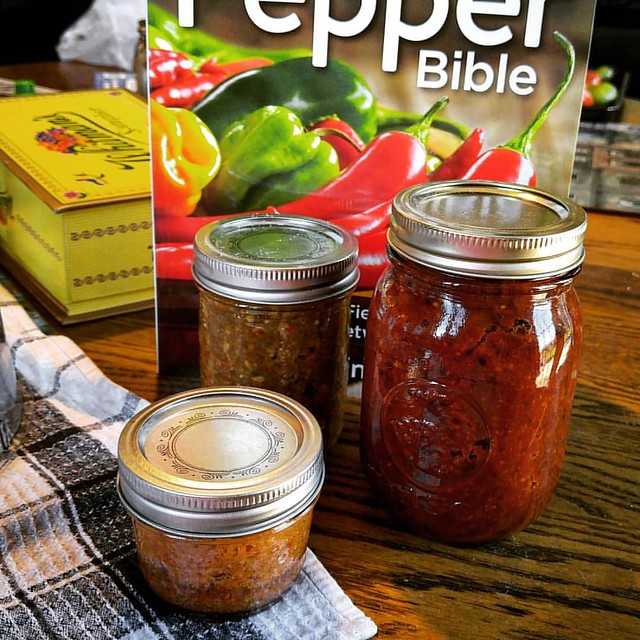
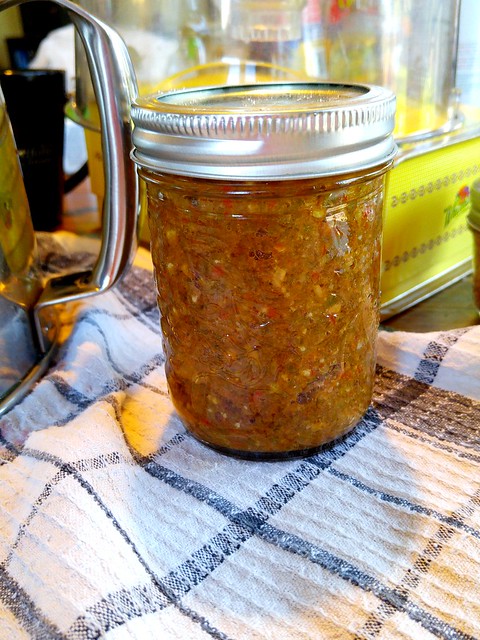
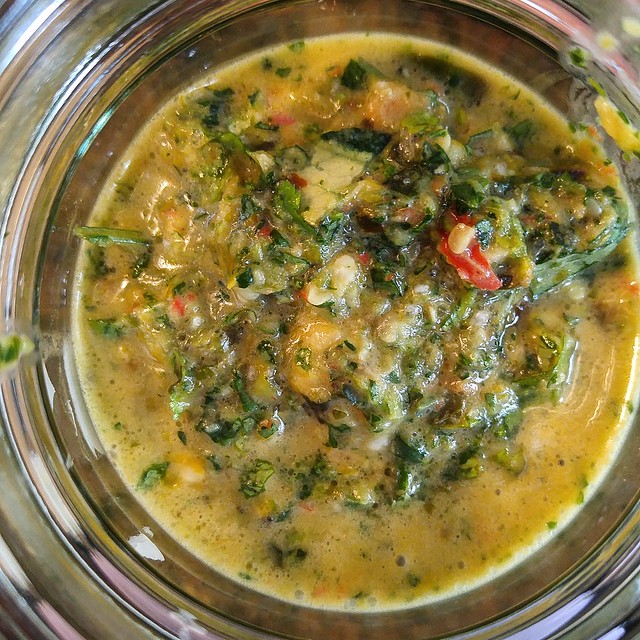
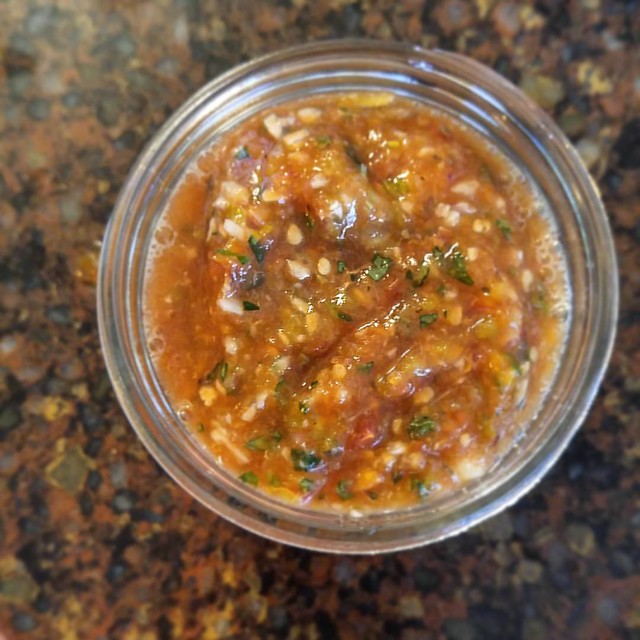
A trio of fire 🔥🔥🔥 inspired by the Chile Pepper Bible- clockwise from the right:  Dakkous (Arabian Style Tomato Sauce), Chili Dipping Sauce for Potstickers and Harissa. #vegetarian #vegetables #tomatoes🍅 #spicy #food #cooking #cookbo
Counter-clockwise, from back: Harissa, Potsticker Sauce (not from the book) and Dakkous

The Chile Pepper Bible: From Sweet to Fiery and Everything in Between
Author: Judith Finlayson
Publisher: (2016)

Hot, sweet or in between – however you slice, dice, roast or pickle them, peppers are one of the most personality-packed vegetables (fruits?) out there. Whether you prefer the sweet crunch of mild, raw bell peppers in a salad or the flame of habanero hot sauce in your rice, there is at least one variety out there for everyone. I’ve been a chile-head for years, but only ever relied on prepared hot sauces or pickled peppers for my fire – aside from chili, what do you do with the spicy and moderate peppers out there? Well, author and food researcher Judith Finlayson sets out to enlighten us cooks in her book The Chile Pepper Bible.

Harissa made with a load of habanero and jalapeno peppers, homegrown tomatoes and Ontario garlic.
Harissa

Chile Pepper Bible is true to it’s name – this rather comprehensive encyclopedia / cookbook in one details information on dozens of chiles – hot and sweet – from their histories and growing regions to their Scoville units and health benefits. Once you’ve read up on the “whys” of the pepper world, the author opens the back end of the book up with 250 recipes that span the globe, from Chinese and Thai to Balkan, Indian and Mexican. The recipes include everything from appetizers to desserts, and include both meat and vegetarian main dishes as well as a wealth of sauces to use immediately or store for when the occasion demands. 

Piri piri sauce
Piri Piri Sauce

I couldn’t wait to get started – and with four hot pepper plants producing en masse in my garden (not to mention another 12 hot and sweet seedlings in my mom’s), I was spoiled for choice. My first creation from the book was Dakkous (p. 382), an Arabian-inspired tomato sauce flavoured not only with a hint of spicy peppers but the heady aroma of cinnamon. The combination was unexpected but no less delicious, and I not only used it for mixing into long grain rice but as a dipper for warmed pocketless pitas. I can only imagine how good it would be as a simmering sauce for chicken too. Nam Prik Num (p. 364), a Thai sauce with roasted peppers, came next – warning, if you’re cooking the peppers indoors, use good ventilation! Watering eyes aside, the spicy, chunky sauce was well worth it, and paired beautifully with roasted fish. I also had to try Finlayson’s version of one of my favourites – Harissa (p.390). This one, unfortunately, fell short of what I was hoping for (which was a recreation of one a friend brought me from Morocco), missing the rich, slightly sweet tomato notes, pop of sour from sumac (or lemon) and spicy garlic kick I knew. That said, when added to a tomato-based recipe (I used it in roasted tomato and potato soup), the flavours fleshed out somewhat and it wasn’t as obvious. I’d be interested to see how it fared in hummus too. Piri Piri Sauce (p. 314) also fared so-so on its own, but drove a ton of flavour into plain chicken breast when used as a marinade.

Nam Prik Num (Thai grilled chile salsa) made from the Chile Pepper Bible #yum #spicy #vegetarian #vegetables #tomatoes🍅 #homegrown #vegan
Nam Prik Num

Not relegated to face-on-fire Scotch bonnets or scorpion chiles, the world of peppers is vast, varied and full of flavours from around the globe. Judith Finlayson has done a wonderful job of opening the door for culinary adventurers in The Chile Pepper Bible, and I encourage you to step through and savour what she has to offer.

Available on Amazon

Wednesday, September 21, 2016

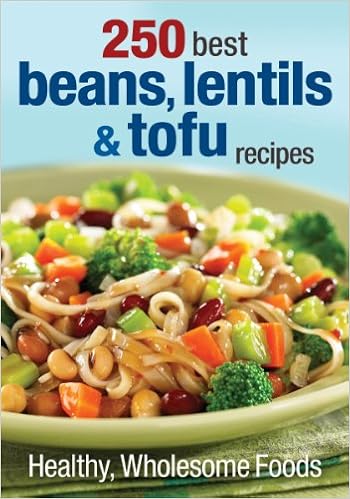
250 Best Beans, Lentils & Tofu Recipes

250 Best Beans, Lentils & Tofu Recipes
Publisher: (2012)

Beans, lentils and tofu…for most people, seeing these in someone’s grocery cart is a signal that they are a card-carrying vegetarian. After all, why would anyone who ate meat need to pick up these alternative proteins? Well, in 2016, the reasons can be much more than ethical in nature. Economics and health concerns are pushing more and more people away from meat-centric meals, forcing them to confront the previously outré ingredients seen only in Asian restaurants or chili pots. What was missing was a comprehensive guide to making legumes worthy of a dinnertime staple. Judith Finlayson’s book 250 Best Beans, Lentils & Tofu Recipes is designed to fill that niche, with meals for all occasions both with and without meat.

Beans, Lentils & Tofu is a library’s worth of inspiration, and whether you’re a bona fide vegetarian or just want to reduce the meat you eat you’ll find something to tempt your palate. Most of the main dishes are hearty enough to satisfy even the most ravenous eaters and generally store and/or freeze well, making eating “on the cheap” even easier. I was pleased to see some of my favourite veggie staples – notably Harira (p. 64) and Caribbean Chickpea Curry with Potatoes (p. 161) – as well as some tempting ideas for the family like Cheater’s Cassoulet (p. 194) and Roasted Vegetable Lasagna (p. 230).  For the baked bean addicts out there, Finlayson has included no fewer than six variations – five of them containing meat, which was a bit of a disappointment. While I understand the desire to appeal to the greatest audience possible, there are so many hearty, delicious and nutritious meals that can be made completely vegetarian. By giving the book a title such as 250 Best Beans, Lentils & Tofu Recipes, I expected the author to place more emphasis on those ingredients for main courses and less of the “well, let’s toss in some lentils to fit the book” approach. Also missing are any legume based desserts – of which there are many, and I expected to see at least a black bean brownie or tofu cheesecake in the pages. However, the meatless recipes that are mentioned sound delicious – and while photos are fairly scarce in the book, if they taste as good as they look readers will be well fed and loving it.

For those new to a life of legumes and who still want to include meat in their diet, 250 Best Beans, Lentils & Tofu Recipes by Judith Finlayson is a great place to start. While it’s not a book for the die-hard vegetarian or vegan, for the flexitarian or omnivore each page holds a delightful option for that day’s nosh.


From the publisher:

A collection of delicious recipes that offers not only good health but great food.
Everyone knows that beans, lentils and tofu are good for you, but did you know that you can enjoy tantalizing gourmet food using these very ingredients? You absolutely can, and this enticing collection of recipes compiled by bestselling author and editor Judith Finlayson proves it.

These varied and internationally influenced recipes will give you a whole new perspectiveon the humble legume. Bean recipes range from elegantly continental dishes to authentic meals that take you back to the days of the Wild West. You’ll discover appetizing expressions with lentils, which are a staple of Middle Eastern and Indian cooking. And tofu? Sure, it’s not much on its own, but paired with other ingredients, it becomes something magical.

In a single collection, you can enjoy 250 of the best recipes created by the bestselling authors of Robert Rose, along with nutrition information, preparation tips and serving suggestions. These recipes will appeal not only to vegetarians and vegans, but also to the ever-growing number of people who simply wish to eat less animal protein in favor of healthy alternatives. You’ll no longer have to prepare several different meals for one family — everyone, regardless of their leanings, will enjoy this incredibly satisfying food.

Wednesday, July 27, 2016

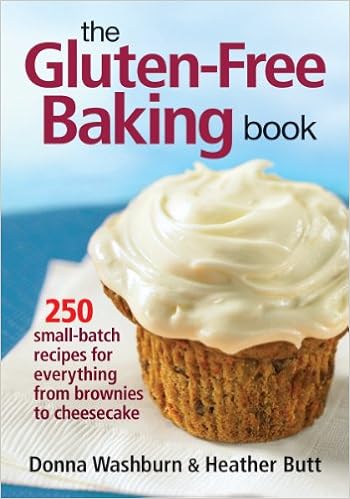
The Gluten-Free Baking Book: 250 Small-Batch Recipes for Everything from Brownies to Cheesecake

The Gluten-Free Baking Book: 250 Small-Batch Recipes for Everything from Brownies to Cheesecake
Publisher:  Robert Rose (2011)

Fewer than five years ago, a diagnosis of Celiac disease (an autoimmune disorder requiring a lifelong abstention from gluten) meant suffering through endless meals of rice, corn or potato side dishes and eschewing baked goods altogether. Bread, cookies and muffins did exist, but they were either hard as rocks, turned to sawdust upon handling or were worse than old kitchen sponges in both taste and texture. Thankfully, for those of us forced to live gluten free (or who love those who are), things have drastically improved in the baking world – hundreds of flours, mixes, starches, gums and recipes have become more or less commonplace in the market (especially on the internet). The science of those ingredients and how they work together has also grown by leaps and bounds, leading to a wealth of cookbooks. One of the books that caters exclusively to the bakers amongst us is The Gluten-Free Baking Book: 250 Small-Batch Recipes for Everything from Brownies to Cheesecake by Donna Washburn and Heather Butt, and it strives to let the gluten-avoidant enjoy the craft again.

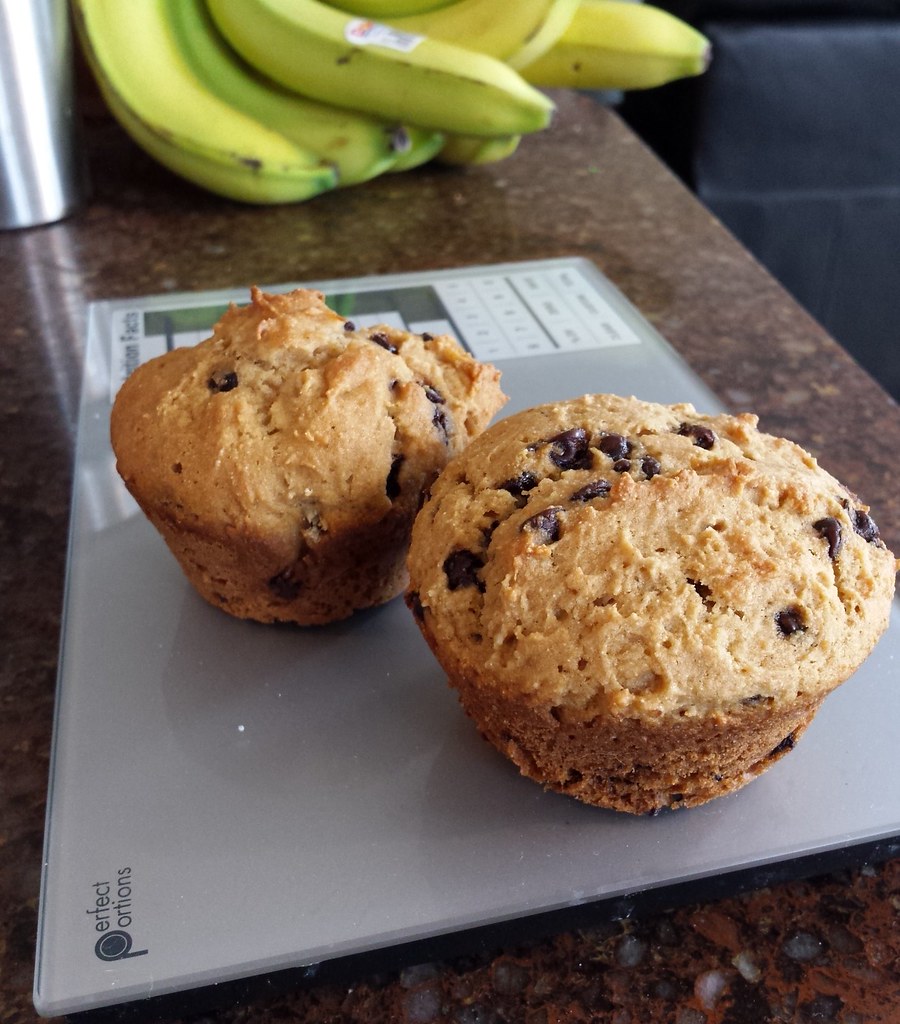
Gluten Free Chocolate Chip Muffins
Chocolate Chip Muffins (p. 161)
Washburn and Butt know their baking well, both professional home economists who own and operate the site bestbreadrecipes.com as a companion to their company, Quality Professional Services. Based on reviews of their previous book The Complete Gluten-Free Cookbook: 150 Gluten-Free, Lactose-Free Recipes, Many with Egg-Free Variations they wrote the recipes in Gluten Free Baking to make smaller batches. This not only keeps costs down when experimenting with the new lifestyle (many gluten-free products are still more expensive than “standard” ones), but accounts for the fact that many gluten free recipes are only eaten by those living with the condition, as opposed to other family members and friends.

The recipes in this book are easy to understand, and contain nutritional information. They call for ingredients that people familiar with a gluten-free diet will recognize and likely stock in their pantries, and if not are available at many grocery and health food stores. The recipe pages are comprised of 250 bakes ranging from No-Knead Yeast Breads (p. 33) to Cakes & Cupcakes (p. 193) and even the conventionally challenging Pastry & Tarts (p. 233). A medley of recipes perfect for special occasions (yet don’t necessarily fit anywhere else) find a perfect home in Gluten Free Baking’s Holiday Baking section (p. 279) – readers will find items such as the decadent Individual Pavlovas (p. 286), which are a treat for the whole family and fun for kids to help make too. On the savoury side, bite-sized Broccoli Cheddar Mini Quiches (p. 295) are perfect for brunch buffets or as passed canapes at a cocktail party, and again will appeal to all ages as well as both gluten free and non.

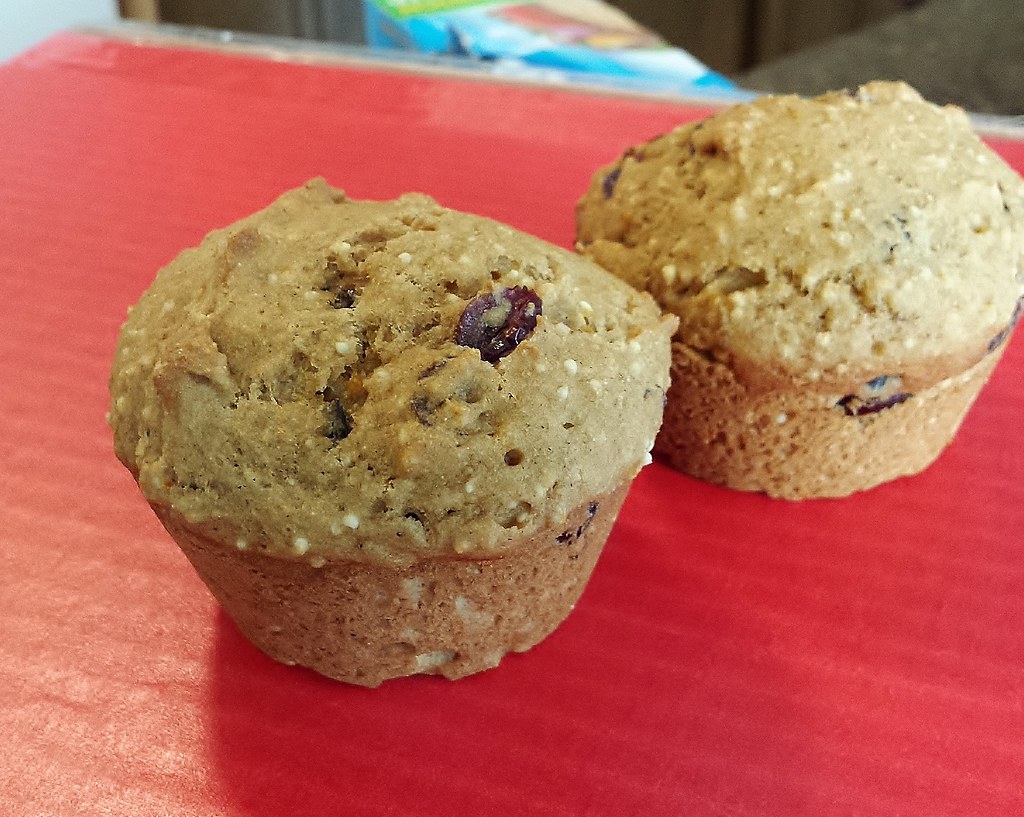
"Cranange" - Millet Muffins
Orange Millet Muffins (p. 156)
Many of the recipes lend themselves well to adaptation and substitution, though the authors don’t provide suggestions outright. I achieved delicious results making the Chocolate Chip Muffins (p. 161) both as written as well as switching the pricey amaranth flour out for millet and the tapioca starch for cornstarch, and the Orange Millet Muffins (p. 156) turned out just fine when using an egg replacer as well as switching the ratios of amaranth and millet flours. Unfortunately, unless readers already have some prior experience in the gluten free kitchen, they may fall victim to sticker shock when purchasing some of the flours!  I did appreciate the authors including “master mix” style recipes for things like Cupcakes (p. 212), Oatmeal Muffins (p. 135-138), Cornbread (p. 107-108) and Biscuits (p. 121-122), which are handy to keep in the pantry as cost-savers – especially if you buy the flours in bulk.

To satisfy your brain’s hunger, the authors included an in-depth, 20 page primer on the various ingredients, equipment and other jargon used in Gluten Free Baking. This is a must-read for complete gluten-free newbies, but is worth a scan even for the seasoned pro. A well-done index makes finding almost any baked good in the book a breeze as well, and most of the recipes have their own tips in the sidebar. Photos are encapsulated in two “blocks” within the book – a fairly common Robert Rose practice), and reflect the actual foods readers can make, rather than appearing as stock photos.

Overall, Donna Washburn and Heather Butt accomplished the goal of making The Gluten-Free Baking Book: 250 Small-Batch Recipes for Everything from Brownies to Cheesecake an accessible, approachable, and inspiring resource for every baker. Gluten free or not, preferring savoury or sweet, cookie-holic or cake star, you’ll be able to find a wealth of temptations between the covers.

Saturday, June 11, 2016

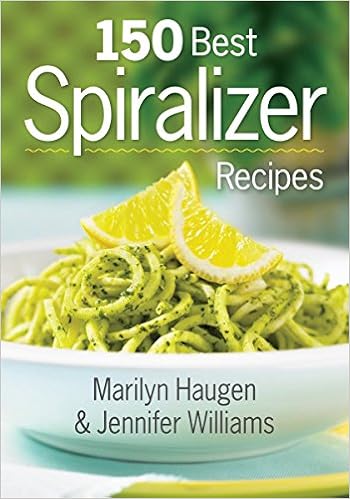
150 Best Spiralizer Recipes

150 Best Spiralizer Recipes
Authors: Marilyn Haugen and Jennifer Williams
Publisher: Robert Rose (2015)

I’ve owned my share of kitchen gadgets over the years. Some, I use regularly – my microplane, a food mill, canning set (tongs and funnel) and a spice grinder, to name a few – not to mention my mini-arsenal of small appliances, including my heavy duty stand mixer and food processor. Other stuff I either bought or was gifted but almost never use. Things like our garlic press, julienne peeler, egg separator, icing comb and pie divider make honourable mentions there, no doubt. Then there’s the awkward “middle children” of my culinary collection – the motley crew of mandolin, potato ricer, cake leveler and instant read thermometer that are used just enough to warrant their existence in my household but not enough to be included in my most convenient cupboards or on my counter. I’ve had to become nothing short of nit-picky when selecting new items to buy, trying to anticipate just how much I’d use them and how versatile they’d be, given that I cook and bake both at home but also as a Home Economics teacher. When the Spiralizer (and it’s various spinoffs) became a craze, I initially held off – at least until our garden started mass-producing zucchini. Suddenly, veggie-noodles didn’t sound too bad! Luckily, about the time we had ratatouille and zucchini-breaded ourselves out of existence, my review copy of 150 Best Spiralizer Recipes by Marilyn Haugen and Jennifer Williams showed up on my doorstep.

Spiralizer is true to it’s title, being filled with 150 (mostly delicious-sounding) recipes suitable for almost everyone. The book is organized largely by diet style, rather than recipe type – from Paleo and Raw to Gluten Free and Vegetarian / Vegan. For those of you who are completely new to the art of making vegetables into twirly works of art, Haugen and Williams have compiled a 13 page primer in the book’s beginning. Spiralizing Basics (p.8) covers the parts of a generic machine as well as listing a few other tools that are handy for most applications. Next is The Spiralizing Pantry (p. 10), a comprehensive listing of how to spiralize what as well as suggestions for preparing and storing finished spirals. The Pantry also includes suggestions for flavourings and oils as well as a basic tip-sheet, all of which combine with the rest of the intro to create a “safety net” that will let any reader break out their machine with confidence.

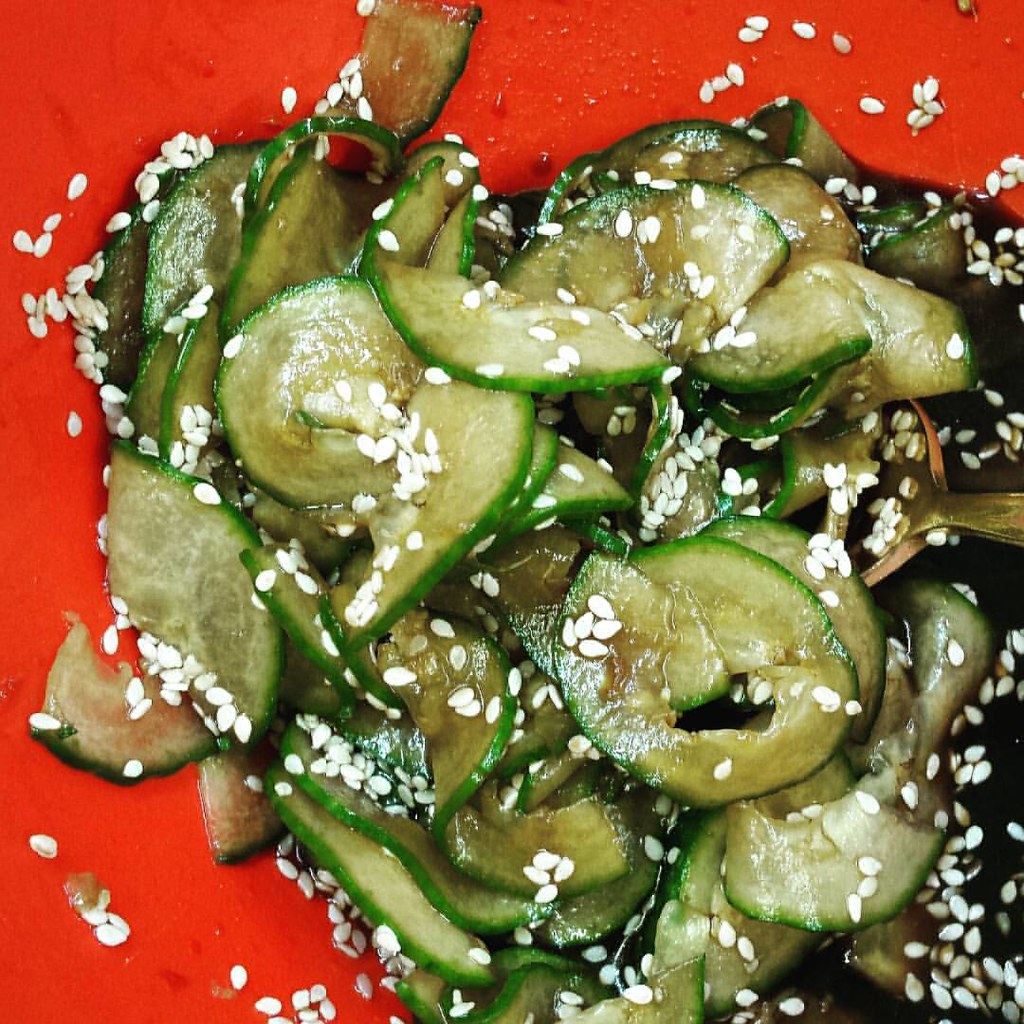
Japanese Sunomono - a light and refreshing #vegan cucumber salad perfect for #summer (and #SundaySupper )! #yum #food #vegetarian #glutenfree #vegetables
Sunomono
The recipes are easy to read, with bold titles and a standardized format that includes introductions, metric and imperial measures. I say the recipes are “delicious-sounding” because, in Robert Rose fashion, there aren’t photos available for all the recipes. Two pockets of full-colour pictures were slotted in – albeit a bit randomly in the middle of a recipe section rather than in between chapters. The text of each recipe is no-nonsense, with easy to follow, numbered directions and handy “tip boxes” accompanying most items. The directions themselves are a clear sign that the authors took their proofreading and editing seriously, even as a new reader skimming through.

On the cooking and eating side, the Spicy Shoestring Jicama Fries (p. 184) were amazing and crisp, albeit a bit too salty for my taste and a true struggle for my Spiralizer to manage. Sweet Potato Noodles with Mushroom Marinara (p. 152) sounded delicious but a trial to spiralize, a tad salty and with a very oily – I found myself wanting much more mushroom. If I made it again, I would add some dried mushrooms and let them soften in the sauce. I haven’t attempted any of the “dessert-style” offerings yet, but it is good to know that the gadget’s not just for savoury things. It’s important to note, as well, that these authors are not doctors or nutritionists, and that many of the recipes, while technically “fitting into” the category they’ve been assigned to, are imbalanced. For instance, most of the vegetarian and vegan recipes lack protein – a key fact they will realize but those trying such a diet as a “fad” may not. When in doubt, researching any or all of the listed eating styles will help readers modify the recipes t suit themselves.

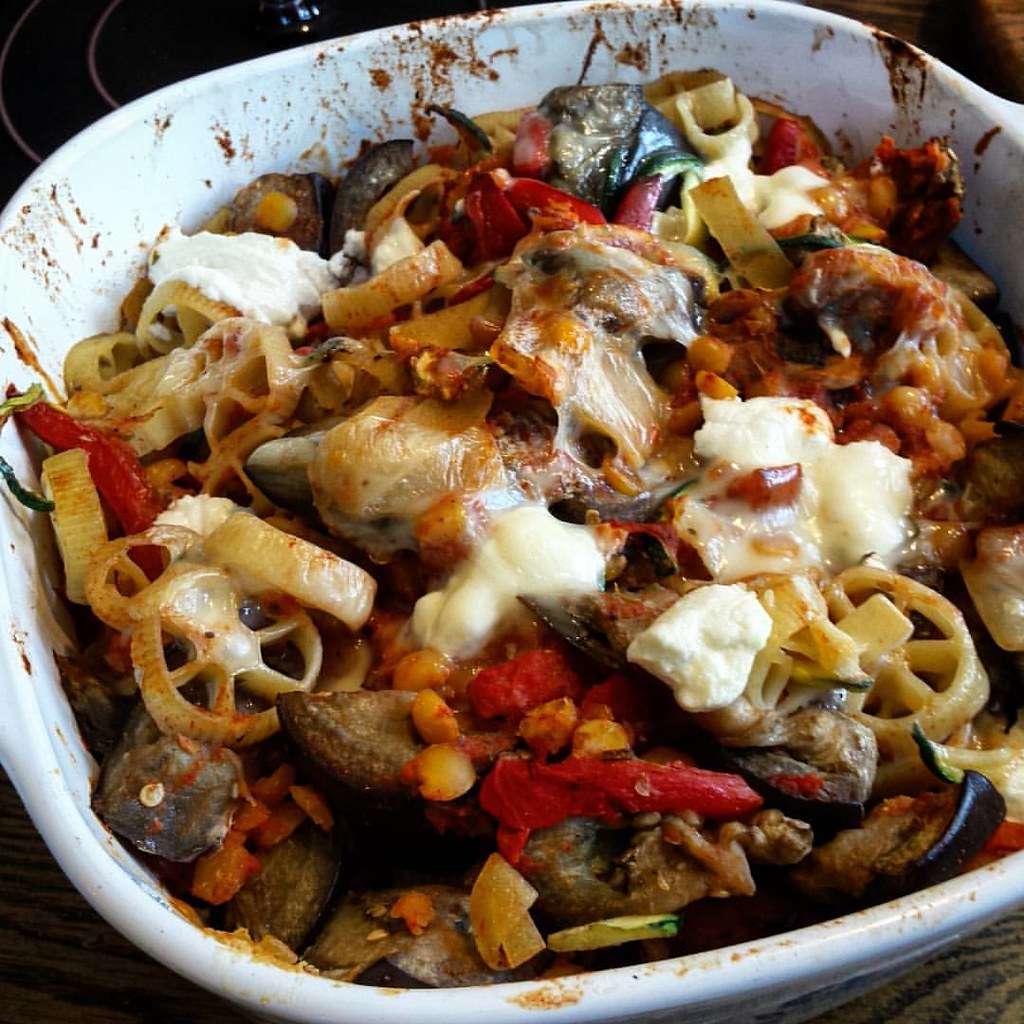
Pictures don't do this Pasta-touille justice. TONS of #vegetables, split peas and a teeny bit of #chicken, laced with goat and fresh mozzarella #cheese ! #yum #food #cooking #baked #SundaySupper #tomatoes #foodie #dinner
Pasta-Touille
Possibly the best part about this whole book is that it’s a fantastic source of inspiration. While it’s not a recipe given in Spiralizer, I dreamed up (and devoured) a version of a Japanese cucumber salad for my Home Economics class to try. They loved the salad, and the gadget, and it’s given me reason to bring it out again for other treats. At home, the device mowed through zucchini and red pepper to make a version of ratatouille pasta that was filling but light on the waistline. While the appliance is still not a “must have” fixture in my kitchen, the book makes using it more approachable and I won’t be throwing it out anytime soon. No, like many hidden gems, it will remain one of my “middle children” until I find the right way to make it (and lots of assorted veggies) bloom.

Available on Amazon