Showing posts with label vegan. Show all posts

Tuesday, March 27, 2018

Aquafabulous!

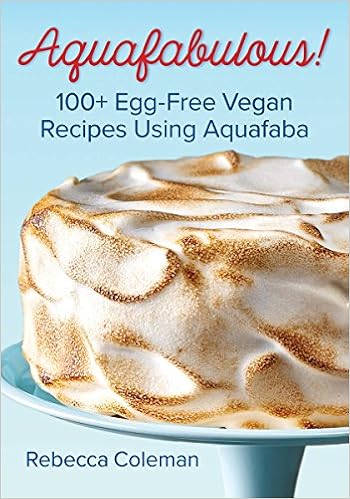
Aquafabulous!: 100+ Egg-Free Vegan Recipes Using Aquafaba
Publisher: (2017)

Vegans and egg-free foodies are singing the praises of a new egg substitute. Aquafaba – also known as bean liquor or the brine found inside cans of legumes like chickpeas or cannellini beans – is versatile, low-calorie and found in almost every home. Instead of draining beans down the sink, aquafaba converts have turned the liquid into meringues, waffles, crepes and even mayonnaise. Rebecca Coleman has compiled a collection of vegan recipes using both aquafaba and the beans that make it in her book Aquafabulous!: 100+ Egg-Free Vegan Recipes Using Aquafaba.

As can be expected from any Robert Rose book, Aquafabulous! begins with a highly detailed introduction to the topic, including manufacturing and storing homemade aquafaba. Coleman also includes a “vegan pantry” listing of ingredients common in her recipes, including miso paste, nutritional yeast and tofu. While the book is exclusively vegan, even cooks new to the cuisine will be able to turn out flavourful and satisfying meals once they peruse the chapter. Each chapter has it’s own table of contents, making browsing through the book simple, and a well-referenced index helps users look up a specific recipe. The chapters are categorized by meal type (e.g. Breakfast, Baked Goods and Mains), although the author mentions her own three classifications of recipes in the introduction. Aquafabulous!, according to Coleman, can first be categorized into vegan “basics” – things like making your own aquafaba, non-dairy milks and other “recipes for recipes” that form components for meals later in the book. Second, there are recipes using the aquafaba itself – either in breading preparations (e.g. Grown-Up Tater Tots (p. 76)), as a binder (e.g. Vegetable Fritters (p. 60)) or for leavening (e.g. Chocolate Mousse (p. 173)). These recipes are what readers generally search for when they pick up a book on aquafaba – it’s one thing to loud the possibilities of this bean liquid, but quite another to put it to use practically. Lastly, Coleman provides recipes to use up the “by product” of aquafaba procurement: the beans themselves. Chickpea Curry (p. 100) is a bright, not-too-spicy main dish that uses exactly 1 (16 oz.) can of chickpeas – although those of us in Canada are more used to the 19 oz. cans, which work just fine.
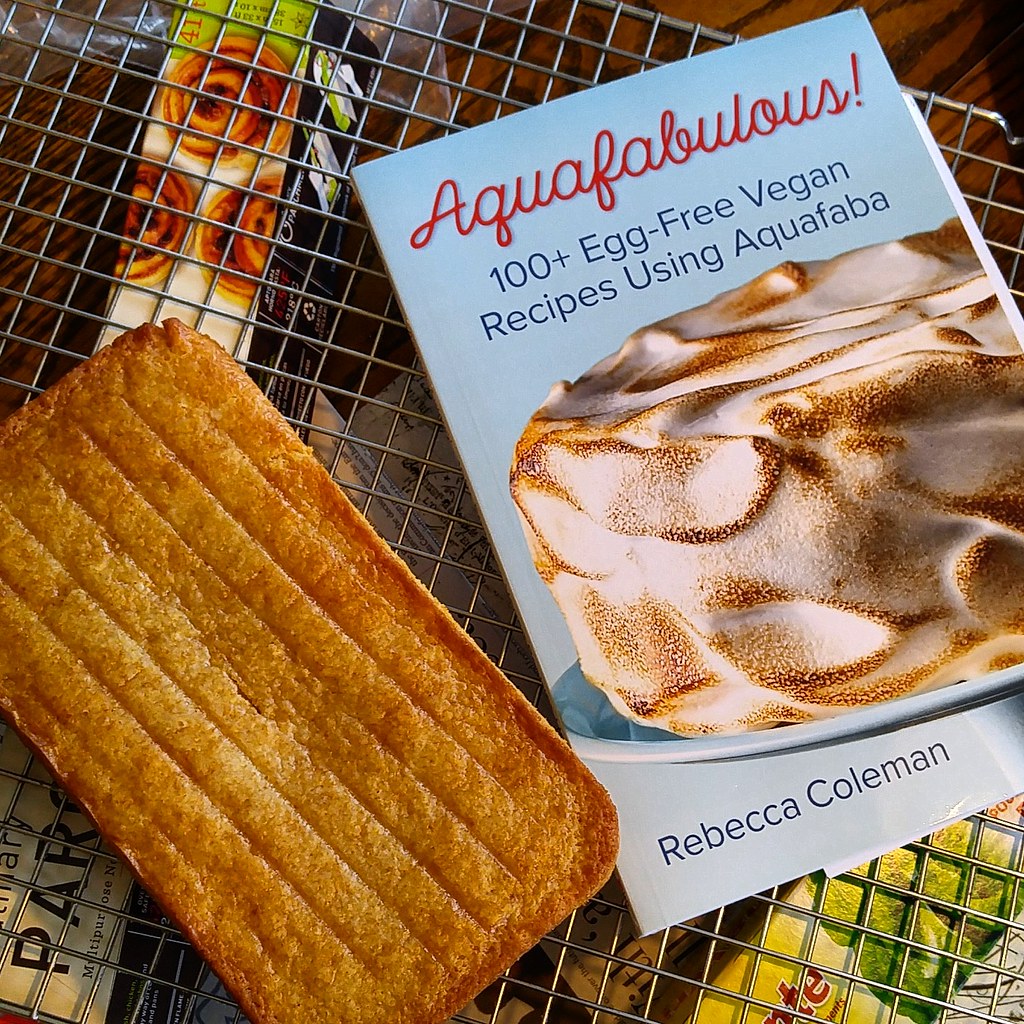
Aquafabulous!

The book is clear about where aquafaba’s strengths are: the baking world. The whipped foam was miraculously like beaten egg whites in cakes and muffins, adding lightness and a rather fine texture in most cases. Meringues (p. 144) were ethereally light – provided they were made on a dry day and not in the middle of a snowy winter day. Heavier batters, like the Lemon Rosemary Polenta Cake (p. 150), just weighed the foam down however, becoming a dense, somewhat oily but nevertheless tasty snack suitable for afternoon tea or as a sweet-savoury dessert after a heavy meal. However, I should note that with simple, relatively one-note flavours such as those in meringues, it is critical that a light, low-flavor bean is chosen. Cannellini and chickpea brine is ideal for most applications, as it adds neither colour nor any perceptible “bean” flavor. Black or kidney bean brine can be used, regardless of what mainstream aquafaba converts say, but they are best suited for richer flavours like chocolate (in Decadent Chocolate Brownies, p. 160) or spices (Carrot Cake, p. 152).
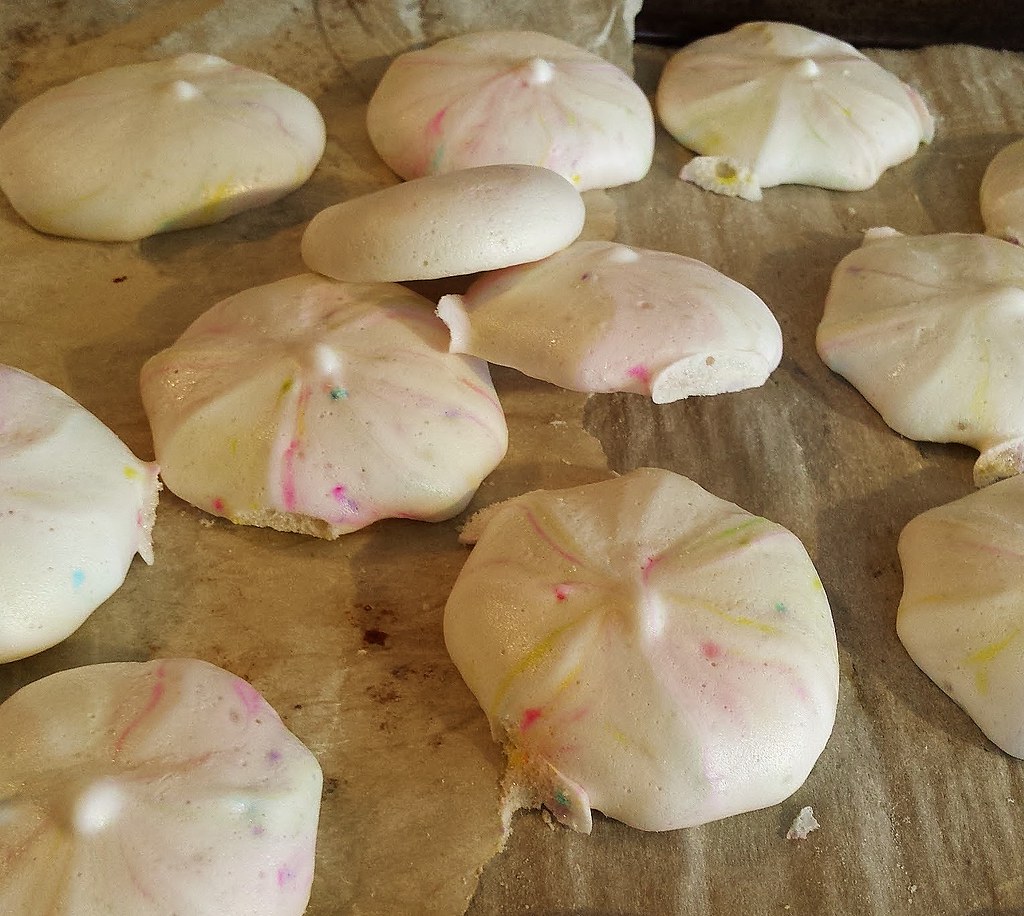
"Cake Batter" Aquafaba Meringues

While there are certainly many aquafaba-containing recipes in this book, the star ingredient can be difficult to locate at times. Some recipes have the aforementioned “basic” components made from aquafaba as a condiment, others have no aquafaba or beans at all, which is highly confusing. If I am going to buy a book about a subject, I would expect a compilation of information and practical applications for the topic at hand. In this respect, Aquafabulous! is best described simply as a vegan cookbook, not one dedicated to the craft of cooking with the title ingredient.

Aquafabulous!: 100+ Egg-Free Vegan Recipes Using Aquafaba is definitely a good buy for those embracing a vegan diet, or who wish to find an innovative way to bake egg-free. There are enough aquafaba recipes to be useful for beginners, but those looking for a more in-depth manual will find the information and innovation lacking. Rebecca Coleman shows promise as a cookbook author and I look forward to seeing further cookbooks from her.

Thursday, February 26, 2015

The Vegan Pantry: More Than 60 Delicious Recipes for Modern Vegan Food

The Vegan Pantry: More Than 60 Delicious Recipes for Modern Vegan Food
Author: Dunja Gulin
Publisher: Ryland Peters & Small (2014)


My family, like so many these days, is a mixed bag of backgrounds, traditions, habits and – not the least – diets. The “man of the house” (who is the only man in the house!) is a true omnivore. He loves almost every fruit or vegetable out there, but is hard pressed to call a plate of animal-free food a “meal” no matter how hearty it is. My (not so) little sister would happily live off pancakes and pasta every day, but for my mom and I vegetable-based main dishes are the rule rather than the exception. Neither of us are “true” vegetarians (we both eat fish, and she eats meat in small amounts), but we are not opposed to vegan food as the bulk of our dining routine. Part nutritional, part economical and part sustainable, a totally vegan diet can also be completely delicious, varied and manage to fill any craving you might have. Dunja Gulin, author of The Vegan Baker, sets out to prove this very fact in her cookbook The Vegan Pantry: More Than 60 Delicious Recipes for Modern Vegan Food.

Without manifesto, pomp or harassment as to the “evils” of a meat-inclusive diet, Vegan Pantry is precisely the same style as any other cookbook in terms of it’s organization and language. Shying away from overly processed meat and cheese analogues, Gulin shows how vegetables, whole grains and legumes can form delicious and filling frameworks for a variety of meals – including comfort fare such as Lentil Moussaka (p. 61), elegant Polenta Tarte Flambee (p. 65) and even a hearty Goulash (p. 53). Many of the recipes in this book are gluten-free as well, giving this book an added bonus for people cooking for mixed company. It’s hard to believe that any of the dishes are missing anything – and truly, they aren’t, since the choice to live any sort of dietary lifestyle is one that should be filled with enjoyment, not focused on sacrifice.

Of course, healthy (or “alternative”) food doesn’t always look too gourmet – but William Reavell does the recipes in Vegan Pantry justice with his stunning, full-colour photographs. Even tofu-phobics will crave a colourful Tofu Scramble (p. 35) or Curry (p. 49), and the Vegan Caesar Salad (p. 93) looks decadent enough to make anyone crave a bowl of greens. I can’t promise that every dish that came out of my kitchen while cooking through this book looked as spectacular, but then again, the taste had me coming back for more!

He major stumbling block that most would-be vegan cooks face is the sheer amount of time that most whole-food preparations take. Vegan Pantry is not immune to this, unfortunately, as many of Gulin’s recipes require advance soaking, grinding, chopping or even secondary recipe preparations before a relatively brief “final assembly”. While I would never discount the book entirely based on that detail alone, some simpler and more approachable items would benefit busy households or working parents who are considering this lifestyle.

I thoroughly enjoyed making and tasting a host of things from Vegan Pantry, including the Pure Energy Bars (p. 39) and the Strong Flavoured Tomato Sauce (p. 99). The Gooey Chocolate Cookies (p. 127) are on my must-make list as well without question, since even with the time constraints they look decadent enough to eat off the page. The success of everything I’ve made so far also gives me confidence that more complex projects will turn out equally well. One of the major “pluses” of Gulin’s recipes is that most of them make fantastic leftovers (or freezer meals) as well. He filling in the Soft-Shell Veggie Tacos (p. 62) lasts a week in the fridge and is divine mixed with rice or pasta, as well as being reheated in its original “taco” form. The deserts themselves last in the fridge or freezer too, and if they aren’t gobbled up the second they’re served, a serving makes a fabulous snack or weeknight treat.

Whether you’re a long-term plant based foodie, or simply trying out a few meat-free menus during the week, you’re sure to find something to tempt you in Dunja Gulin’s The Vegan Pantry: More Than 60 Delicious Recipes for Modern Vegan Food. From breakfast to dessert, delicious, nutritious and relatively simple meals are just a page-turn away.

Saturday, June 7, 2014

Vegan Chocolate: Unapologetically Luscious and Decadent Dairy-Free Desserts

Vegan Chocolate: Unapologetically Luscious and Decadent Dairy-Free Desserts
Author: Fran Costigan
Publisher: Running Press (2013)

Milk, dark or riddled with nuts – it’s hard to find a single person who’s day isn’t made better with a little chocolate! With hundreds, if not thousands, of ways to enjoy the gift of the cacao tree, chocolate is arguably one of the most versatile foods in nature. What would the world be like without a chocolate chip cookie, a chunk of chocolate fudge birthday cake, a bowl of spicy-sweet mole or the occasional melt-in-your-mouth truffle? For those ascribing to a vegan lifestyle, be it for economical, health or ethical reasons, a lot of those decadent chocolate treats are off limits. Yes, vegan chocolate chip cookies existed in the 1960’s “hippie” era, but if you’ve ever had one of those “traditional” vegan concoctions you know they were anything but decadent! Fran Costigan is out to bring the indulgence of chocolate back to everybody’s table with her new book: Vegan Chocolate.

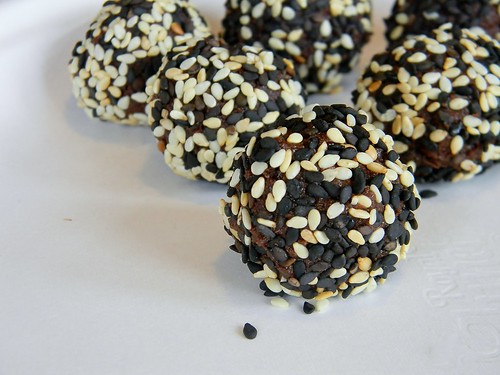
Chocolate - Orange Sesame Truffles
Chocolate Orange Sesame Truffles (p. 58)
Aptly titled, Vegan Chocolate makes no mystery as to the treats within its pages. As if the title wasn’t enough to sway you, the front cover displays a to-die-for looking chocolate cake (sadly, that recipe is not indicated in the book, but I believe it’s Sachertorte (p. 105)) and almost every page is laced with Kate Lewis’ stunning photography. A full index caps the almost 300-page book off, and is a great resource for that “I-need-chocolate-now” moment, and each recipe section also has a listing of its offerings at the beginning for more leisurely browsing. Along with the wealth of recipes, Costigan also includes an indispensable guide to “Ingredients, Sweeteners, Chocolates and Equipment” (p.12), a well-stocked “Resource” (p.290) list, a suggested “Reading List” (p. 296) and even a Rolodex-worthy compilation of relevant “Organizations and Publications” (p.297). Costigan proves time and time again her worth as a culinary artist – vegan or no – and definitely erases any notion of vegan food as stuff for health gurus only. Recipes range from a simple Chocolate Sorbet (p. 209) to gourmet Lemon Olive Oil Truffles (p. 44) and an extravagant Raspberry Chocolate Silk Tart (p.165), and it’s truly hard to believe that absolutely no dairy, eggs or even refined sugar are components! As fancy and complicated as the recipes seem to be, rest assured that Costigan has done her due diligence in this respect too and makes replicating her creations as easy as possible.

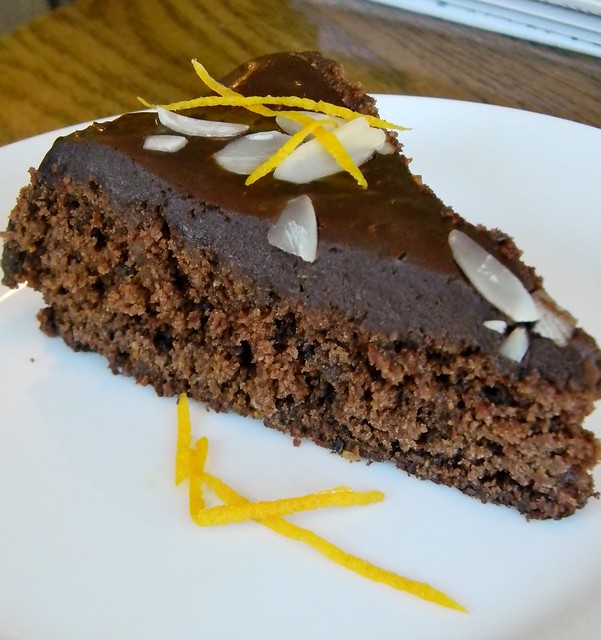
Vegan Chocolate - Orange Torte
Chocolate, Orange and Almond Olive Oil Cake (p. 72)
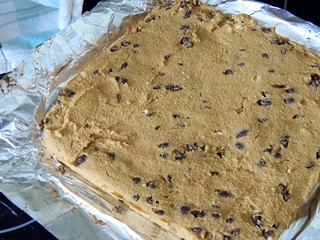
Of course, I couldn’t wait to get into the kitchen and bake up something lusciously chocolate – the problem was what to choose! I eventually settled on the Chocolate, Orange and Almond Olive Oil Cake (p. 72) to start off. The dessert is extraordinary, and wouldn’t be out of place in an elegant bistro or trattoria, but if you can measure, pour and mix it is remarkably simple. To me, unfortunately, it doesn’t really belong in a “chocolate” book – the only element of chocolate is in the glaze (which is a separate recipe). That said, when I made the cake I added a touch of cocoa powder for a bit of “back-up” flavour. Continuing on my “chocolate and orange” kick, I knew I had to try the Chocolate Orange Sesame Truffles (p. 58), which looked spectacular in their photo and definitely involved a kick of chocolate. These, too, were extremely simple to make and relied on an unorthodox melting medium – orange juice – rather than heavy cream or milk. A dab of tahini helped re-solidify everything and they shaped nicely, even after being in the fridge for a day. The balance of fruit, chocolate and sesame was spot on to my palate and I wouldn’t hesitate to make a plate of these for a Christmas party. Lastly, I whipped up a pan of one of my favourites: Blondies (p. 130). Granted, blondies really have no place in a “chocolate” book either, as their whole mandate is “chocolate-free brownies”, but I have a soft spot for those bars and wanted to see how Costigan’s recipe stacked up. I had to make a few minor changes based on what I had available, and I opted to add some chocolate-covered cacao nibs along with the chocolate chips for extra pizzazz, but I have to say I was pleased by the final result and would make them again. In fact, I did make them again, for a school function, and they were thoroughly enjoyed without a word as to the lack of eggs or dairy.

Nibbed Caramel Blondies
Blondies (p. 130)
It is very hard to go wrong with a food as perfect as chocolate, but many people find it too difficult or time consuming to tackle in any great quantity. Not only does Fran Costigan’s Vegan Chocolate convince you that chocolate is a boon, not a burden, to the kitchen, but shows that elegant, decadent desserts are within every home cook’s reach. Furthermore, Vegan Chocolate truly erases any doubts as to the “cardboard” nature of vegan, refined sugar-free food and just may tempt more than one diner over to enjoying more meat-, dairy- and egg-free fare overall.

Available on Amazon

Monday, May 26, 2014

125 Best Vegan Recipes

125 Best Vegan Recipes 
Authors: Beth Gurney and Maxine Chuck 
Publisher: Robert Rose (2014) 

As a gang of foodies and (mostly) veggie-lovers, our family is always on the lookout for ways to keep meals interesting. Nobody ascribes to a purely vegan, or even a vegetarian lifestyle, but between the economy being the way it is and the new health concerns that arise with age, meatless (or less-meat) meals are beginning to take centre stage. Whether you abstain from animal products completely for ethical, political, economical or health reasons, or simply want less meat on your plate, vegan cookbooks are a great place to start. 125 Best Vegan Recipes by Beth Gurney and Maxine Chuck is one of the newest books of the type on the market and aims to be a resource for fledgling and long-standing vegetarians alike.

Vegan Recipes is a tome of simple, approachable recipes perfect for new and seasoned meat-freers alike. Appetizers, light mains, casseroles, grains, vegetable sides and desserts all have a home here – there’s even a section just for kids! If you’re leery of tofu, there are many legume and nut based options as well as a sizable quantity of “meat analogue” based recipes. Generally, I’m not a fan of relying on “fake” meat and dairy simply to make something vegan – it seems like too much of a cop-out for those who want to claim they’re vegan to follow a trend, not to mention the majority of them aren’t particularly nutritious. However, I do understand that most of this book’s intended audience are looking for convenience and a familiar flavour and texture moreso than “classical” vegan recipes, and for those transitioning to the lifestyle (especially with children), their use fits the bill. That said, some of the “recipes” in this book aren’t really recipes at all, but compilations of store-bought mock meats, jarred sauces, pasta or grains and a few vegetables. Anybody who can make standard-issue spaghetti and meatballs out of dried pasta, a jar of marinara and a box of pre-made, spherical meat can make a vegan version – without the need for a Spaghetti and Soy Balls (p.80) recipe.

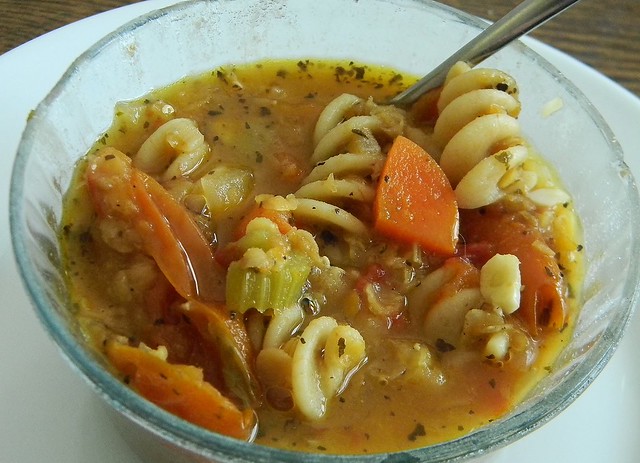
Browsing through the offerings in Vegan Recipes with a mind towards “scratch” cooking, I settled on the “Soups” (p. 40) chapter. The first one I tried, Leek and Potato Soup (p. 50), called for rice milk as the “cream” – a move that, in hindsight, I wish I hadn’t followed. The rice milk was watery, sweet and separated with the cooking time – interfering with the flavour of the ingredients. I did make a follow-up batch with sunflower milk, though, and the resulting bowls were luscious and flavourful – leading me to believe that it was just that one ingredient at fault. The Tomato Soup (p. 54) was much more successful, especially when I added multigrain pasta and used home-roasted tomatoes. The sweet, savoury and tangy natures of the (admittedly standard) ingredients worked spectacularly here, and I liked that the soup was a little chunkier. It was definitely a recipe to come back to again, especially since there were some variations I can’t wait to try!

Tomato Pasta Soup
Tomato Soup (p. 54)
One of the stumbling blocks this book poses for many would-be cooks is the lack of photography. To its credit, Vegan Recipes does contain some full-page colour photos, but they are inserted in bulk rather than accompanying their namesake recipe. It’s worth noting, too, that a fair number of those were not taken of the dish itself, and were instead sourced from stock footage sites. While I’m sure the intentions were good in this respect, it’s worth remembering that the Cranberry Orange Scones (p. 171) emerging from your oven will not necessarily mimic the gorgeous picture.

A vegan diet is not necessarily the golden ticket to a lifetime of health and wellness. It can, and often does, rely on processed foods, refined grains, packaged meals and few “originally vegan” recipes. That said, getting into the kitchen in the first place is a wonderful first step towards embracing a new food-related lifestyle! While seasoned vegan cooks will scoff at the offerings in Beth Gurney and Maxine Chuck’s 125 Best Vegan Recipes, the book will open up a realm of possibilities to the newer cook and remove the aura of intimidation that the label “vegan” can entail. 

Sunday, March 9, 2014

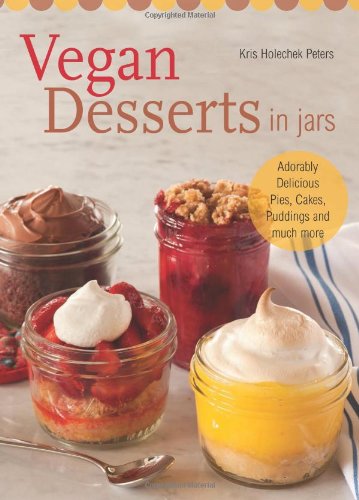
Vegan Desserts in Jars

Vegan Desserts in Jars
Author: Kris Holechek Peters
Publisher: Ulysses Press (2013)

It’s hard to resist the allure of tucking into your own little dessert. Something about being able to eat all of something, not simply a slice or a scoop, draws us in and gives us a feeling of guilty pleasure and comfort. A treat made for you – just for you – to enjoy allows you to recreate the touches of home, where Mom would pack you a cookie for lunch, and indulges that little nugget of selfishness we all possess. Desserts in jars are not new, but most recipes contain eggs, dairy or other animal products, forcing vegans to substitute (which can lead to success or failure). Enter Vegan Desserts in Jars by Kris Holechek Peters, a vegan author and food blogger at nomnomnomblog.com, who brings perfectly portioned  treats that can fit into almost any lifestyle.

You certainly don’t have to be a vegan or vegetarian to love Vegan Desserts. If sweets are your thing, the pages will tempt you with crisps, cupcakes and puddings – all decadent and rich without being “stereotypical vegan” food. Even mixes for making your own goodies fill a small chapter, not to mention recipes for jams, toppings and fillings. I really appreciated the “Treats for Two” section (p. 83) – filled with weakness-instigating things like PB Banana Cake for Two (p. 87) – which eliminates the temptation (and fridge-clutter) of leftovers, but families will definitely find use for this book as well. Recipes are designed to create perfect individual portions of larger recipes, often serving 4-6, and most of them store well as well given the Mason jar’s handy lid.

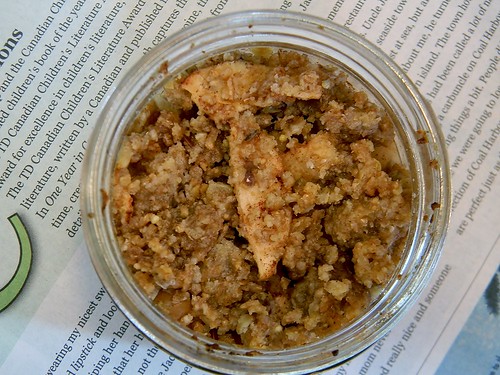
Apple Crisp in a Jar
Apple Crisp Cups (p. 50)
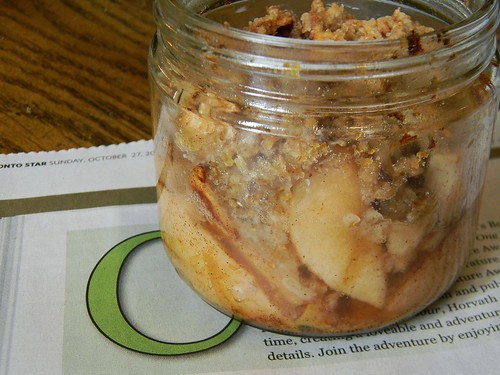
Being the author of a vegan recipe book for the masses, Peters does have to include a short discussion on the nuances of vegan cooking and baking. The most challenging aspect of converting any recipe to vegan is by far replacing the eggs. However, in Vegan Desserts’ opening chapter readers will find a handy chart that can also be used for recipes outside those 124 pages. While this method of cooking may be “old hat” for long-practicing vegans and those with egg allergies, for those used to the standard 1-2-3-4 cake method this section is invaluable. The largest section of Vegan Desserts is “Cakelettes” (p. 20), which contains not only your Basic Chocolate Cake (p. 21) but goodies like Spotted Dick (p. 31) and Tiramisu (p. 37). The whimsically titled Elvis in a Jar (p. 38) will capture the heart of any peanut butter and banana fan, but I have to say that the Rustic Rhubarb Cakes (p. 36) with flash-frozen homegrown rhubarb made our late-Autumn dinners. “Pie and Friends” (p. 42) was definitely where I spent the majority of my time with this book though, since I fell in love with the newfound portability of Peters’ Apple Crisp Cups (p. 50). Those have since become a favourite “visiting” gift that not only takes care of a sudden glut of apples in Fall (speaking from a family of zealous apple pickers) but is also perfect year round. I must confess that I essentially ignored the “No-Bake Treats” chapter (p. 5), simply because neither I nor my family are huge fans of the raw food scene and really do lean towards pie or cake rather than ice cream or pudding.

Apple Crisp in a Jar
Apple Crisp Cups (p. 50)
Whether you or someone you love abstain from animal product due to religious, ethical, environmental or health reasons, there is no reason to abstain from delicious food and the occasional sweet treat. From pies and cakes to pudding and trifles, nothing is off limits in Kris Holechek Peters’ book Vegan Desserts in Jars. Who knows – dessert could just be the greatest culinary equalizer out there!

Available on Amazon

Tuesday, September 24, 2013

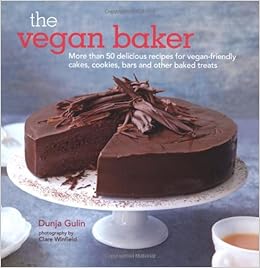
The Vegan Baker: More Than 50 Delicious Recipes for Vegan-friendly Cakes, Cookies, Bars and Other Baked Treats

The Vegan Baker: More Than 50 Delicious Recipes for Vegan-friendly Cakes, Cookies, Bars and Other Baked Treats
Author: Dunja Gulin
Publisher: Ryland Peters & Small (2013)

Everyone loves a treat once in a while. It’s almost impossible to think of an office meeting, open house or even road trip without some sort of edible, and while muffins and cookies aren’t considered “health food” in any sense of the phrase, they can provide a much-needed pick-me-up during the day. However, those who have dietary restrictions are often at a loss when it comes to the conventional sweets table. Most commonly purchased bakery items are laced with eggs, dairy, nuts or one of the other common allergens, and those who follow a specific diet for religious or ethical reasons often avoid prepared foods for this reason as well. One of the most basic ways to eliminate two of the major allergens, as well as any animal product-based restrictions, is by preparing vegan items. While they may be stereotyped as things only palatable for hippies and health gurus, the science and methodology of vegan baking has progressed enough to be more than capable of producing items that are approachable, economical and simply delicious – no segregating identifier of “vegan” required. Dunja Gulin believes delicious baking that just happens to be vegan is accessible to everyone, and avers this passion in her third cookbook: The Vegan Baker: More Than 50 Delicious Recipes for Vegan-friendly Cakes, Cookies, Bars and Other Baked Treats.

Vegan Baker takes not only a dairy- and egg-free approach to baking, but a healthier twist as well. Gulin stresses the use of the best possible ingredients, organic items when possible, and limiting or eliminating refined sugar – resulting in wholesome, not-too-sweet goods that are still most definitely treats. While some people may argue against all these restrictions (or “rules”) for what is supposed to be something decadent and special, Gulin’s reasoning is that the finished goods will taste just as rich and delicious, if not more so, than their conventional counterparts. I don’t necessarily subscribe to the belief that organic food tastes (or is in general) better, but I do know that quality ingredients in any form of cooking or baking make a huge difference. This is not to say you should break the bank on imported chocolate and hand-harvested and ground grains for flour, nor do you need to cook beans and grind nut butters from scratch at home – just have faith that the items you choose to cook with will produce stellar results.

If the passionate introduction and thorough discussion of ingredients doesn’t whet your appetite for the recipes, Clare Winfield’s fantastic, full-colour photos just might. Beautifully styled shots of almost (if not every) recipe fill the pages, and unlike many cookbook pictures provide a relatively authentic representation of the words alongside.

Carob Slice
Yummy Carob Slices (p. 58)
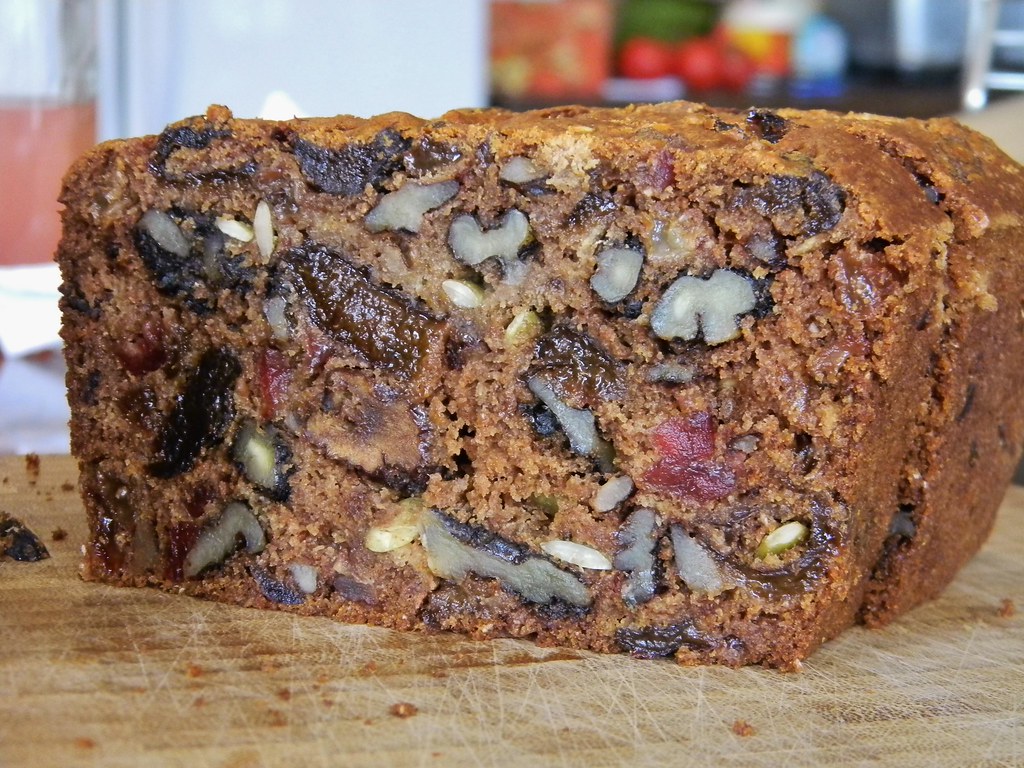
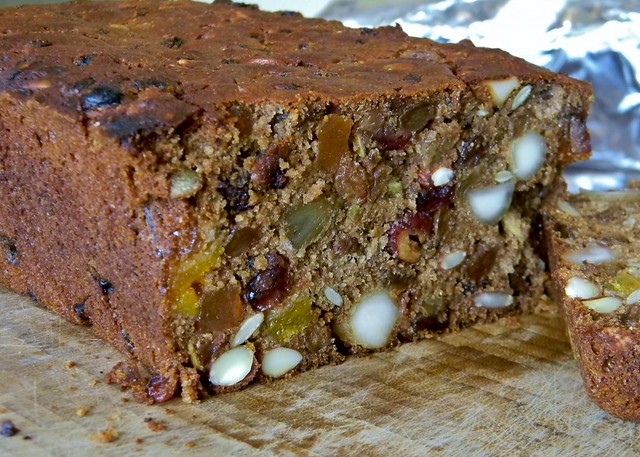
Of the recipes I tried in Vegan Baker, I was consistently amazed. Not because the methods were outlandish or the ingredients were exotic, but because they were anything but – fairly simple, straightforward and quick, with the most outré ingredients being carob and agar powder (which even in my relatively rural neighbourhood were easy to locate at the health food and bulk store). The results weren’t anything other than decadent – not just “good for being vegan” – and while I included a list of ingredients on the packages I put together for some friends of mine (in order to avoid any potential allergies to soy, gluten or nuts), no mention was made of the treats being made without many conventional staple ingredients and no questions ever came up. The Rich Tea Bread (p. 36) was first on my list to try, and I actually made it twice in different forms to use up a bunch of partial bags of nuts and dried fruit in my pantry. Both the original, more “British” combination of Earl Grey, prunes, dates, Craisins, sunflower seeds and walnuts and the “tropical” rendition with mango tea, candied ginger, apricots, macadamia nuts, dates, cranberries, almonds, pumpkin seeds and raisins were moist, dense and flavourful – better than any standard fruitcake I’ve ever made or had before! The sleeper hit for many of my taste-testers was the Yummy Carob Slices (p. 58).  Given that carob is the unfortunate recipient of the “70’s-era hippie food” stereotype, I waited for the unbiased opinion to be leveled before cluing in the group. While it didn’t taste like your standard chocolate cake (and it wasn’t billed as such), it was moist, rich and nothing short of a wonderful dessert.

The only recipe of Gulin’s I questioned was the Coffee Toffee Cookies (p. 89), as there was no real “toffee” or true “coffee” element in the ingredients. I expected a buttery, bittersweet note from the two ingredients, but the cookies only contained coffee extract, not brewed, ground or instant coffee, and contained cocoa powder which seemed out of place. If I was to re-make these, I would use a vegan butter substitute instead of the relatively flavourless coconut oil, add a dash of butterscotch or caramel flavouring, leave out the cocoa and use a spoonful of instant coffee along with the extract.

Tropical Tea Cake
Rich Tea Bread (Tropical Version) (p. 36)

On the whole, Dunja Gulin does the culinary world as a whole a great service with The Vegan Baker: More Than 50 Delicious Recipes for Vegan-friendly Cakes, Cookies, Bars and Other Baked Treats. With sweet, rich tasting treats that have a subtly healthy twist, the book will become a staple on my baking bookshelf and I urge you to take a look yourself.

Available on Amazon

Tuesday, November 13, 2012

Quick and Easy Low-Cal Vegan Comfort Food: 150 Down-Home Recipes Packed with Flavor, Not Calories

Quick and Easy Low-Cal Vegan Comfort Food: 150 Down-Home Recipes Packed with Flavor, Not Calories
Author: Alicia C. Simpson
Publisher: The Experiment (2012)


Meat eater or meat-freer? Die hard carnivore, fish-head, veggie belly or flexitarian? There are so many diets out there that we all fit into at least one “category” when we eat! So, even if you’re not vegan, chances are you know someone who is. Celebrities all over the globe tout this way of eating – which eschews any and all animal-derived items including eggs, dairy and even honey – as the best way to eat for mind, body and planet. Ethical issues are often cited as reasons many eaters switch over, but increasingly the crusade has been led by people searching for a healthier lifestyle or a way to lose weight.

Unfortunately, just because something is “vegan” doesn’t mean it automatically becomes a beacon of health. Like with many gluten free foods, there are many “vegan friendly” recipes and processed foods that involve copious quantities of oil, sugar, salt and refined carbohydrates (potato chips and cotton candy are both gluten free and vegan, but are in no way good for you!). The balance of delicious, soul-nourishing fare and healthy, vegan eating is the focus of blogger Alicia C. Simpson’s latest book: Quick and Easy Low-Cal Vegan Comfort Food: 150 Down-Home Recipes Packed with Flavor, Not Calories. Simpson is the author of the blogs Vegan Guinea Pig and The Lady and Seitan, both filled with delicious food, reviews and discussion.

There is no denying the nutrition factor in this book. The first 30 odd pages detail “low calorie” eating, the importance of exercise, definitions of “low-fat / low-calorie”, “serving size” “nutrient density” and the like, and finally calorie-controlled menus for 1400, 1600, 1800 and 2000 calorie diets. A mini “glossary” of common vegan ingredients (i.e. nutritional yeast) is also included, and for true vegan neophytes this is a good read to have under your belt. I also appreciated the visually-appealing lists of serving sizes, covering common items in the “grains”, “vegetables”, “fruits” and “proteins”. The only issue I took with this part was the categorization of potato as a vegetable and not a “grain” like corn. Perhaps the phrase “starches” would have been better suited. As a nutritionist, I also appreciated the RDI tables for calcium and iron. However, I feel that the page of algebraic-like calculations to figure out caloric needs was excessive for a cookbook touted as “Quick and Easy”. There are many websites that are publicly accessible which calculate individual needs and eliminate the possibility of human mathematical error. The nutritional information is provided on each recipe, however the serving size isn’t – meaning that you would have to make the whole dish separately, weigh the components and portion out each element between serving bowls (not quick and/or easy) in order to get a proper calorie count and serving size.

Banana Nut Bread (p. 82)
In terms of the recipes, Low-Cal Vegan Comfort Food includes breakfasts, breads, snacks, sides, salads, soups, mains, desserts, beverages and condiments. Simpson also incorporates a section of “basics” – from simple roasted tofu to five types of seitan (including my favourite sausage – chorizo!). Many of the recipes use the same ingredients, or are themselves used in other recipes (aka “recipes within recipes”). This can be a boon or a hindrance to those looking for “quick and easy” – if you are willing to spend a weekend preparing all the basic elements of a meal for later in the week, then when it comes time to put it all together it is more than acceptable to expect a 30-minute turnaround time. However, this is not a book that caters to impulse cooking. For instance, Wet Burritos (p. 176) could very well be a weeknight meal – but not if you haven’t made the Taco Seasoning Mix (p. 234), Enchilada Sauce (p. 236) and Refried Beans (p. 112) first. Granted, you can (and should) make batch-ups of these components once you find a few recipes you love, and keep them on hand in either fridge or freezer. Would-be cooks from Low-Cal Vegan Comfort Food should also be familiar with the flavours, textures and preparation methods for things like quinoa, amaranth and millet and be prepared to spend the extra money (if not vegan normally) to buy liquid aminos, soy yogurt, non-dairy cream, “butter” and “cheese” and TVP. Unlike most nutritionist-vegans, Simpson is unabashedly a fan of both soy and gluten for protein, which is refreshing to see, but I do with there were more whole legume-based meals (the majority of the book’s legumes are in soup).

Banana Nut Bread (p. 82)
I had the experience of both resounding success and dismal failure while cooking from Low-Cal Vegan Comfort Food. Both the Crispy Chile Peas (p. 94) and the South Carolina Peach Jam (p. 240) were tasty and perfectly spiced and interesting twists on a crunchy snack and toast spread. However, the Buttermilk Biscuits (p. 68) had a very strange flavour – nothing reminiscent of buttermilk – and did not become the flaky puffs I know biscuits to be. The Banana Nut Bread (p. 82) never baked through, despite extra oven time and every trick in the book I knew of. The loaf was also woefully lacking in flavour, being devoid of vanilla or spices. I don’t expect a “spice cake” with my banana breads, but one without cinnamon? My batter-tasters agreed: it was definitely missing something, and both those recipes felt to me like a waste of fairly expensive soy yogurt and almond milk. Thinking that it could simply be that Simpson’s forte is not baking, I tried the Yellow Split Pea Soup (p. 148), and was overwhelmed by sweet and smoky flavour. There is no salt in the recipe (thankfully there are bay leaves, but too many for my taste), and I found that I needed at least a good teaspoon to bring it back over to the “savoury” side, and added lashings of black pepper and a pinch of basil to try and liven up the flavour. With the modifications I made, it was serviceable, and if I was to make it again I’d leave out at least two of the bay leaves. I did have some success with the Spiced Cranberry Sauce (p. 123), since it’s not as sweet as most (a quality I like), but then again it’s hard to mess up cranberry sauce! I would love to make the Chorizo (p.45) and the Moon Dusted Donuts (p. 214) but at this point I’m hesitant to try.

South Carolina Peach Jam (p. 240)
Vegan fare does not have to be boring, difficult, unhealthy or outlandish. Everyone needs to feel comforted by a meal every so often, and if they can do that while adhering to their dietary needs so much the better. There are many aspects to Alicia C. Simpson’s writing I like, some even love, but the inconsistent success I had with the recipes in Quick and Easy Low-Cal Vegan Comfort Food: 150 Down-Home Recipes Packed with Flavor, Not Calories indicates it will probably be a very occasional resource in my kitchen. 


Thursday, August 23, 2012

Vicki's Vegan Kitchen: Eating with Sanity, Compassion and Taste

Vicki Chelf is an experienced natural foods cooking instructor, an accomplished artist, and an internationally recognized food writer. She has also served as head chef at a top natural foods restaurant. Vicki is the author of six cookbooks, including The Arrowhead Mills Cookbook and Cooking for Life. She will be at Culinarium in Toronto on Sunday, August 26 2012, and it's a breakfast that is worth waking up for! Vicki will be demonstrating 3 different vegan breakfast menus that will even get non-vegans on board. See how you can plan a satisfying menu using locally available produce and products that can be incorporated into your diet, whether you want to be vegan or simply add more plant-based foods to your diet. Vicki will also be cooking at Culinarium on Wedneday, August 29 2012 and Thursday, August 30 2012. For more information, or to RSVP for any of the events, please call 647-430-7004 or email fork@culinarium.ca.

Vicki will be appearing at the Apple Tree Market in June Rowlands Park, Toronto on Tuesday, August 28.

Below is my review of her latest book,  Vicki's Vegan Kitchen: Eating with Sanity, Compassion and Taste.
 
Vicki's Vegan Kitchen: Eating with Sanity, Compassion and Taste
Author: Vicki Chelf
Publisher: Square One (2011)

Veganism is nowhere near the foreign, strange and somewhat scary lifestyle that was associated with the hippies and Asian communities a few years ago. Rather, this manner of eating only plant-based foods (eschewing meat, fish, eggs, dairy and honey) and depending on the circumstances, avoiding any material produced with animal input (i.e. wearing leather or wool, using beeswax in cosmetics or candles) is more mainstream than ever - and a big business. It's also one of the great equalizing diets. No matter what continent, religion, age or economic level, celebrity or commoner, bacon-loving omnivore or staunch herbivore, a flavourful meal of rice, beans and fresh veggies is sure to satisfy. Keeping all the taste, without the cholesterol and (for some) guilt of animal products, is a passion of Vicki Chelf's which she shares in her cookbook Vicki's Vegan Kitchen: Eating with Sanity, Compassion and Taste.

Just like the recent "gluten free" boom, specialty markets and companies are churning out all sorts of products that are "suitable" for a vegan diet. But, just like the gluten free way of eating, the pure methods and ingredients behind vegan fare are simple, wholesome and unprocessed - not to mention cheaper and more convenient than the specialty foods companies will have you believe. In Vegan Kitchen, readers will find recipes that are packed with nutrition, but for the most part are simple and accessible for even the fledgling cook.

Health and wellness are first and foremost in Vegan Kitchen. The first chapter is dedicated to the nitty-gritty nutrition basics of a healthy vegan diet, which though informative I admittedly found a tad boring and have a feeling most people buying this book as a cookbook will skip. Stocking the Pantry (p. 9) is a bit more useful for new vegan (or veg-curious) cooks, though her sections on organic choices and Foods to Avoid (p. 26) are a bit too much of a "sermon" for my tastes - as a nutritionist, I would much rather people eat wholesome foods at all than fuss and worry about whether it's certified organic, and many of her "bad" foods are either impossible to avoid in the modern diet or have never been proven as being "bad for you" (case in point: canola oil, which contains the highest amount of omega-3 ALA amongst cooking fats and is lower in saturated fat than olive oil, making it a better choice for vegans who would otherwise struggle with ALA intake from food). I would have appreciated a note on the importance of moderation, regardless of the food, as opposed to a guilt trip on the choices available to the harried vegan cook. In between recipes, Chelf includes incredibly useful tip sections for vegetables (p. 220), grains (p. 230), pizza (p. 203), pastry (p. 115), salad (p. 152) and sandwich (p. 139) ideas, as well as primers on the protein staples of beans (p. 252-254), tofu (p. 266) and seitan (p. 244-246).

Many of the recipes utilize "basic" items or condiments that are included in other sections of the book, minimizing waste and the likelihood of finding half-empty, mouldy jars of leftovers in the back of the fridge six months down the line. I especially liked the myriad of uses for the Basic Whole Wheat Bread Dough (p. 104), which is transformed into things like Sesame-Cloverleaf Rolls and Cinnamon Pecan Sticky Rolls (both p. 105). The Create-a-Pasta Dish! (p. 196-197) inset is also a great resource for cooks on the run who need a quick fix for dinner and have prepared one or more of the delicious-looking Sauces and [or] Condiments (p. 169) on the weekend. Though most of these keep well in the fridge (Chelf often specifies just how long they're good for), busy lives take note - while putting together the final dish is a snap, the individual elements require advance planning and preparation time!

Banana-Walnut Muffins (p. 111)
I whipped up a batch of the remarkably simple, whole wheat Potato Pie Crust (p. 115) in the amount of time it took to bake the Banana-Walnut Muffins (p. 111) for the Apple Pie (p. 278), although next time I will use a tablespoon or two less oil in the crust than called for as my hands and countertop were glistening by the end. The dough recipe also makes far more than needed for the "9-inch single crust" states, I made both a 10" and a 6" single crust with the amounts given (not that it's necessarily a bad thing). The pie was far too sweet and sticky, the half-cup of brown rice syrup overpowering the naturally sweet fruit, though some who are used to common bakery fare may find this unobtrusive. The muffins were delicious and a breeze to put together in the food processor, though stuck fiercely to the liners I used due to the fact that there is no added oil in the recipe. I also used half the amount of agave for the less sweet maple syrup to avoid having to bake away such a delicious but precious resource in my household. The main problem I had with the muffin recipe was that it was devoid of any seasoning at all - even salt. I can appreciate the attention to sodium levels in a health-conscious cookbook, but in order to bring out the taste of the other delicious ingredients a small amount is necessary. I also added a pinch of cinnamon and nutmeg to make the resulting muffins more like a "normal" recipe, and the batch made 6 more standard muffins than the yield stated. I also tried to make the Sun-Dried Tomato Dressing (p. 151), which looked amazing (albeit a tad oily for our family's preference), but my fairly strong blender refused to puree the tomatoes into anything resembling "smooth" and even with simply mixing the recipe with diced tomato pieces it was very sweet and needed both a stronger acid than balsamic vinegar and more seasoning. Chelf's quest for health in Vegan Kitchen is also occasionally at the expense of taste and texture,  especially in her use of whole wheat pastry flour to thicken sauces instead of cornstarch or plain all-purpose results in a gritty texture and a greyish tint that children will probably refuse to touch and even adults will have issues with.

Potato Pie Crust (p. 115)
However, you will have to find the recipes in the book themselves to make any of them - the script used in the titles is incredibly difficult to read, and the orientation of the writing changes from recipe to recipe. Many recipes, likely delicious and approachable, will be missed by a good portion of readers because of this. It is also a very soy-heavy book, which some people looking for more "pure" vegan fare using produce, beans and whole grains may find off putting. Beginning vegan or "healthy" cooks may also be scared off by the fact that many of the recipes in Vegan Kitchen are more "crunchy granola" than mainstream fare (Shiitake and Arame Saute (p. 217) or Lentil-Carrot Loaf (p. 255) for example), and call for puzzling, expensive or hard to find ingredients (like brown rice soba (p. 200), dulse or kudzu). I noticed a few errors in this book as well, continuity-wise - although the guide for bean cookery states adzuki beans need no soaking, some recipes explicitly state otherwise for no reason.

This is not to say that Vicki's Vegan Kitchen isn't a valuable resource in some respects. For those willing to dedicate the time and energy to learning and separating the great ideas from the overzealous, and who will open their minds and palates to new tastes, textures and cooking methods, it is a wealth of information. However, for the brand-new vegan cooks, or those who are hoping for a source of fare that is easily assimilated into an omnivore family, there are better guides available.

Monday, July 25, 2011

Vegan Desserts: Sumptuous Sweets for Every Season

Vegan Desserts: Sumptuous Sweets for Every Season
Publisher: Skyhorse Publishing (2011)

Hannah Kaminsky is nothing short of a Jill-of-all-trades. The author of an award winning and well written blog (bittersweetblog.wordpress.com/) packed with delicious recipes, gorgeous photos and fantastic tips, she also finds time to create and share adorable knitted creations, have a personal presence on Twitter, and pen several cookbooks. Five of these are e-books, ranging from lunch box goodies to homemade candy and even ice cream, while the two she has in print concern some of the fancier or more complex dessert options that exist. Every single recipe and aspect of her blog is completely vegan, and while she does include savoury mains and other items, it is clear that her passion lies in the art of baking. Coupling her gift at writing with her love for all things sweet, Kaminsky’s second cookbook, Vegan Desserts: Sumptuous Sweets for Every Season, will make a dessert lover out of anyone.

This compact, beautiful recipe collection is composed of over 100 offerings: pies, ice creams, cookies, crisps, cakes and muffins to name a few. What makes this book a joy to cook from is it’s attention to the seasonality of the kitchen – the recipes are divided by the seasons, and are “heavier” or “lighter” accordingly. Kaminsky stresses ingredients that are as fresh, seasonal and nutritious as possible, and as a result many of the desserts featured in this book are allergy-friendly as well. Allergen-appropriate offerings are included under their relevant headings (gluten-, peanut-, tree nut- and soy-free) in a separate index (p. 236). The inclusivity of all those with a sweet tooth is refreshing in a dessert book when so many are filled with these, along with eggs and dairy. Kaminsky also includes an intensive “dictionary” of sorts regarding her choice ingredients, tools and substitutions (p. 3), and for those who are a bit greener in the bakeshoppe (vegan or otherwise), there’s also an interesting and helpful “troubleshooting” section filled with her personal experiences and solutions (p. 16).


Given that the ingredients Kaminsky chooses to utilize are dependent on the seasons and often reflect her own personal grocery availability, some of them are not what you would usually expect to find on the dessert table. Recipes like “Olive Oil Ice Cream” (p. 56), “Black Pearl Truffles” (p. 172) with black sesame seeds and wasabi and “Raspberry Lavender Cupcakes” (p. 103) were a bit beyond me, although I know they probably taste fabulous and variations are seen at fine restaurants worldwide. There are certainly “tamer” recipes included in Vegan Desserts as well – rugelach, biscotti, and Raspberry Mocha Semifreddo (p.104) make appearances and (as with every recipe) are accompanied by bright, full-colour photographs.

I did find the courage, after seeing Kaminsky’s generous use of herbs in sweet treats, to attempt one of the more “unusual” cookies in Vegan Desserts – a tender cookie she calls “Sweet Basil Shortbread” (p.68). Laced with lemon juice and zest and rich from the vegan margarine and powdered-sugar base, tiny little specks of green pepper the otherwise flawless face of the sweets. Not having any basil in the garden (and loath to buy some as I personally cannot stand the flavour), I utilized what I was growing out in the backyard – lemon thyme, lemon balm and pineapple sage. The flavours of these herbs really shone through in the dough (as I’m sure the basil would have done) and everyone who tried them referred to them as “refreshing” and perfect for the warmer weather – even though it is a traditionally rich dessert! I can’t wait for the early fall apples begin appearing to try out the “Apple Spice Scrolls” on page 122, and my omnivore, “butter and eggs need to be in cake” mom even bookmarked the unique (and very Italian!) “Torta Al Vino” (p.166) which uses red wine, Champagne grapes, pine nuts and almond flour! While we aren’t growing the Champagne variety in our backyard vineyard, I’m sure we’ll find another sumptuous grape to match.

Like all good books, this one is not without it’s faults. However, Kaminsky has an answer for that too on her blog, under “Cookbook Errata” (bittersweetblog.wordpress.com/cookbook-errata/). Every issue I noted while leafing through Vegan Desserts was caught by Kaminsky or another source and compiled in numerical page order, and many of them are minor adjustments to ingredients or method that would not have any major impact on the outcome of the dish. Updated photos of some of the recipes are also on her site or FlickR page, but rest assured this book is a photo album for any gastronome.

I really enjoy the layout, writing and recipes I found in Vegan Desserts: Sumptuous Sweets for Every Season. The appeal to my sweet tooth was just as great as the ability to use my local and seasonal produce was, and as a baker and lover of good food in general the uniqueness of the recipes provided food for much more than thought! Anybody with a sweet side to their tastebuds will find something to enjoy in this work – regardless of their diet, region or season.

Available on Amazon

Monday, June 13, 2011

Quick and Easy Vegan Bake Sale: More Than 150 Sweet and Savoury Vegan Treats Perfect for Sharing

Quick and Easy Vegan Bake Sale: More Than 150 Sweet and Savoury Vegan Treats Perfect for Sharing
Author: Carla Kelly
Publisher: The Experiment (2011)

Bake sales are one of the most well-received fundraising techniques around. It’s hard to pass up a table or two laden with grab-and-go treats like cookies, muffins or wrapped slices of banana bread, especially when it’s for a good cause. Though the school year (prime time for the events) is briskly drawing to a close, portable snacks are still in hot demand with the camp-kid set and the BBQ potluck crowds. With the popularity and obvious economic benefits of selling batches of sweet treats piecemeal, there is always the worry of alienating those with restricted diets or worse – causing an allergic reaction due to the ingredients that commonly fill these foods. Luckily, vegan treats eliminate the need for the eggs and dairy concern – but can be rife with nuts. Carla Kelly addresses all of these concerns, and more, with her decadent new book Quick and Easy Vegan Bake Sale: More Than 150 Sweet and Savoury Vegan Treats Perfect for Sharing.

Kelly pens this cookbook with a witty, approachable tone – confidently declaring in her introduction that she is “not a dietician, a nutritionist, or a professional chef” (p. xii) and adding that the recipes are ideas for both special occasions and everyday treats as well as saleable fare. Adaptation and substitution are even encouraged with helpful sections on those topics in the introduction as well as blank “Remember” boxes for your own notes. Kelly also writes a primer on bake sales and sharing, covering everything from the economics of it all to location and marketing – a must read for any potential host. Newbie chefs and bakers used to using a box mix will appreciate her exposé of the equipment, ingredients, and basic “how-to’s” for the bakeshop, although experienced cooks and most harried parents will skip these parts along with the somewhat inconsequential “history” section.

The recipes in Vegan Bake Sale are tantalizing, well written and varied – covering not only the “traditional” bars, quick-breads, cupcakes with frosting, cookies, muffins and pie, but also yeasted and savoury treats that will appeal to almost anyone. Whether you’re on the hook for two dozen vanilla cupcakes for the next Girl Guides meeting or just want to make a killer lunch entree on the weekends, one of the titles will fit your bill. For those with allergy concerns, Kelly declares nuts, soy, peanuts, and wheat at the top of each recipe, and again at the back of the book (in a piece titled Allergy and Suitability Information (p. 253) along with a refined sugar-free and child-friendly recipe listing. Regardless of what recipe you opt for first, the ease of making it and the excellent taste will bring you back for more. Your waistline may not appreciate you (another point she admits) but those around you surely will!

I opted to test one of her more “coffee-break”, adult-friendly quick-breads: Chai Chocolate Mini Loaves (p. 78). Taking her approval of substitutions to heart, I chose to use half whole-wheat flour and some of our chai tea in the batter instead of the black and the other spices (except an additional dash of cinnamon). Even with using the specific tea, there was a distinct lack of flavour “oomph” in the batter, but upon doubling the amount of tea the rest was smooth sailing. The scent coming from the oven was enough to cause even non-chai lovers’ mouths to water! I followed Kelly’s preparation instructions easily, and took advantage of her handy “muffin” variation – which, as proscribed, made exactly 12. There was no discernable “weight” or taste from the whole grain flour, and the little pops of chocolate (I used miniature chips instead of a grated bar) were the perfect addition to the not-too-sweet concoction. My taster group loved that an oil-free muffin or quick-bread batter was so light, moist and flavourful, while the non-vegans never knew that they were egg and dairy free too. Once my rhubarb plant takes a bit firmer stand in it’s growing season, page 67’s Rhubarb Squares are on my list!

With so many delicious recipes and clever tips, it’s a shame that Vegan Bake Sale doesn’t include more pictures in it’s pages. Given that Kelly is herself a blogger at Vegan Year and takes fantastic photos, it should go without saying that her recipes be peppered with eye candy to ensnare those who just “flip though” cookbooks for inspiration. Granted, there are 8 pages of colour photographs positioned between the “Ingredients” and “How to Bake” sections, but it is impractical for most visual chefs to constantly flip back and forth. Thankfully the food speaks for itself once it’s in the process of being made, and if nothing else – it’s a bake sale! Make the treats as ornate or rustic as you please to suit the potential clientele!

Whether you’re a steak and cheese fanatic or have been animal-free for years, it’s hard to go wrong with recipes as consistently rewarding as those in Vegan Bake Sale. The simplicity, approachability and practicality of the treats in this book speak volumes about the author’s love for sharing good food, and might just inspire you to do the same.

Available on Amazon

Friday, January 7, 2011

The Vegan Girl's Guide to Life: Cruelty-Free Crafts, Recipes, Beauty Secrets, and More

The Vegan Girl's Guide to Life: Cruelty-Free Crafts, Recipes, Beauty Secrets, and More
Author: Melisser Elliott
Publisher: Skyhorse Publishing (2010)
There are a handful of the same problems that plague cooks at home: the same few things get repeated. You know the drill - the same proteins cooked in the same way with the same sides at the same time each day. While omnivores often claim that they have a broader palette to dip their proverbial basting brush in, the growing population of flexitarian, vegetarian and vegan “foodies” is out to change the misconception that meatless always equals monotony. Regardless of whether you are just trying to reduce the meat in your diet, are a “brand new” vegan, or are an old hand at the practice, fresh options are always welcome. Melisser Elliott does one heck of a good job of not just dishing up good eats but also providing a side of tips for daily animal-free living in her new book The Vegan Girl's Guide to Life: Cruelty-Free Crafts, Recipes, Beauty Secrets, and More.

Packed with information on all things vegan, Guide to Life is almost a manifesto. Elliott breaks down a host of possible reasons for choosing to adopt the lifestyle, from the stereotypical “animal rights movement” to the health benefits and environmental bonuses lent by an animal-free existence. Twenty pages of nutrition basics follow, including my favourite heading: “So, Where Do You Get Your Protein?” (answer: it’s a heck of a lot easier than the national Food Guides would have you think). Also mentioned are strategies to cope with food allergies, healthy eating through pregnancy and even an address of the stereotypical, hurtful correlation between veganism and eating disorders. Elliott includes a personal story from one of her close friends who battled the disease and won hand in hand with a vegan diet. Those looking for more personal accounts of living an animal-free life will adore the interviews peppering the book’s pages throughout, including those with fellow female bloggers, friends and business owners.

And the recipes! Those who read food blogs will notice some fairly prominent names in Guide to Life in addition to Elliott’s: from Hannah Kaminsky of Bittersweet to Kittee Berns from Cake Maker to the Stars. The sprouts and polenta preparation from Elliott’s Brussels Sprouts with Crispy Tempeh over Soft Polenta (p. 161) were delicious, while tempeh is a food I can’t enjoy due to my dietary restrictions. A friend of mine looking to include more protein sources in her diet (proof that vegans get perfectly fine amounts!) tried and adored the Thanksgiving Dinner Cutlets (p. 172) over the holiday season. I can’t wait to whip up Cookin’ Crunk author Bianca Phillips’ Sweet Tater Bread (p. 183) either – and I happen to know a few willing taste-testers to try it!

When you’re done making the goodies in Guide to Life, Elliott has some great how-to’s on presentation, packaging and storage too in the chapter “Do it Yourself”. If a green thumb has you going, vegan gardening (who knew there was such a thing?) tips abound as well, and for the textile-minded crafters there are awesome patters for Reusable Produce Bags (p. 199), Cross-Stitching (p. 203) and knitting projects from Kristen Blackmore (p. 213) and Kaminsky (p. 215) too.

Apart from the fact that all the interviews are with women (and the marketing power a female-centric book has), there is no reason why this book needs to be labelled as a guide for girls alone. I know several men who make the transition to a meat-free life and need some inspiration for their daily menus. If they can get past the (dare I say) sexist connotation of every vegan as a woman, the purchase of The Vegan Girl's Guide to Life: Cruelty-Free Crafts, Recipes, Beauty Secrets, and More is well worth anyone’s purchase – and who knows, you might just make at least a part-time veggie out of your meat-eating mama!

Available on Amazon

Friday, November 19, 2010

The Vegan Cookie Connoisseur: Over 140 Simply Delicious Recipes That Treat the Eyes and Taste Buds

The Vegan Cookie Connoisseur: Over 140 Simply Delicious Recipes That Treat the Eyes and Taste Buds
Author: Kelly Peloza
Publisher: Skyhorse Publishing (2010) (www.skyhorsepublishing.com/)

It used to be that vegetarianism was only a movement led by pot-smoking, unshaven hippies. The general population’s entire knowledge of the phenomenon known as veganism was that it was followed by those same hippies who just marched on Parliament and threw cans of paint on their hamburger-grilling neighbours. If you, as an omnivore, was invited to a vegan’s home for dinner, you’d be dreading it – because after all, the only vegan foods in the universe had to be brown rice and black beans, a nut and lentil loaf or – God forbid – a dish with the spongy white block known as tofu. It’s not surprising that the mentality of vegan food as being bland, boring or even downright scary has persisted in today’s lay community, especially in my parent’s generation and older. Most conventional restaurants today are incredibly meat-centric, and the traditional “breakfast of champions” is still bacon and eggs, and until very, very recently you couldn’t buy a single prepared vegan product outside of a health food store. There is still a major imbalance in the modern grocery stores, even the most well stocked of the bunch: while you’ll find whole aisles dedicated to shrink-wrapped cuts of meat, a well-stocked deli, and maybe even butcher and fishmonger counters, (not covering the array of frozen, meat and/or cheese-based stuff of many frozen meals), the entire vegan-friendly stock may fill one cooler case and a handful of shelves.
Times are changing, though, and how! Vegetarianism is now as commonplace in society as omnivorous living, whether for health, economic, ecological or ethical reasons. Country-wide movements for the installation of “Meatless Mondays” are occurring in the USA – land of the burger and Texan steak – and Canadians dining on Alberta beef and Pacific salmon are encouraged to do the same. Even vegans are becoming mainstream, viewed by some sceptics or desperate individuals as a new “weight-loss” or “detox” fad, but seen far more frequently as simply another culinary lifestyle just like keeping Kosher or Halal. Vegan foodies are all over the media spectrum; blogging, on TV, and not least in the bookstore. Far from rehashing tired stir-fries and fruit salads while bemoaning the challenges of egg- and dairy-free cookery, authors like Kelly Peloza embrace the delicious and decadent side of life. In her work The Vegan Cookie Connoisseur, Peloza dishes up over 140 recipes for every type of cookie you could ever want. From drop to bar, rolled cut-outs to no-bakes, the sweets are almost endless. Every offering is completely animal free – no dairy, eggs, or honey – and most can be made with ingredients found in any baker’s cabinet. If there is any stigma about the “difficulty” or expense of vegan baking lingering in your mind, Peloza effectively slays it with her chewy Giant Bakery-Style Double Chocolate Cookies (p. 78), spicy Chai Cookies (p. 17) and her Cashew Cappuccino Nanaimo Bars (p. 153).
I couldn’t resist trying my hand at those three sweet treats – being born with a chocolate addiction (inherited from the other women in the family!), a mother adoring coffee *almost* as much as chocolate and a best friend with a love for Chai tea, there was never any question as to the first recipes I’d try out! A skim through the fairly standard ingredient glossary and FAQ – in which Peloza reassures the reader that using a different sugar, agave colour or even flour refinement is totally fine – I dove headlong into the pages.
Even if you just have a single mixing bowl, no electric mixer and a couple cookie sheets, it’s perfectly possible – no, make that essential – to make a batch of Peloza's huge, rich chocolate-chocolate chip cookies. A microwave makes the preparation of the melted chocolate base super-simple (of course you could break out the double boiler), and the fact that you don’t even need to sift the cocoa powder into the batter means you can have CD-sized biscuits ready in under an hour. If you’re not a huge chocolate fan but have a love of soft, spicy cookies like snickerdoodles, Peloza’s written one of the most uniquely-flavoured recipes I’ve come across in her Chai Cookies. I’m not a Chai tea lover myself – the few times I’ve had it in front of me it went unfinished – but the mixture of spices both in and on these cookies smelled heavenly. I know the students coming into IHN clutching their Chai Lattes swooped down on them lickety-split and declared them nothing short of delicious. Being an ex-coffee hog with a patriotic heart, though, I think I looked forward to baking the Cashew Cappuccino Nanaimo Bars most. What can I say... I’m Canadian! I think I was probably asking for trouble after the other two easy successes, but decadence has it’s price, I suppose. Those bakers planning to make the cream-filled bars take note: the base of margarine, sugar, cocoa, soy milk, graham cracker crumbs, cashews, melted chocolate and Kahlua makes twice the amount the rest of the ingredients warrant, and takes a good extra 10 minutes to firm up at the temperature Peloza specifies and I highly suggest freezing the base for 45 minutes before spreading on the creamy filling. Do make sure to get a good brand of ground coffee for the filling as well – and since I didn’t have the optional coffee extract hanging around but still wanted the extra “pop” of flavour, I used both the recipe-stated Kahlua and a teaspoon of instant espresso powder. I was not disappointed with the flavour at all in the end, and the extra base dough that I eventually scraped off of the pan mid-bake made some very delicious chocolate-cashew cookies for my mom.
One of the coolest things I’ve found about Connoisseur is Peloza’s handy “hint dropping” throughout the pages. Whether it’s how to bake cookies in a toaster oven, cope with a food-related allergy or (most useful for omnivorous bakers) how to veganize a prized family recipe, the tips scattered through the book are valuable bits of information that you’ll find yourself using time and again. If you have a penchant for variations, there is no shortage of them here either. Don’t want plain vanilla in your gigantic bombs of chocolate deliciousness? Well, what about almond or coffee? If you love making biscotti every year as Christmas gifts, you’ll love the two “basic” recipes for the sweet (chocolate and vanilla) as well as 8 other variations to make everybody happy.

Needless to say, this is no health manual. Sure, there are no eggs or butter to contend with, but there is plenty of chocolate, margarine, sugar and nuts to make up for that. Really – if you’re out to bake cookies, the last thing you should be counting is a calorie or fat gram! Though there is a special section of the book dedicated to “Healthier Cookies and Baking for Specific Needs” (starting on p. 191), decadence is still far and away the bill of fare in Connoisseur. Regardless of your particular diet (or lack thereof), belief system or personal lifestyle, you are sure to find a host of new favourites in The Vegan Cookie Connoisseur. Many “traditional” bakers will marvel at the dangerously simple versions of “everyday” cookies as well as the ingenuity of Peloza’s inventions, and “traditional” eaters will be none the wiser.

Available on Amazon