Showing posts with label Health and Wellness. Show all posts

Sunday, January 31, 2016

For the Love of Food and Yoga: A Celebration of Mindful Eating and Being

For the Love of Food and Yoga: A Celebration of Mindful Eating and Being
Publisher: (2015)

I can’t tell which I fell in love with first – yoga or food. There’s a certain zen to each craft – be it working towards inner peace through daily asanas or allowing the flavours of a perfectly balanced meal dance across the tongue. While many people think the practice of yoga is ascetic and the enjoyment of delicious cuisine is overly decadent, separating each other with a distinct wall, the fact is that the two can work in glorious harmony. Authors Liz Price-Kellogg, a trained yoga instructor, and her student Kristen Taylor, embody this philosophy in their book For the Love of Food and Yoga: A Celebration of Mindful Eating and Being.

Food and Yoga is a combination of photo album, yoga guide and cookbook. The pages are packed with 100 recipes, each either vegan or vegetarian, and are peppered with inspirational quotations (“YogiBites”) from the likes of people such as Einstein, the Dalai Lama, Julia Child and even Steve Jobs. Asanas are shown in glorious full-colour photographs taken along the St. Lawrence River and are titled in both Hindi and English, with an (English) description as to the benefits of that pose. For instance, one of my favourites (Bhujangasana or Cobra Pose (p. 161)) “strengthens upper body, elevates mood, opens heart center” and is photographed with a glorious view of the river and its shores. Recipes are also artfully captured by either the authors, Blake Price-Kellogg or Jonathan Taylor, each enticing readers to try the cleverly-titled recipes like Restful Rosemary Potatoes (p. 80), Seated Spinach (p.134) and Chakra Fruit Salad (p. 254). In fact, even non-foodies will find this book is worth buying for the photography alone, more suitable for keeping on coffee tables or open shelves rather than closed-door pantries.

Vasisthasana III (Advanced Side Plank) - All Rights Live Yum LLC

The recipes themselves are a great combination of simplicity and complexity – both in ingredients and flavours. Realized Roasted Tomatoes (p. 68) call for only a handful of ingredients and steps, but lend considerable depth to a simple pasta dish or warm grain salad. Likewise, Buddha Brussels (p. 64) will turn almost anybody onto the flavour of roasted sprouts thanks to their perfect marriage of garlic, Dijon and just a hint of cayenne. The innocuously named Liberating Lentil soup (p. 108) is full of complexity thanks to a generous helping of both umami, tart and sweet ingredients – each in harmony with the other and creating a satisfying, yet crave able, bowl of comfort. It’s impossible to pick just a single favourite from the book, but both the vegan Asian Style Wealthy Wonton Purses (p.230) and the Sinfully Sublime Mousse Mountains (p. 244) are in demand with those who taste them!

Napoleon - All Rights Live Yum LLC

For those days when body and soul nourishment is lacking, Liz Price-Kellogg and Kristen Taylor’s book is more than satisfying food for the soul. Whether you’re a Zen master, five-star chef, master photographer or simply someone who loves the art of balance, you’ll find something to love in the pages of For the Love of Food and Yoga: A Celebration of Mindful Eating and Being.

Available on Amazon

Wednesday, January 14, 2015

The Essential Guide to Home Herbal Remedies: Easy Recipes Using Medicinal Herbs to Treat More Than 125 Conditions from Sunburns to Sore Throats

The Essential Guide to Home Herbal Remedies: Easy Recipes Using Medicinal Herbs to Treat More Than 125 Conditions from Sunburns to Sore Throats 
Author: Melanie Wenzel
Publisher: Robert Rose (2014)

In the past, before Big Pharma and the test tube medicine-dependent generations hit the scene, people had two choices when it came to treating ailments: do nothing and suffer (and possibly perish) or turn to Mother Nature's bounty for relief. Nothing has changed about the potent healing qualities of plant life - nature still provides effective relief against all sorts of diseases and conditions - the difference is that today those remedies have been distilled, encapsulated and sold in a bottle. Home healing is enjoying a new upsurge in recent times (as chemical medicines begin to lose effectiveness with resistant bacteria strains), and the quest for effective and simple remedies is at an all time high. Books like Melanie Wenzel's The Essential Guide to Home Herbal Remedies: Easy Recipes Using Medicinal Herbs to Treat More Than 125 Conditions from Sunburns to Sore Throats are surely set to do their part in the education process.

Home Herbal Remedies is a relative encyclopedia of holistic medicinal ingredients, and divides itself into categories based on classes of ailments (i.e. adult lifestyle complaints like muscle strains, stress, colds and flu, pain, pregnancy, child-, men- and women-specific issues and senior medical concerns). The beginning of the book includes a history of herbal medicine as well as a basic guide for using teas, tinctures, oil infusions, healing vinegars, inhalations, compresses and poultices, herbal baths, and aromatherapy. Shortly before the index, Wenzel includes a chapter on "plant portraits from A - Z" which covers all the major elements in her formulae.

Each section contains a few "recipes" for home remedies, ranging from infused oils to superfood-filled muffins, and while they may be effective at helping to achieve the ultimate goal of health I admit that most of them are just not practical for the modern working individual and some are dubious in their effectiveness at best. I have yet to find a doctor or parent who would use marigold petals steeped in rubbing alcohol as the sole cleaning agent for wounds, nor can I see anyone jumping up for a bottle of Tea Tree Oil Mouthwash (p. 145) the next time their significant other comes to call. The major issue is really the amount of time it takes for these remedies to show any effectiveness - far from the almost-instant relief of prescriptions and over the counter capsules, natural remedies take days, if not months, before their effects are evident.

While this book is a fascinating exploration of what is available beyond the pharmacy, I don't predict it will become anyone's sole how-to guide for daily living. After all, even Grandma still reaches for the Tylenol for a sick baby while the chicken noodle soup simmers for lunch.

Available on Amazon

Sunday, December 29, 2013

The Healing Herbs Cookbook

The Healing Herbs Cookbook
Author: Pat Crocker
Publisher: Robert Rose (2013) 


Herbs have long been reputed as nature’s pharmacy. For millennia, civilizations have relied on plants harvested from local areas to treat illness and infections as well as promoting general wellness. Figuring out what to do with herbs in modern day cooking, though is a relatively lost art limited mostly to flavour enhancement via grocery store staples. Pat Crocker, author of The Vegan Cook’s Bible, takes on the challenge of bringing more exotic herbs home with her latest piece – The Healing Herbs Cookbook.

Healing Herbs is not simply a cookbook, nor does it rely on the use of only common herbs. Crocker begins the book with what could be considered a miniature herbology textbook – with a discussion of herb history, an encyclopedia of different plants used in modern culinary and medicinal practice, advice about cooking with herbs and even a few pieces of advice about preparing her specific recipes. At the back of the book, Crocker also includes a handy glossary, resource guide and bibliography for further reading should you choose to further your herb studies.

One of the unique traits of Healing Herbs is that the recipes are not simply organized by type of dish (i.e. mains, soup) but also by season. This provides a handy idea of what we as consumers should be on the lookout for at the farmer’s market, and, if you want to grow your own, greenhouses. The seasonality of the herbs also piques interest as to what to search for in the local wilderness (although you should always check the local laws, as well as with the owners of the property (if private) and be sure of the safety of the plants before foraging and especially eating any wild plants). For instance, this blustery winter day could easily call for a bowl of Roasted Squash, Caramelized onion and Garlic Soup (p. 78), made with woodsy, robust rosemary and thyme, or a serving of thyme, shiitake and sage-laced Winter Vegetable Lasagna (p. 116). When the summer heat beckons us all outside though, Immune-Spiced Soba Noodle Salad (p. 143) sounds like a perfect lunch – especially with some Poached Cherries with Rosemary Custard (p. 153) for dessert.

I will say that most of the recipes in Healing Herbs are not for the amateur cook or palate – if traditional hot and sour soup from the local Chinese-American restaurant is your usual Asian fare, the ginseng and burdock in Crocker’s version (p. 70) may be a bit too “out there” for you to stomach. Likewise, Crocker often calls for many hard to find, odd looking and strange-tasting ingredients which can easily put off readers who don’t have access to varied international markets or have more timid palates. Some items taste downright medicinal (chamomile, hyssop and echinacea come to mind), and simply won’t jive with those who lack the taste for stereotypical “health food”.

That said, there are some recipes in this volume that are easy and accessible to almost everyone, not to mention they’re attuned to the “common” Western tastebuds. The Eggplant Manicotti with Spinach Manicotti Stuffing (p. 105), for example, is everything an Italian carb-watcher could want, being filled with basil, spinach and garlic-laced cheese and topped with simple tomato sauce. To her credit, Crocker also includes more common options for many exotic ingredients in her recipes. If ramps and maitake mushrooms aren’t your grocery store’s usual stock, regular old leeks and cremini or shiitake mushrooms will make a fine Cream of Mushroom Soup (p. 66). A few recipes are still beyond reach for the average cook, but most of the limitations are totally up to the palate of the reader.

With the abundance of medications being prescribed today, more of us would do better turning to the garden for prevention and cooperative treatment. While modern medicine lack taste and can in fact become useless when bacteria mutate and become resistant to the chemicals, herbs are biodynamic and flavourful options for meals, sides and desserts. With The Healing Herbs Cookbook, Pat Crocker endeavours to bring the nutritious and the delicious together, opening up a new world of healthy possibilities.

Asparagus Three-Cheese Burritos with Tomato Sauce (p. 96)
Excerpted from The Healing Herbs Cookbook by Pat Crocker 
© 2013 Robert Rose Inc. www.robertrose.ca. Reprinted with publisher permission.


Available on Amazon

Friday, June 28, 2013

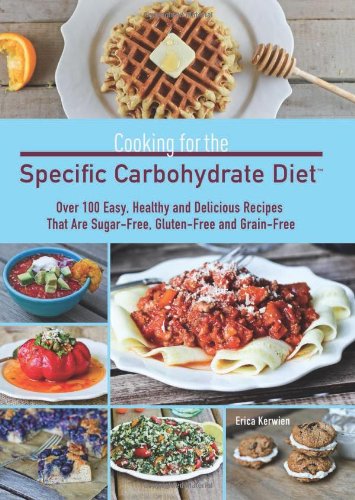
Cooking for the Specific Carbohydrate Diet: Over 100 Easy, Healthy, and Delicious Recipes that are Sugar-Free, Gluten-Free, and Grain-Free

Cooking for the Specific Carbohydrate Diet: Over 100 Easy, Healthy, and Delicious Recipes that are Sugar-Free, Gluten-Free, and Grain-Free   
Author: Erica Kerwien  
Publisher:Ulysses Press (2013)

There are a lot of diets out there – vegan, low fat, paleo, organic... but few of them are truly designed to bring the body back to a world of balance. The body is constantly walking a tightrope, and the lifestyle you have and the food you eat can pull you right off the wire. But what if you were eating all the “good” stuff – 2-3 glasses of milk a day, a whole wheat pita with hummus for lunch, sweet-potato oven fries with a dollop of lycopene-rich ketchup – but not absorbing it? Worse, what if those same foods were actually hurting you further? That is often the case with Crohn’s Disease – a devastating condition in which the body tears itself apart on the inside. An often overlooked treatment (there is, sadly, no cure) is a proper diet... and it may not be the Food Pyramid-style one you think. Elaine Gottschall became a revolutionary leader in digestive health when she developed the Specific Carbohydrate Diet, a program that has since led to thousands of would-be invalids with any number of GI conditions (namely Inflammatory Bowel Disease, celiac, colitis, food intolerances and even cystic fibrosis) experiencing full, enjoyable lives. A simple list of “dos” and “don’ts”, however, can be challenging for the lay person to translate into realistic meals and snacks, especially since the foods on the SCD can be unusual for some. Erica Keriwen lives the SCD life for the benefit of her son, who was diagnosed with Crohn’s Disease in 2005. She turned her life experiences and kitchen experiments into a comprehensive website and blog (http://comfybelly.com/) and compiled the best of her recipes into Cooking for the Specific Carbohydrate Diet: Over 100 Easy, Healthy, and Delicious Recipes that are Sugar-Free, Gluten-Free, and Grain-Free.

Specific Carbohydrate Diet (SCD) is filled with a host of meals and snacks designed to be not just safe for the patient to eat, but tasty enough for the whole family (and any guests) to enjoy. The book starts off with 12 pages of in-depth SCD information – history, science and a little hand-holding in terms of “allowable” and “banned” foods all feature in the introduction. Be forewarned, though, that some of the “science” written in this book’s pages are a little biased, and that this dies has not been tested and approved as “official” treatment for any GI condition by the regulating bodies, nor does it work for every patient or situation. As with anything health-related, it is worth checking with your doctor before embarking on any diet program, whether it’s for weight loss or (like the SCD) to treat an underlying condition. Keriwen is, however, good at downplaying some of the more radical appeals of diet supporters, focusing on the basics without becoming too technical. While the book has a well-laid out table of contents, I wish the book also included an alphabetical index at the back as it would greatly facilitate using this book. The photos, taken by Keriwen, are stunning and their captions do contain page numbers for reference. This is something readers will be thankful for, since not being able to try the Stuffed Bell Pepper (p. 125) recipe after it is presented so beautifully would be a form of culinary torture.

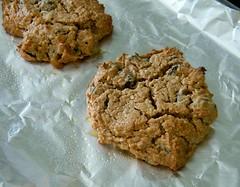
Cashew "Oatmeal Raisin" Cookies
“Oatmeal” Raisin Cookies (p. 146)
The recipes in SCD are varied, but not all of them are what I call “easy” – nor are they necessarily inexpensive to make. Many of the recipes in the later portions of the book require you to have one of the “basic” recipes from the second chapter already on hand. A tasty-looking Ranch Dressing (p. 73) needs both Mayonnaise (p. 68) and SCD Yogurt (p. 24), a process that is at least a 24-hour venture. Almost anything requiring cooking in fat uses Ghee (p. 28), which while not entirely foreign to Western palates is not something I can foresee myself just whipping up to make dinner. Still other recipes utilize Almond Milk (p. 16) and Coconut Milk (p. 19), which can be readily purchased provided you pay attention to the “dos and don’ts” on the list (p. 4-5). As most of the recipes also require the use of almond or coconut flours, nut butters and whole nuts, they can carry a hefty price-tag , and with honey as the sole form of sugar in the entire book those with sweet teeth will soon find themselves crying over their latest grocery bill. Given that this book is in no way vegan (fresh meat and fish, eggs and aged cheeses are allowed and encouraged), testing out this “unproven” lifestyle to cure any digestive woes requires a significant re-prioritizing of food spending. That said, for people at their wit’s end, the chance to achieve health is worth any price. While I have yet to figure out how any vegan could subsist on this diet (fruit and nuts?), with time and planning adhering to the SCD can be made slightly more cost effective through creative use of allowable legumes, eggs, fruit and vegetables, using canned fish and only eating meat on occasion.

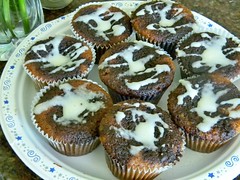
Cost and convenience aside, what do the recipes in SCD taste like? I tried a few of the book’s offerings and I have to say I am impressed by Keriwen’s culinary talent. It was actually a struggle for me to find recipes in this book that I could safely eat, given that the SCD’s mainstays of nuts, coconut, meat, eggs and oil are my IBD triggers and allergies. However, with a few modifications I really enjoyed the Beet Chips (p. 50) sprinkled with a sprinkle of coarse sea salt. The Roasted Cauliflower Rice (p. 115) was also fabulous and surprisingly filling paired with some basic, spicy black beans (one of the few allowed beans). On the sweet side of things, my non-GI-affected mom and grandma fawned over the “Oatmeal” Raisin Cookies (p. 146), and remarked at how closely the shredded coconut emulated the forbidden grains. I had my doubts when I was mixing the batter (I used cashew butter as I’ve heard it better emulates the “cookie dough” taste), as it seemed too wet and I couldn’t imagine the coconut concoction holding together – but lo and behold the recipe not only baked up perfectly, but it smelled identical to my mom’s standard cookie recipe in the oven! For a few of my gluten- and dairy-free friends, I had to whip up a batch of Keriwen’s famous coconut flour-based Cinnamon Bun Muffins (p. 96). It’s a good thing the recipe only makes 8 at a time, because they made my house smell maddeningly like the famous mall franchise. Apparently, they tasted just as good – if a bit on the eggy “French toast” side (the recipe uses 4 eggs per 8 muffins). The muffins did take longer than stated to bake through, however, and sunk a bit in the centre, but with such a wet, starch free batter that’s to be expected. Even sunken, the texture was akin to a lighter-style pound cake or a sour cream coffee cake with a baked-in topping. I can’t wait to try the same topping on a “normal” pound cake to see the result!

Cinnamon Bun Muffins
Cinnamon Bun Muffins (p. 96)

If a life with debilitating gut issues has turned you off the thought of ever cooking again, or if you are simply looking to eat fewer grain products, you can certainly do worse than a recipe in Erica Keriwen’s Cooking for the Specific Carbohydrate Diet: Over 100 Easy, Healthy, and Delicious Recipes that are Sugar-Free, Gluten-Free, and Grain-Free. Full of delicious, unique and (generally) nutritious ideas, everyone at the table will be able to have the Comfy Belly they deserve.

Monday, February 18, 2013

Fresh & Healthy DASH Diet Cooking: 101 Delicious Recipes for Lowering Blood Pressure, Losing Weight and Feeling Great

Fresh & Healthy DASH Diet Cooking: 101 Delicious Recipes for Lowering Blood Pressure, Losing Weight and Feeling Great
Author: Andrea Lynn
Publisher: Ulysses Press (2012)

Few foods can garner as much accolade and criticism as humble salt. Found in all colours of the rainbow, grinds from melt-on-the-tongue flakes to miniscule diamonds to crunch-in-the-teeth rocks, salt is the chef’s right hand seasoning. For all it’s wonderful flavour-enhancing properties, though, salt has the unfortunate side effect of raising blood pressure – a condition that can create heart problems over time – and thus has become the nemesis of the nutritionist. So what of the health conscious, flavour loving consumer? Must they sacrifice the taste of a well seasoned steak or pasta sauce, give up their cheese and eschew their soup? Or do they resign themselves to a lifetime of Avapro, Micardis and Diamox? Andrea Lynn thinks you can have all the flavour with minimal salt, and sets out to prove it in her book Fresh & Healthy DASH Diet Cooking: 101 Delicious Recipes for Lowering Blood Pressure, Losing Weight and Feeling Great.

The DASH diet is recommended because of it’s emphasis on fresh, whole foods and portion control. The basics of the diet are simple, and essentially follow the “official” Food Guides out there – making this way of eating one that most modern people should be following anyway. Where the DASH diet sticks out as a “name” is it’s limits on salt – not a problem with those used to mostly whole foods (since they don’t come pre-seasoned), but as processed foods are laden with both salt and sugar the reduction might come as a shock for others. Lynn does not eliminate salt in her cooking, by any means, nor does she eschew the use of canned products (though she does stress “low-sodium” varieties when they’re available). This practical, and in some cases streamlined, approach to cooking allows many of the recipes in Fresh & Healthy DASH Diet Cooking to fit perfectly into weeknight dinners.

Fresh & Healthy DASH Diet Cooking opens with a brief introduction to the nutritional basis of heart healthy eating, including portion control and food group servings. Recipes are categorized into Appetizers and Snacks, Salads and Soups, Sides, Pasta, Poultry, Meat, Fish and Shellfish, Vegetarian and Desserts. This is a commendable array, though I do with more variety was shown with the vegetarian features, including more vegan options, and less emphasis was placed on meaty mains. While I have nothing against eating meat, I do believe from a health and ecological perspective that a diet of mostly plant based meals is beneficial. There is also a somewhat depressing lack of desserts and sweets in Fresh & Healthy DASH Diet Cooking. While I realize the bake-shoppe is less likely to be the home of excess salt (in terms of home baking at least, given that packaged bread is the #1 source of sodium in our diet), I do know that many people who are required to follow a heart-health plan develop a sweet tooth and are always on the lookout for options that fit with their doctor’s guidelines.
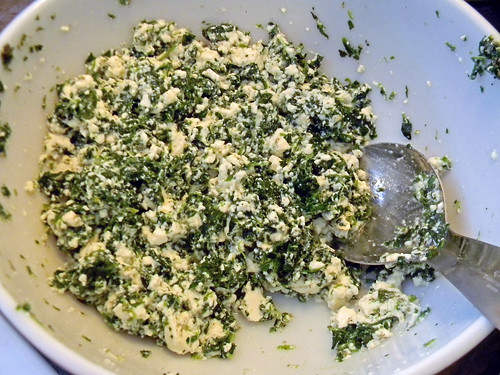
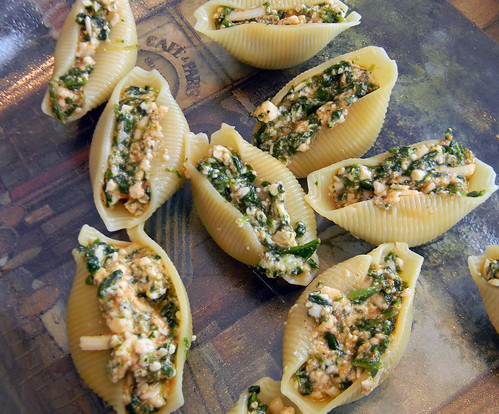
Tofu-Cheese-Spinach Filling
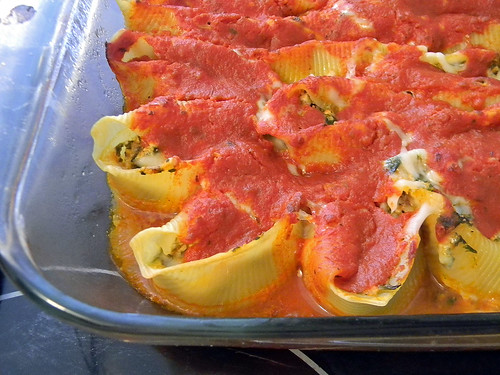
While a couple recipes in this book piqued my interest immediately, I decided to make Lynn’s recipe for Spinach Stuffed Shells (p. 62) first. What I liked about this recipe was that it contained mashed tofu in place of some of the cheese, much like a lasagne recipe I make. I did find a few adjustments necessary to make it applicable for our groceries and tastes, not to mention our budget. Around here, the jumbo pasta shells only come in 9 oz (not 12 oz) boxes, and while it’s called for in the book, I have never seen a whole-grain variety in either Canada or the USA. My family is not a huge fan of the fresh mozzarella called for in Lynn’s recipe, as it lacks any distinct flavour on its own and I felt that both the taste and texture of it combined with the tofu  would just be too much blandness. While I can appreciate the fact that fresh cheese is generally lower in sodium, when it comes to eating healthfully taste matters most. I opted for a blend of goat cheeses instead, which are lower in sodium and easier for the digestive tract to handle than their cow-milk counterparts while imparting a world of complex flavour. I also chose to add fresh garlic, which enormously added to the dish and was fresher and healthier than the granulated variety.

Spinach Stuffed ShellsI love the colourful pictures in Fresh & Healthy DASH Diet Cooking, though unfortunately some of them look nothing like the actual finished product. The Tofu Chocolate Pudding (p. 129) looks fantastic in it’s photo, but the actual pudding is lost in a sea of broken Oreos (which coincidentally have 7% of the RDA of sodium in a measly 4 cookie serving). The pudding itself, when made in my household, was not as elegantly rich brown either, though that could be a difference in chocolates. I haven’t attempted the Banana Bread (p. 133), but the picture looks like the recipe should contain molasses or another darkening agent other than maple syrup as its crumb appears to be rather dark.

Spinach Stuffed ShellsPhoto nit-picking aside, the recipes taste alright. But in no way will they come off as being the same as your “usual” fare – which can wreak havoc when cooking for children or picky adults. A few tweaks and mid-recipe taste-tests will greatly improve the reader’s experience and I encourage them to use fresh ingredients over canned or dried to get the most flavour and health benefits from the recipes. If you’re stuck for healthy meal ideas, this book is a good ace in your pocket, but more than anything this book’s nutrition information should spark the reader to begin modifying their own favourites and indulging in the DASH Diet lifestyle long before hypertension becomes an issue.

Available on Amazon

Tuesday, November 13, 2012

Quick and Easy Low-Cal Vegan Comfort Food: 150 Down-Home Recipes Packed with Flavor, Not Calories

Quick and Easy Low-Cal Vegan Comfort Food: 150 Down-Home Recipes Packed with Flavor, Not Calories
Author: Alicia C. Simpson
Publisher: The Experiment (2012)


Meat eater or meat-freer? Die hard carnivore, fish-head, veggie belly or flexitarian? There are so many diets out there that we all fit into at least one “category” when we eat! So, even if you’re not vegan, chances are you know someone who is. Celebrities all over the globe tout this way of eating – which eschews any and all animal-derived items including eggs, dairy and even honey – as the best way to eat for mind, body and planet. Ethical issues are often cited as reasons many eaters switch over, but increasingly the crusade has been led by people searching for a healthier lifestyle or a way to lose weight.

Unfortunately, just because something is “vegan” doesn’t mean it automatically becomes a beacon of health. Like with many gluten free foods, there are many “vegan friendly” recipes and processed foods that involve copious quantities of oil, sugar, salt and refined carbohydrates (potato chips and cotton candy are both gluten free and vegan, but are in no way good for you!). The balance of delicious, soul-nourishing fare and healthy, vegan eating is the focus of blogger Alicia C. Simpson’s latest book: Quick and Easy Low-Cal Vegan Comfort Food: 150 Down-Home Recipes Packed with Flavor, Not Calories. Simpson is the author of the blogs Vegan Guinea Pig and The Lady and Seitan, both filled with delicious food, reviews and discussion.

There is no denying the nutrition factor in this book. The first 30 odd pages detail “low calorie” eating, the importance of exercise, definitions of “low-fat / low-calorie”, “serving size” “nutrient density” and the like, and finally calorie-controlled menus for 1400, 1600, 1800 and 2000 calorie diets. A mini “glossary” of common vegan ingredients (i.e. nutritional yeast) is also included, and for true vegan neophytes this is a good read to have under your belt. I also appreciated the visually-appealing lists of serving sizes, covering common items in the “grains”, “vegetables”, “fruits” and “proteins”. The only issue I took with this part was the categorization of potato as a vegetable and not a “grain” like corn. Perhaps the phrase “starches” would have been better suited. As a nutritionist, I also appreciated the RDI tables for calcium and iron. However, I feel that the page of algebraic-like calculations to figure out caloric needs was excessive for a cookbook touted as “Quick and Easy”. There are many websites that are publicly accessible which calculate individual needs and eliminate the possibility of human mathematical error. The nutritional information is provided on each recipe, however the serving size isn’t – meaning that you would have to make the whole dish separately, weigh the components and portion out each element between serving bowls (not quick and/or easy) in order to get a proper calorie count and serving size.

Banana Nut Bread (p. 82)
In terms of the recipes, Low-Cal Vegan Comfort Food includes breakfasts, breads, snacks, sides, salads, soups, mains, desserts, beverages and condiments. Simpson also incorporates a section of “basics” – from simple roasted tofu to five types of seitan (including my favourite sausage – chorizo!). Many of the recipes use the same ingredients, or are themselves used in other recipes (aka “recipes within recipes”). This can be a boon or a hindrance to those looking for “quick and easy” – if you are willing to spend a weekend preparing all the basic elements of a meal for later in the week, then when it comes time to put it all together it is more than acceptable to expect a 30-minute turnaround time. However, this is not a book that caters to impulse cooking. For instance, Wet Burritos (p. 176) could very well be a weeknight meal – but not if you haven’t made the Taco Seasoning Mix (p. 234), Enchilada Sauce (p. 236) and Refried Beans (p. 112) first. Granted, you can (and should) make batch-ups of these components once you find a few recipes you love, and keep them on hand in either fridge or freezer. Would-be cooks from Low-Cal Vegan Comfort Food should also be familiar with the flavours, textures and preparation methods for things like quinoa, amaranth and millet and be prepared to spend the extra money (if not vegan normally) to buy liquid aminos, soy yogurt, non-dairy cream, “butter” and “cheese” and TVP. Unlike most nutritionist-vegans, Simpson is unabashedly a fan of both soy and gluten for protein, which is refreshing to see, but I do with there were more whole legume-based meals (the majority of the book’s legumes are in soup).

Banana Nut Bread (p. 82)
I had the experience of both resounding success and dismal failure while cooking from Low-Cal Vegan Comfort Food. Both the Crispy Chile Peas (p. 94) and the South Carolina Peach Jam (p. 240) were tasty and perfectly spiced and interesting twists on a crunchy snack and toast spread. However, the Buttermilk Biscuits (p. 68) had a very strange flavour – nothing reminiscent of buttermilk – and did not become the flaky puffs I know biscuits to be. The Banana Nut Bread (p. 82) never baked through, despite extra oven time and every trick in the book I knew of. The loaf was also woefully lacking in flavour, being devoid of vanilla or spices. I don’t expect a “spice cake” with my banana breads, but one without cinnamon? My batter-tasters agreed: it was definitely missing something, and both those recipes felt to me like a waste of fairly expensive soy yogurt and almond milk. Thinking that it could simply be that Simpson’s forte is not baking, I tried the Yellow Split Pea Soup (p. 148), and was overwhelmed by sweet and smoky flavour. There is no salt in the recipe (thankfully there are bay leaves, but too many for my taste), and I found that I needed at least a good teaspoon to bring it back over to the “savoury” side, and added lashings of black pepper and a pinch of basil to try and liven up the flavour. With the modifications I made, it was serviceable, and if I was to make it again I’d leave out at least two of the bay leaves. I did have some success with the Spiced Cranberry Sauce (p. 123), since it’s not as sweet as most (a quality I like), but then again it’s hard to mess up cranberry sauce! I would love to make the Chorizo (p.45) and the Moon Dusted Donuts (p. 214) but at this point I’m hesitant to try.

South Carolina Peach Jam (p. 240)
Vegan fare does not have to be boring, difficult, unhealthy or outlandish. Everyone needs to feel comforted by a meal every so often, and if they can do that while adhering to their dietary needs so much the better. There are many aspects to Alicia C. Simpson’s writing I like, some even love, but the inconsistent success I had with the recipes in Quick and Easy Low-Cal Vegan Comfort Food: 150 Down-Home Recipes Packed with Flavor, Not Calories indicates it will probably be a very occasional resource in my kitchen. 


Sunday, November 4, 2012

500 of the Healthiest Recipes and Health Tips You’ll Ever Need

500 of the Healthiest Recipes and Health Tips You’ll Ever Need
Authors: Hazel Courteney and Stephen Langley
Publisher: CICO Books (2012)

We are all trying to be healthier. Whether there is a specific goal in mind, like losing weight or treating a pre-existing condition, or there is just a general desire to feel better, overall wellness is paramount. Before turning to drugs or supplements as a “quick-fix” solution, why not try nature’s original medicine – food? 500 of the Healthiest Recipes and Health Tips You’ll Ever Need is a collection of nutrient-rich recipes and hints in a relatively easy-to-navigate, colourful format.

While this is a recipe book in title, Healthiest Recipes essentially takes on the role of baby-stepping bible for any sort of health complaint. Unfortunately, the “hype” associated with many “natural” and “holistic” nutrition circles carries into the book courtesy of Stephen Langley, a London-based naturopath. Now, I have nothing against natural remedies – in fact, I am a practicing holistic nutritionist myself – but many portions of this book are impractical or expensive to the average individual. In some cases the suggestions are even dangerous for those with the conditions the book is intended to treat! While well meaning, trying to be a “jack of all trades” just translates into contradiction and confusion for the readers. For example, in the “Anti-Allergy Foods” chapter (p. 22) the opening pages suggest tamari, miso and natto and suitable foods for a soy allergy, and even mentions tofu as being tolerable to some. Obviously, those with a true allergy will find this “handy swap” completely useless, as all of those items are soy based. Far more helpful would have been tips on how to spot potential allergens in ingredient lists, such as casein for milk-avoiders or xanthan gum for those with a corn allergy. There is no mention of avoiding cross-contamination in the kitchen or pantry either, which can lead to attacks in sensitive individuals. In “A Healthy Heart” (p. 116), the authors state initially to avoid all table salt, then mentions that it’s okay if not “in excess”. This would be fine if they had included what a “reasonable” level was, and also included any added salts in the blanket statement. There is also good deal of fuss made about gluten and wheat damaging the gut and affecting nutrient absorption (p. 32) immediately following two recipes containing gluten-ridden spelt, soba noodles (which are often made with a blend of wheat and buckwheat), soy sauce and stock (both of which often contain wheat and/or gluten). Gluten and wheat are too often presented as the “root of all evil”, but some notes simply state to “eliminate wheat”, which will not help matters a great deal if it is the gluten protein causing the issue. The statement that wheat and gluten free pastas are better for balancing blood sugar is also misleading, as many commercially available options are still made from processed, refined flours which spike glucose at the same (or worse) rates. The book even admits that “many gluten-free foods are high in cornstarch and/or syrup” (p.32), two items they denounce in earlier pages.

This is not to say every tip in Healthiest Recipes is fraught with inaccuracy. Many nutrition and health notes in the pages are correct and interesting to read. The most useful of these are often found in the “Food as Medicine” sidebars (like pineapple’s enzyme bromelian acting as digestive aid, anti-inflammatory agent, blood cell “lubricant” and anti-tumour agent (p. 62) and why having a banana before bed gives you the tryptophan your body needs to convert to melatonin for proper sleep (p. 249)). The “Health Tips” are for the most part no slouches either – being a mix of trivia (people with Type A blood suffer from more circulation-related problems and artherosclerosis (p. 121)), nutrient advice (CoQ10 acting like an energy “spark plug” and heart support (p.260)) and lifestyle modifications (how to get your kids (and you) moving more for a healthy heart (p.133)). However, some of the hints border on “too technical” for the average reader to pay attention to.

What should have been the most useful portion of is the “Larder List” (p. 16). However, this list of “staples” is so long that even the largest pantries would have trouble holding it all! Seven types of vinegar and six varieties of sweetener are listed, but the recipes often call for them at random points without explanation as to why one is better than another. No fewer than fifteen types of fats and oils are also listed along with 15 types of grains and a multitude of nuts and seeds. Aside from the spices, the majority of these ingredients are expensive and not used in any quantity large enough to give them true value in the common cash-strapped home.
The recipes in Healthiest Recipes are in general very good, if you can abide the complexity of them. Most readers will find some of the phrasing is confusing. I noticed that the delicious-looking Falafel with Avocado, Tomato, and Red Onion Salsa (p.85) “deep fries” the chickpea cakes in 3 tablespoons of oil – which is a ridiculously tiny amount for a cooking method that denotes that food is submerged completely in hot fat to cook. I was also amused to see rice milk being used in a dish that also contained goat’s cheese (p. 30) and another that calls for raw honey, then proceeds to broil it (p. 38) – two of the many contradictory ingredient lists in Healthiest Recipes. Most modifications are simple enough for the skilled cook to handle, and the use of internet search engines is invaluable for ingredient substitutions (especially in the case of sweetener and dairy substitutions). That said, the Cardamom Rice Pudding (p. 113) I made with almond in place of rice milk was surprisingly creamy and perfectly spiced, though I did need to add a touch of salt (an ingredient missing in most of the book’s recipes). The Ribbon Vegetable and Hummus Wraps (p.71) were a surprisingly simple, filling lunch that would have only been made better with the addition of some alfalfa sprouts for colour and bulk. My mother has bookmarked the Miso and Seaweed Broth with Noodles (p.141) to try out, being a fan of the Japanese broth, and the Beet and Walnut Cake (p.242) I made for some friends (using a stevia baking blend and honey in place of the xylitol) blend was devoured to praise.
Beet and Walnut Cake (p. 242) with Crabapple Jelly
If you’re looking to be the master of your own health, Hazel Courteney and Stephen Langley make a commendable effort to help you along the way. However, I’m questioning how many readers will find the book too confusing, preachy or impractical for their skills as cooks, nutritionists and doctors, or who will be unable to use the book to treat their conditions as intended due to homes with children, holidays and long commutes. Coupled with the errors in the nutrition recommendations and an exhaustive, hard-to-source grocery list, I’m waiting for some serious revision work to take place before I’d title this book the 500 of the Healthiest Recipes and Health Tips You’ll Ever Need.

Available on Amazon

Tuesday, May 1, 2012

The Healthy College Cookbook

The Healthy College Cookbook
Authors and Collaborators: Alexandra Nimetz, Jason Stanley, Emeline Starr, Rachel Holcomb
Publisher: Storey Publishing, LLC (2008) 

Stereotypical college life is fairly simple: dorm rooms, cafeterias, all nighters, takeout pizza and lots of liquid “sustenance” in both caffeinated and alcoholic forms. While it is definitely not as party-hearty as the movies and TV shows would have you believe, there is no denying the fact that students are in a very different situation than when Mom and Dad were in charge. Meal plans and the accessibility of not-so-healthy options in campus cafeterias make healthy eating a challenge, and with growing numbers of young adults leaving the nest without learning how to boil water the thought of using the kitchen facilities can be daunting.

Enter the by-students, for-students culinary solution: The Healthy College Cookbook. Written by Alexandra Nimetz, Jason Stanley and Emeline Starr, this new edition adds recipes from a fresh wave of post-secondary students and turns the simple “how to” original into a verifiable catalogue of ideas. Not only are the recipes simple, relatively quick to prepare and inexpensive, this cookbook is also filled with information on setting up your first kitchen, basic cooking techniques, grocery shopping and other “kitchen tips” that are smattered throughout the 283 pages. Handy symbols on each recipe denote vegetarian, vegan, “super quick” and “dorm room favourite” selections and all have a brief nutrition analysis provided for them.

For those who are truly new in the kitchen, the first chapter “Getting Started in Your First Kitchen” is a must read. Even as a seasoned home cook, I appreciated the tips the authors gave (like Three Easy Odour Beaters (p. 6)), and I wish that as a student I had the Cookware Essentials list (p. 3)! The herb and spice section is almost an encyclopedia (in a good way), including suggestions of what to use on what food you’re cooking. A small note on healthier substitutions (p. 17) is basic but useful for most “recipe makeovers”, and I particularly appreciated the line “... remember, 1 slice chocolate cake = 27 minutes on the Stairmaster!” (ironically for a 150 lb individual this is extremely close!). The only part of this introductory chapter I found lacking was the cupboard and fridge “essentials” list (p. 5-6), which has significant gaps in terms of what to keep on hand for most of the recipes to follow.
Peanut Butter Oatmeal (p. 26)

College Cookbook is categorized into eleven chapters, which is a bit superfluous given the bulk of them fit more than one “mould” (and some cases would do better in a different category). While Chicken and Bacon Quesadillas (p. 61) is documented as serving 8 to 10, I defy any college student to have just half of a tortilla as a snack. The entire contents of the “Pasta” section fit neatly into one of the Vegetarian, Seafood, Chicken, Meat or Sauce chapters, and the solitary turkey recipe (Turkey Burgers (p. 212)) looks awkward nestled in the Meat chapter with the beef and pork offerings. While the “Side Dishes and Sauces” chapter contains baked, twice baked and mashed potato recipes, the “Appetizer” section also contains a baked B.L.T. Tater (p. 58) which is essentially the same thing. A condensed table of contents and better categorization of the recipes would probably better suit the “easy” marketing angle of the book.

The actual recipes in College Cookbook are generally solid, dependable creations that the average student would both be able to and want to recreate. The meals are also those that can “grow” with the cook as they build their kitchen and cooking know-how, allowing enough free reign to experiment with flavours and ingredients while still maintaining the integrity of the original dish. That said, not all the recipes in this book are what I (or some students I consulted) would consider “healthy”. A single serving of the aforementioned Chicken and Bacon Quesadilla (half of one tortilla) clocks in at 230 calories and 13 grams of fat! Given that the majority of the student body would easily have two (if not more) servings at a time if they were feeling peckish, the Freshman 15 wouldn’t  be too far off.

Some recipes are too simple for anything but a child’s cookbook to have, such as Ants on a Log (p. 47) or Cottage Cheese on a Bagel (p. 72) while others are more complex, time consuming, hard to store, expensive or “gourmet” than what the average college cook is willing to approach. The “harder” recipes shouldn’t be discounted completely, however, as they are a wonderful place to turn when time and a fully equipped kitchen are on your side (perhaps over Summer break?). Even the “middle ground” items like Tofu and Broccoli Stir Fry (p. 133) are perfect for any home cook’s repertoire, regardless of their age or living situation. I love that this updated version of College Cookbook does contain a decent amount of tofu-based recipes and vegan options, and while a lot of the recipes are sorely lacking in vegetables as written, adding produce to stir fries, pastas, soups and casseroles is simple. Another strength of this book is it’s high ratio of “takeout”-like recipes. For anyone on a budget, let alone those who are chronically surrounded by fast food, being able to make a cheaper and healthier option is a big plus.

Chicken Curry (p. 202)

This book is definitely not just for broke, stressed out, time-crunched or lazy students looking for the next snack – although it suits that purpose as well. There is enough variation in the pages to tempt food lovers of any age, especially those who commute to work or have children to care for. I had the pleasure of having a lightning-quick, stick-to-your-ribs (albeit almost cement-thick) bowl of Peanut Butter Oatmeal (p. 26) one morning, while my mom has been enjoying reheating the Chicken Curry (p. 202) and Thai-Inspired Beef and Pasta (p. 150) at work. In both the case of the curry and beef dishes, I followed the student-life example of using what you have around and catered to my mom’s desire for vegetable-heavy dishes with a few substitutions and additions. The creamy curry (originally a milk-based sauce with diced onion and chicken cubes) became in essence a rich vegetable curry packed with mushrooms, cauliflower, snow peas and carrots and an occasional mouthful of chicken. The six ounces of thinly sliced, marinated round steak stretched to three filling, nutritious meals (rather than the two servings as written) with generous additions of carrot, green onion, mushrooms, bell pepper and snow peas. In both cases, the full flavour of the original recipe still shone through, and allowed the small amount of protein to carry through many meals without resorting to adding a huge amount of starch like rice or pasta. As we didn’t have any on hand, the macaroni in the Thai-Inspired Beef became brown rice stick noodles that my sister had brought back after her second year in university, adding a more authentic flair while also costing less per serving than standard Italian pasta. We’ve earmarked several other recipes in this so-called College Cookbook which are perfect for our hungry, busy and frugal family of five’s dinners as well.

Thai-Inspired Beef and Pasta (p. 150)

For those about to head off to school in September, or their parents, this book is a fabulous investment in the future. The health and wellbeing of young adults and families is at stake thanks to the inability of the younger generation to craft a meal from scratch and the lack of time or patience the older generation has to play teacher. The hidden value in this book is truly in that it makes cooking approachable and fun, two qualities which are frequently forgotten in the world of 500 page gourmet tomes and perfectly executed television shows. Anyone who pages through The Healthy College Cookbook will find something of value, be it a tip about deodorizing the kitchen or an impressive but low-fat burger, and the lessons learned along the way won’t be as fleeting as those from early morning lectures.

Available on Amazon

Thursday, September 22, 2011

The Safe Food Handbook: How to make Smart Choices about Risky Food

The Safe Food Handbook: How to make Smart Choices about Risky Food
Author: Heli Perrett, PhD
Publisher: The Experiment (2010)

Do you worry about the food you eat? Not the calories, fat content, allergy risk or carbon footprint, but the safety of your dinner menu every night? Parasites, bacteria, viruses and chemicals are all present in the culinary world, from the farms and processing plants to the delivery trucks and store shelves. Even the home and restaurant kitchens are not immune from the dangers that are exposed to our food every day. But what are the most significant risks, why, and who is responsible for controlling them? Heli Perrett, a former senior technical advisor at the World Bank, professor and sculptural artist examines these concerns in The Safe Food Handbook: How to make Smart Choices about Risky Food.

Approaching this book, I’ll admit that I was a little jaded in my expectations. After two years of intensive food and nutrition management and a third in holistic health and nutrition, I was fairly aware of the dangers in “risky foods” that existed (or lurked as the case may be, depending on whom you talk to). The problem with a book like Safe Food is that because regulations, outbreaks, health cautions and even the banning or allowing the sale of a product change so quickly, by the time it hits the store the information within may well have changed. While Perrett makes a good point regarding the risk of Mad Cow Disease in beef, she only specified Canadian cattle were the sole problem, rather than sharing the blame with the US and UK herds. The melamine fiasco in China is labelled as food terrorism, and she stresses how it “can happen so easily” (p. 199). Although it is risky to consume unpasteurized dairy, the author gives warnings regarding the consumption of yogurts with “live bacterial cultures” (p. 181) is less safe than more typical American-style, heat treated yogurts. I take exception to this particular mention because it is the very live bacteria in the yogurt which makes it such a nutritious choice. Far from causing infections and other ill effects, the organisms (Acidophilus and Bacillus in particular) compete with the overgrowth of toxin-creating organisms in the gut and “tone” the immune system to respond readily, preventing those issues as well as many others [1]. Those who were not aware of this would likely start at the words “live bacteria” and swear off the food forever. While Perrett is correct in her statement that canned produce, by virtue of the pasteurization process, contains almost no risk of bacterial infection (p. 48), it is at the expense of the nutrients found in most fresh or frozen goods. Modern grinds of meat (i.e. hamburger) are truly less at-risk for parasites and bacteria (p. 143), but what Safe Food omits is that these parasites are often eliminated by treatment with commercial ammonia [2].
 
I appreciated the author’s attention to the importance of industry labelling and guide to common “buzzwords” and phrases like “COOL” (Country Of Origin Labelling), “Certified Organic”, “Natural” and “Hormone Free” .This knowledge is truly of value to the average consumer, who may only be concerned with the general contents of their shopping choices and not each individual “what if” scenario in a meal. I also found each chapter’s inclusion of regulating bodies (or “Who Keeps it Safe?”) both intriguing and worth noting specifics of, especially when “mixed” products are concerned. “Try Regulating a Sausage” (p. 134) details the difficulty in controlling the entire process’ safety and consistency, with mention of the existing regulations as to the type or grade of meat, fat and filler contents, and type of casings. Sushi lovers like myself, anyone planning a pregnancy, or those with youngsters who eat seafood regularly will want to bookmark Perrett’s list of mercury levels in fish (p. 110), especially those on the coasts (since over 2500 pounds of the metal are dumped off the shores of San Francisco each year). Although I’m not overly concerned over the potential toxicity of the herbs and spices in my cupboard, Safe Food’s chapter on the subject (p. 267) is an interesting read in itself.

I did find it a bit odd – and in a way a bit contradictory – that after compiling this tome of personal risk “ratings”, the cause and reduction of food dangers, and the specific risks in produce, fish and shellfish, meat and poultry, dairy, eggs, grains, beans, nuts and even herbs and spices the author spends almost four pages convincing the reader that it isn’t all that much of a concern. Her final paragraph in the chapter “There Are Smart Ways to Cut your Food Risks” (p.28) includes the line “don’t let concern about the safety of your food become a straitjacket, unless it really has to be” (p. 32) and the mention that we consumers should, above all, enjoy our food. Her backpedalling in this section of Safe Food causes me to doubt how confident she is of her own statements, regardless of what her research may show. This is especially due to my discovery of her background not as a nutritionist, chemist, doctor or food scientist, but as a World Bank advisor, artist and Adjunct Professor of Public Policy Studies. Unfortunately, the list of references that would allow the reader to peruse Perrett’s comments is missing from the back of the book, although the author does include a list for “further reading” (which is not necessarily where she gleaned her own information).

While it is true that being an informed consumer is being a wise consumer, The Safe Food Handbook: How to make Smart Choices about Risky Food borders on the edge of fear-mongering in Heli Perrett’s quest to pick every nit in the food-consuming world. While there is good, valid information in this work, it is difficult to separate the significant dangers from those which generate the most “wow” factor in an audience without prior information, thus negating the need for much of this book’s writing.

Available on Amazon
 
[1] University of Pennsylvania School of Medicine (February 3, 2010). "'Good' bacteria keep immune system primed to fight future infections". ScienceDaily. Retrieved  September 22, 2011 from http://www.sciencedaily.com/releases/2010/01/100127095945.htm.

[2] Michael Moss (December 30, 2009). “Safety of Beef Processing Method Is Questioned”. New York Times. Retrieved September 22, 2011 from http://www.nytimes.com/2009/12/31/us/31meat.html.