Showing posts with label reference. Show all posts

Monday, April 13, 2015

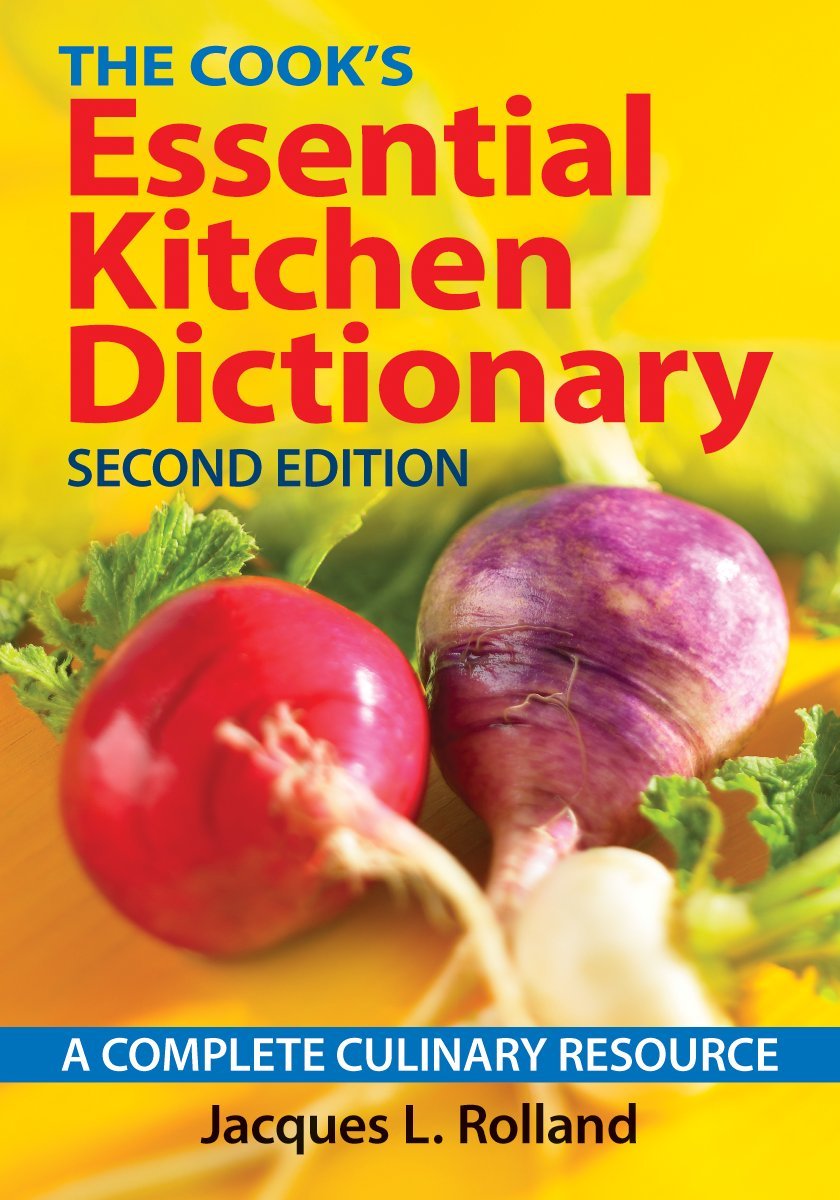
The Cook's Essential Kitchen Dictionary: A Complete Culinary Resource

The Cook's Essential Kitchen Dictionary: A Complete Culinary Resource
Publisher: Robert Rose (2014)

I am a total trivia nut. When I find myself intrigued by a certain subject or hear the mention of  something I’m unfamiliar with, I’m almost immediately gripped by the need to find out not just the definition, but to learn everything I can about it. Encyclopedias, compilations of articles or anecdotes, web searches and documentaries are my brain’s bread and butter – especially when it comes to the culinary world. As a foodie who always loves to try new techniques and cuisines, I often come across an ingredient that holds vaguely familiar meaning, but that I’m not confident enough to use without some background digging. Other times, I know “what” an item is but cannot describe it adequately, which makes writing recipe descriptions tough!

Enter The Cook's Essential Kitchen Dictionary: A Complete Culinary Resource by Jacques Rolland. This new, completely revised edition has thousands of definitions for all sorts of culinary terms, along with a wealth of historical background for many words and even in depth explorations of varieties within a blanket term (such as Apple (p. 25-27), where Rolland creates an inset to describe a host of cultivars from braeburn to winesap). For me, these insets are the true eye-candy in this book, consolidating items that could have been strewn alphabetically throughout the Kitchen Dictionary into one handy place. That said, the whole compilation is excellently cross-referenced and in perfect alphabetical order, making last-minute lookups (did I really just read Spotted Dick (p. 358) on that recipe card?) a breeze. The book is not illustrated in any way, but Rolland’s precise and descriptive writing colours in the pages in a way no photography could. Paging through, I can almost taste the Zuccotto (p. 416) Rolland mentions, and it’s enough to cause me to want to look up a recipe!

As well as answering spur of the moment cooking questions, the Kitchen Dictionary is simply a fun “did you know” type of book to read and absorb. Flipping through the pages reveals interesting tidbits of historical and cultural background for not only dishes but ingredients, tools and cooking methods. I never knew there was such a story to the humble, now-common Pineapple (p. 298) – from it’s close botanical relationship to Spanish moss to the fact that royalty in Spain and France at one point refused to eat it. Likewise, I had no idea that one of the flavouring agents in cream soda and vanilla ice cream was the extract of a certain iris flower root (Orris (p. 279). History buffs will get a kick out of many of the listings in this book too, and the breadth of information Rolland includes makes this work relevant in almost every country or cuisine.

Whether you adore finding out about the world around you as much as I do, need some clinchers for trivia night at the pub, or simply need an answer to one of the kitchen’s “what is that?” queries, The Cook's Essential Kitchen Dictionary: A Complete Culinary Resource lives up to it’s title and more. You’ll be surprised what you didn’t know about what’s on your plate!

Available on Amazon

Wednesday, January 14, 2015

The Essential Guide to Home Herbal Remedies: Easy Recipes Using Medicinal Herbs to Treat More Than 125 Conditions from Sunburns to Sore Throats

The Essential Guide to Home Herbal Remedies: Easy Recipes Using Medicinal Herbs to Treat More Than 125 Conditions from Sunburns to Sore Throats 
Author: Melanie Wenzel
Publisher: Robert Rose (2014)

In the past, before Big Pharma and the test tube medicine-dependent generations hit the scene, people had two choices when it came to treating ailments: do nothing and suffer (and possibly perish) or turn to Mother Nature's bounty for relief. Nothing has changed about the potent healing qualities of plant life - nature still provides effective relief against all sorts of diseases and conditions - the difference is that today those remedies have been distilled, encapsulated and sold in a bottle. Home healing is enjoying a new upsurge in recent times (as chemical medicines begin to lose effectiveness with resistant bacteria strains), and the quest for effective and simple remedies is at an all time high. Books like Melanie Wenzel's The Essential Guide to Home Herbal Remedies: Easy Recipes Using Medicinal Herbs to Treat More Than 125 Conditions from Sunburns to Sore Throats are surely set to do their part in the education process.

Home Herbal Remedies is a relative encyclopedia of holistic medicinal ingredients, and divides itself into categories based on classes of ailments (i.e. adult lifestyle complaints like muscle strains, stress, colds and flu, pain, pregnancy, child-, men- and women-specific issues and senior medical concerns). The beginning of the book includes a history of herbal medicine as well as a basic guide for using teas, tinctures, oil infusions, healing vinegars, inhalations, compresses and poultices, herbal baths, and aromatherapy. Shortly before the index, Wenzel includes a chapter on "plant portraits from A - Z" which covers all the major elements in her formulae.

Each section contains a few "recipes" for home remedies, ranging from infused oils to superfood-filled muffins, and while they may be effective at helping to achieve the ultimate goal of health I admit that most of them are just not practical for the modern working individual and some are dubious in their effectiveness at best. I have yet to find a doctor or parent who would use marigold petals steeped in rubbing alcohol as the sole cleaning agent for wounds, nor can I see anyone jumping up for a bottle of Tea Tree Oil Mouthwash (p. 145) the next time their significant other comes to call. The major issue is really the amount of time it takes for these remedies to show any effectiveness - far from the almost-instant relief of prescriptions and over the counter capsules, natural remedies take days, if not months, before their effects are evident.

While this book is a fascinating exploration of what is available beyond the pharmacy, I don't predict it will become anyone's sole how-to guide for daily living. After all, even Grandma still reaches for the Tylenol for a sick baby while the chicken noodle soup simmers for lunch.

Available on Amazon

Sunday, November 4, 2012

500 of the Healthiest Recipes and Health Tips You’ll Ever Need

500 of the Healthiest Recipes and Health Tips You’ll Ever Need
Authors: Hazel Courteney and Stephen Langley
Publisher: CICO Books (2012)

We are all trying to be healthier. Whether there is a specific goal in mind, like losing weight or treating a pre-existing condition, or there is just a general desire to feel better, overall wellness is paramount. Before turning to drugs or supplements as a “quick-fix” solution, why not try nature’s original medicine – food? 500 of the Healthiest Recipes and Health Tips You’ll Ever Need is a collection of nutrient-rich recipes and hints in a relatively easy-to-navigate, colourful format.

While this is a recipe book in title, Healthiest Recipes essentially takes on the role of baby-stepping bible for any sort of health complaint. Unfortunately, the “hype” associated with many “natural” and “holistic” nutrition circles carries into the book courtesy of Stephen Langley, a London-based naturopath. Now, I have nothing against natural remedies – in fact, I am a practicing holistic nutritionist myself – but many portions of this book are impractical or expensive to the average individual. In some cases the suggestions are even dangerous for those with the conditions the book is intended to treat! While well meaning, trying to be a “jack of all trades” just translates into contradiction and confusion for the readers. For example, in the “Anti-Allergy Foods” chapter (p. 22) the opening pages suggest tamari, miso and natto and suitable foods for a soy allergy, and even mentions tofu as being tolerable to some. Obviously, those with a true allergy will find this “handy swap” completely useless, as all of those items are soy based. Far more helpful would have been tips on how to spot potential allergens in ingredient lists, such as casein for milk-avoiders or xanthan gum for those with a corn allergy. There is no mention of avoiding cross-contamination in the kitchen or pantry either, which can lead to attacks in sensitive individuals. In “A Healthy Heart” (p. 116), the authors state initially to avoid all table salt, then mentions that it’s okay if not “in excess”. This would be fine if they had included what a “reasonable” level was, and also included any added salts in the blanket statement. There is also good deal of fuss made about gluten and wheat damaging the gut and affecting nutrient absorption (p. 32) immediately following two recipes containing gluten-ridden spelt, soba noodles (which are often made with a blend of wheat and buckwheat), soy sauce and stock (both of which often contain wheat and/or gluten). Gluten and wheat are too often presented as the “root of all evil”, but some notes simply state to “eliminate wheat”, which will not help matters a great deal if it is the gluten protein causing the issue. The statement that wheat and gluten free pastas are better for balancing blood sugar is also misleading, as many commercially available options are still made from processed, refined flours which spike glucose at the same (or worse) rates. The book even admits that “many gluten-free foods are high in cornstarch and/or syrup” (p.32), two items they denounce in earlier pages.

This is not to say every tip in Healthiest Recipes is fraught with inaccuracy. Many nutrition and health notes in the pages are correct and interesting to read. The most useful of these are often found in the “Food as Medicine” sidebars (like pineapple’s enzyme bromelian acting as digestive aid, anti-inflammatory agent, blood cell “lubricant” and anti-tumour agent (p. 62) and why having a banana before bed gives you the tryptophan your body needs to convert to melatonin for proper sleep (p. 249)). The “Health Tips” are for the most part no slouches either – being a mix of trivia (people with Type A blood suffer from more circulation-related problems and artherosclerosis (p. 121)), nutrient advice (CoQ10 acting like an energy “spark plug” and heart support (p.260)) and lifestyle modifications (how to get your kids (and you) moving more for a healthy heart (p.133)). However, some of the hints border on “too technical” for the average reader to pay attention to.

What should have been the most useful portion of is the “Larder List” (p. 16). However, this list of “staples” is so long that even the largest pantries would have trouble holding it all! Seven types of vinegar and six varieties of sweetener are listed, but the recipes often call for them at random points without explanation as to why one is better than another. No fewer than fifteen types of fats and oils are also listed along with 15 types of grains and a multitude of nuts and seeds. Aside from the spices, the majority of these ingredients are expensive and not used in any quantity large enough to give them true value in the common cash-strapped home.
The recipes in Healthiest Recipes are in general very good, if you can abide the complexity of them. Most readers will find some of the phrasing is confusing. I noticed that the delicious-looking Falafel with Avocado, Tomato, and Red Onion Salsa (p.85) “deep fries” the chickpea cakes in 3 tablespoons of oil – which is a ridiculously tiny amount for a cooking method that denotes that food is submerged completely in hot fat to cook. I was also amused to see rice milk being used in a dish that also contained goat’s cheese (p. 30) and another that calls for raw honey, then proceeds to broil it (p. 38) – two of the many contradictory ingredient lists in Healthiest Recipes. Most modifications are simple enough for the skilled cook to handle, and the use of internet search engines is invaluable for ingredient substitutions (especially in the case of sweetener and dairy substitutions). That said, the Cardamom Rice Pudding (p. 113) I made with almond in place of rice milk was surprisingly creamy and perfectly spiced, though I did need to add a touch of salt (an ingredient missing in most of the book’s recipes). The Ribbon Vegetable and Hummus Wraps (p.71) were a surprisingly simple, filling lunch that would have only been made better with the addition of some alfalfa sprouts for colour and bulk. My mother has bookmarked the Miso and Seaweed Broth with Noodles (p.141) to try out, being a fan of the Japanese broth, and the Beet and Walnut Cake (p.242) I made for some friends (using a stevia baking blend and honey in place of the xylitol) blend was devoured to praise.
Beet and Walnut Cake (p. 242) with Crabapple Jelly
If you’re looking to be the master of your own health, Hazel Courteney and Stephen Langley make a commendable effort to help you along the way. However, I’m questioning how many readers will find the book too confusing, preachy or impractical for their skills as cooks, nutritionists and doctors, or who will be unable to use the book to treat their conditions as intended due to homes with children, holidays and long commutes. Coupled with the errors in the nutrition recommendations and an exhaustive, hard-to-source grocery list, I’m waiting for some serious revision work to take place before I’d title this book the 500 of the Healthiest Recipes and Health Tips You’ll Ever Need.

Available on Amazon

Tuesday, September 11, 2012

The Locavore Way: Discover And Enjoy The Pleasures Of Locally Grown Food


The Locavore Way: Discover And Enjoy The Pleasures Of Locally Grown Food
Author: Amy Cotler
Publisher: Storey Publishing (2009)
 
Eating local is all the rage these days. From tiny roadside stands with Bristol-board signage proclaiming backyard strawberries to five star restaurants building entire tasting menus from local suppliers and reality television challenges, it's the latest trend in food culture for good reason. Local food is picked riper and shipped less, allowing the best nutrition and (most importantly) the truest flavours of the fruit or vegetable to shine. While you would figure that the task of eating what is produced around you is an easy one, it's not always the case. Labelling is hit and miss, some farmers markets are actually selling imported goods and occasionally the prices are higher thanks to the lack of corporate mass-farming operations keeping costs to a minimum. Amy Cotler attempts to ease the transition to a more locally based diet in her book The Locavore Way: Discover And Enjoy The Pleasures Of Locally Grown Food.

Locavore Way is if nothing else a valiant attempt to humanize the still somewhat elitist world of farm-to-table living. With a personable writing style and many helpful lists and subsections including stories from producers who follow the "local food first" philosophy, Cotler addresses many key concerns such as sourcing local food, finding farmers markets and restaurants who provide truly auto-produced or regional fare, how to shop and prepare what you buy or grow for the best results and most importantly - doing all of this on a budget. While similar books become akin to sermons or lectures on how conventional eating is the root of all evil, and usually promote a strict vegetarian way of life, Locavore Way is less so. A certain amount of preaching is present however, especially where the chapter Connect and Engage (p. 180) and the appendix section Key Events in Local Food History (p. 216) are concerned, but in general the message Cotler brings is full of passion and backed with experience, whether her own or her interviewees.

Unfortunately, due to the fact that anything to do with local eating is by nature only applicable to the immediate surroundings, some of this book specific points and examples lack relevance for anyone outside of Cotler's location of northeastern America. Many of the points mentioned in Locavore Way are, while important in their own right, also dependent on living in cities within the United States with easy access to services like Community Supported Agriculture (p. 47), bulk Buying Clubs (p. 67) and well stocked supermarkets and specialty grocers, not to mention longer growing seasons and better climates than those in Canada or the United Kingdom can hope to have. This book also struggles with a lack of fresh, revealing content for it's target audience. In essence, the messages shared in anyone outside of Cotler's location of northeastern America. Many of the points mentioned in Locavore Way are intuitive, and the majority of consumers already understand the basics of why and how to eat locally that make up this book's skeleton. A lot of the information in this book is identical across chapters and sections, simply re-stating the same facts in different language, occasionally sounding like the author simply turned to a Thesaurus and re-wrote what came up. A section that would have been appreciated is a section of tips for finding a "better option" when, as in the case of us up north, local options are out of season or too expensive. A portion of the book I looked forward to, "The Seasonal Eater" (p. 18), is unfortunately impractical for the majority of readers, since today people tend to thrive on variety, not to mention an array of foods in the diet is important for overall health. Even her well-intended section "10 Reasons to Eat Locally Produced Food" (p. 10) is written from an idealistic perspective - for instance, point #3 (For the health and safety of your family and yourself) is not necessarily the case - just because a vegetable or loaf of bread came from next door doesn't mean it isn't laden with chemicals, pesticides and preservatives, less processed or more sound nutritionally than a similar item. Number 6 (For an open, working landscape) would be wonderful if it was as common as Cotler may have you believe, but the truth remains that local production does not equal historical or pristine landscapes and environments.

I appreciated the fact that Cotler took the time to connect with like minded farmers and document their stories, particularly those of Breezy Hill Orchard and Stone Ridge Orchard (p. 35) which were a great eye opener as to the challenges of biodynamic farming. Her section on "Local vs. Organic" (p. 13) was refreshing to read as well, as it reiterated what many shoppers are unaware of in terms of the costs of certification preventing many local farms from applying the label regardless of their identical practices. Her farmer's market planning guide (p. 23) is fantastic, especially for those who have never ventured to one. "15 Ways to Become a Locavore" (p. 4), while imperfect in it's ability to be applied carte-blanche across livelihoods and locales, is a good start for complete local neophytes and worth a read even if you've eaten local for years. While the section dedicated to seasonal eating was more flash and less substance, readers can find lists of what to look for (at least in the northeastern US) by season in the sections titled "The Seasonal Market" (p. 33) and a sample CSA "share" listing from Sproutwood Farms (p. 64). As a foodie, the chapter Play with your Produce (p. 146) was a wonderful resource for preparation and serving ideas (whether using local or supermarket fruits and vegetables), and as it covers some of the less familiar items like celeriac, jicama, fennel, kohlrabi, Jerusalem artichokes and tomatillos the information may entice even the wariest cook to look at it in a different way. For budding gardeners, Locavore Way also has a fairly basic starter guide to growing your own, but I would suggest true beginners consult a gardening manual before jumping in head first.

For those just discovering the local way of eating, The Locavore Way: Discover And Enjoy The Pleasures Of Locally Grown Food is a good first read to test the waters with. Amy Cotler takes care to inform, inspire and impassion even the most skeptical consumer, and provides enough solid, basic material that readers can move on and apply specific principles to their lives in the way that suits their lifestyles best. A perfectly 100-mile existence is out of reach for many, but regional and in-season eating is attainable at least some of the year. When it's as close as your backyard, there's no reason not to try a taste of local living.

Available on Amazon

Wednesday, August 1, 2012

The Beginner’s Guide to Edible Herbs: 26 Herbs Everyone Should Grow and Enjoy

The Beginner’s Guide to Edible Herbs: 26 Herbs Everyone Should Grow and Enjoy
Publisher: Storey Publishing (2010)
Borage (p. 29) Blossoms
My family is fortunate enough to have a large and varied backyard garden providing us with months of organic produce every year. From heirloom tomatoes, carrots and beets to my stepdad's favourite hot peppers and Romano beans, we run the growing gamut as it were - we even have a vineyard, strawberry patches, and both fig and Meyer lemon trees! When it comes to appreciating this bounty, we try to keep things as simple as possible, but after a while we fall into a rut with our flavour pairings. Sure, salt and freshly ground black pepper on still-warm tomatoes is fantastic, and hot peppers are wonderful on sandwiches and pizza, but fresh herbs have the ability to elevate even the most pedestrian, store bought items to new heights. While we often buy our herbs at the grocery store, they are easy and certainly more economical to grow at home - whether in the garden or in planters on the windowsill. What to choose for your kitchen herb garden, how to grow it and - most importantly - how to use it are the tenets of Charles WG Smith's book The Beginner’s Guide to Edible Herbs: 26 Herbs Everyone Should Grow and Enjoy.

Oregano (p. 107)

Smith's book is small and succinct in that it only contains 26 of the hundreds of culinary herbs available. However, this 143-page manual contains everything a gardener could need to know about those herbs, and the ones chosen for inclusion in Edible Herbs really are some of the most quintessential in classical European and North American cooking. The beautifully photographed images in this book lend assurance to the reader that they are buying the correct item once at the nursery, and I have brought this guide with me on occasion so that the staff could help me find a particular plant. This was incredibly helpful, especially in the case of herbs like calendula (p. 36), borage (p. 29), bee balm (p. 26) and the hyssops (pgs. 11, 80), since these plants are more often grown for their gorgeous blossoms than for their culinary applications. Some readers may even find that a flavour goldmine is sitting in their own backyards!

Catnip (p. 46) Leaves and Blossoms
Once the herbs for this season (at least) are chosen, Smith really begins his strongest work. If the reader is unsure about growing anything at all (I know several "black thumbs" out there), the introduction to Edible Herbs addresses the best places to plant in general, "companion" herbs and vegetables, preventing the common "herb sprawl" (with a clever little piece titled Beware the Garden Huns (p.3)) and general care and tending. There is even a handy "yield guide" (p. 6) to prevent the gung-ho gardener having to give away (or worse, throw out) armfuls of mint or lemon balm halfway through the season. I only wish I had read this book sooner, since with only two catnip plants I've been giving away tons of it, not to mention "doping up" our three cats almost every day! Each herb in the book is given it's own chapter, which is divided into "garden" and "kitchen" sections. The "In the Garden" sector covers seeding, final planting and harvesting techniques, as well as providing a simple-to-read chart of ideal soil and  light for that particular plant, as well as whether it is considered an annual or perennial.
Dried Calendula (p. 36) Petals

Once the bounty of herbs is harvested, the "In the Kitchen" component of each of Edible Herbs' chapters comes through, providing ideas as to just what to do with each part of the plant that is considered edible, flavour pairings to try, and general tips on usage. These tips are along the lines of when to add an herb to a dish for best flavour (beginning, midway through or as a finishing touch), if the herbs should be cooked with the other ingredients or only used raw, and whether it's best to choose a fresh or dried version in a recipe. After reading that calendula (p. 36) was considered a saffron substitute, I immediately bought three plants for my own herb garden with grand plans for paella. Unfortunately, the combination of unseasonably warm weather and our hungry backyard wildlife meant I only managed two harvests before they all perished or were eaten, but what I could save I dried, now I can't wait for my first batch of rice pilaf with "Canadian saffron".

Drying Calendula (p.36)

The thing I find confusing with this book is that the recipes and culinary guides are not always cohesive with the herb chapter they appear in. For instance, Making Herbal Vinegars (p.101) is nestled between Marjoram and Mint, yet neither of the two recipes offered contain either of those herbs. Also, while I don't expect complete innovation in terms of recipe suggestions, I did hope for something slightly more than a pizza (p. 110) for oregano and pickles for dill (p. 65). That said, the recipes themselves are good, solid formulae, and once our vegetables catch up I'm looking forward to enjoying the spicy-sweet Red Onion, Mango and Chile Salsa (p. 60) and bowls of the hearty Beta Soup (p. 25) well into the fall and winter.

A "Lemon" Variety of Thyme (p. 137)
For so few herbs included in the pages of Edible Herbs, the level of inspiration available to the reader is astounding. From budding gardeners to old pros in the dirt, kitchen newbies to seasoned gourmands, one of the twenty-six is likely to find a niche in your household. Some herbs may be completely foreign to your eye and palate, while others will be old favourites, but Charles W.G. Smith brings them all together in an accessible, approachable guidebook. With The Beginner’s Guide to Edible Herbs: 26 Herbs Everyone Should Grow and Enjoy, there is no excuse for not going green in your diet and your yard.  

Available on Amazon

Thursday, September 22, 2011

The Safe Food Handbook: How to make Smart Choices about Risky Food

The Safe Food Handbook: How to make Smart Choices about Risky Food
Author: Heli Perrett, PhD
Publisher: The Experiment (2010)

Do you worry about the food you eat? Not the calories, fat content, allergy risk or carbon footprint, but the safety of your dinner menu every night? Parasites, bacteria, viruses and chemicals are all present in the culinary world, from the farms and processing plants to the delivery trucks and store shelves. Even the home and restaurant kitchens are not immune from the dangers that are exposed to our food every day. But what are the most significant risks, why, and who is responsible for controlling them? Heli Perrett, a former senior technical advisor at the World Bank, professor and sculptural artist examines these concerns in The Safe Food Handbook: How to make Smart Choices about Risky Food.

Approaching this book, I’ll admit that I was a little jaded in my expectations. After two years of intensive food and nutrition management and a third in holistic health and nutrition, I was fairly aware of the dangers in “risky foods” that existed (or lurked as the case may be, depending on whom you talk to). The problem with a book like Safe Food is that because regulations, outbreaks, health cautions and even the banning or allowing the sale of a product change so quickly, by the time it hits the store the information within may well have changed. While Perrett makes a good point regarding the risk of Mad Cow Disease in beef, she only specified Canadian cattle were the sole problem, rather than sharing the blame with the US and UK herds. The melamine fiasco in China is labelled as food terrorism, and she stresses how it “can happen so easily” (p. 199). Although it is risky to consume unpasteurized dairy, the author gives warnings regarding the consumption of yogurts with “live bacterial cultures” (p. 181) is less safe than more typical American-style, heat treated yogurts. I take exception to this particular mention because it is the very live bacteria in the yogurt which makes it such a nutritious choice. Far from causing infections and other ill effects, the organisms (Acidophilus and Bacillus in particular) compete with the overgrowth of toxin-creating organisms in the gut and “tone” the immune system to respond readily, preventing those issues as well as many others [1]. Those who were not aware of this would likely start at the words “live bacteria” and swear off the food forever. While Perrett is correct in her statement that canned produce, by virtue of the pasteurization process, contains almost no risk of bacterial infection (p. 48), it is at the expense of the nutrients found in most fresh or frozen goods. Modern grinds of meat (i.e. hamburger) are truly less at-risk for parasites and bacteria (p. 143), but what Safe Food omits is that these parasites are often eliminated by treatment with commercial ammonia [2].
 
I appreciated the author’s attention to the importance of industry labelling and guide to common “buzzwords” and phrases like “COOL” (Country Of Origin Labelling), “Certified Organic”, “Natural” and “Hormone Free” .This knowledge is truly of value to the average consumer, who may only be concerned with the general contents of their shopping choices and not each individual “what if” scenario in a meal. I also found each chapter’s inclusion of regulating bodies (or “Who Keeps it Safe?”) both intriguing and worth noting specifics of, especially when “mixed” products are concerned. “Try Regulating a Sausage” (p. 134) details the difficulty in controlling the entire process’ safety and consistency, with mention of the existing regulations as to the type or grade of meat, fat and filler contents, and type of casings. Sushi lovers like myself, anyone planning a pregnancy, or those with youngsters who eat seafood regularly will want to bookmark Perrett’s list of mercury levels in fish (p. 110), especially those on the coasts (since over 2500 pounds of the metal are dumped off the shores of San Francisco each year). Although I’m not overly concerned over the potential toxicity of the herbs and spices in my cupboard, Safe Food’s chapter on the subject (p. 267) is an interesting read in itself.

I did find it a bit odd – and in a way a bit contradictory – that after compiling this tome of personal risk “ratings”, the cause and reduction of food dangers, and the specific risks in produce, fish and shellfish, meat and poultry, dairy, eggs, grains, beans, nuts and even herbs and spices the author spends almost four pages convincing the reader that it isn’t all that much of a concern. Her final paragraph in the chapter “There Are Smart Ways to Cut your Food Risks” (p.28) includes the line “don’t let concern about the safety of your food become a straitjacket, unless it really has to be” (p. 32) and the mention that we consumers should, above all, enjoy our food. Her backpedalling in this section of Safe Food causes me to doubt how confident she is of her own statements, regardless of what her research may show. This is especially due to my discovery of her background not as a nutritionist, chemist, doctor or food scientist, but as a World Bank advisor, artist and Adjunct Professor of Public Policy Studies. Unfortunately, the list of references that would allow the reader to peruse Perrett’s comments is missing from the back of the book, although the author does include a list for “further reading” (which is not necessarily where she gleaned her own information).

While it is true that being an informed consumer is being a wise consumer, The Safe Food Handbook: How to make Smart Choices about Risky Food borders on the edge of fear-mongering in Heli Perrett’s quest to pick every nit in the food-consuming world. While there is good, valid information in this work, it is difficult to separate the significant dangers from those which generate the most “wow” factor in an audience without prior information, thus negating the need for much of this book’s writing.

Available on Amazon
 
[1] University of Pennsylvania School of Medicine (February 3, 2010). "'Good' bacteria keep immune system primed to fight future infections". ScienceDaily. Retrieved  September 22, 2011 from http://www.sciencedaily.com/releases/2010/01/100127095945.htm.

[2] Michael Moss (December 30, 2009). “Safety of Beef Processing Method Is Questioned”. New York Times. Retrieved September 22, 2011 from http://www.nytimes.com/2009/12/31/us/31meat.html.


Thursday, August 18, 2011

The Baking Answer Book: Solutions to Every Problem You'll Ever Face; Answers to Every Question You'll Ever Ask

The Baking Answer Book: Solutions to Every Problem You'll Ever Face; Answers to Every Question You'll Ever Ask
Author: Lauren Chattman
Publisher: Storey Publishing, LLC (2009)

Some of us grew up in the kitchen clamouring to stir cookie dough and knead bread with nary a box mix in sight, especially if Mom, Dad or Grandma was around to guide the process. While mixes and pre-made foods clearly still have a consumer following, the trend now is to eliminate the excess processing and additives that go into those items and return to the call of scratch baking. So what then of the ones who grow up without an intuitively baking parent – or who were too busy racing around as children that the kitchen didn’t hold that same allure? Scratch baking is not out of reach for the average kitchen elf thanks to the wealth of comprehensive baking guides on bookstore shelves. Arguably one of the most concise and well organized of these resources is Lauren Chattman’s work The Baking Answer Book: Solutions to Every Problem You'll Ever Face; Answers to Every Question You'll Ever Ask.

In Baking Answer Book, readers will find 350 pages of common questions and their detailed, practical answers in an easy to read, no-frills format. Chattman includes only the information that the common baker would find useful in day-to-day applications, and her information spans an array of topics from Ingredients (p. 1) and Equipment (p. 38) to complex Layered Pastry (p. 277) and the often-problematic Yeast Breads (p. 308). The author also includes recent additions to the baker’s kitchen by addressing questions on non-stick, insulated and silicone bakeware (p. 43-46). Chattman also incorporates applications of her answers, with simple and reliable recipes for classics such as Low-Fat Wheat-Bran Muffins (p. 136), Oatmeal Chocolate Chip Cookies (p. 162), New York Cheesecake (p. 220) and the quintessential No-Knead Bread (p. 332). By no accounts, however, is Baking Answer Book a recipe manual. The goal is to inform and ease the creation of the modern cook’s own recipes, not build their cookbook repertoire from ground zero.

This book is one that all bakers, aspiring and experienced, will find useful. Chattman’s tips on freezing batters (like muffins (p. 133) – an application I had never thought of) and doughs (breads are “risky” (p. 337) while cookie dough is better than baked in this respect (p. 191-193)). While I don’t need her help on the subject of pastry bags and tips or cake-frosting techniques (p. 231-238), having taken classes at George Brown College and making up my own solutions for many issues, I did love the author’s glossary of the varieties of cake (p. 201), and her charts of pan volumes (p. 47), as well as metric equivalents (p. 356) as a reference. Having also made many a pie by my mother’s side, much of the help Chattman offers on this subject (p. 240-276) was wasted on me. However, Chattman includes the invaluable conversions of whole to crumbled cookies for crusts (p. 271) and a handy storage guide for the baked pies (p. 274-275). Detailed resource lists for any and all things baking related, including Chattman’s most valued cookbooks, fill the final pages of this book. Those living at high altitudes will be delighted to know that Baking Answer Book includes a special appendix of these answers as well (p. 351).

The only minor issue I do take with Chattman’s piece is in her discussion of specialty flours. While those who out of necessity keep gluten-free diets will already know their “can” and “can’t” grains and flours, others may not realize that soy flour is completely gluten-free (not “substantially lower” as the author notes (p. 12)) as is buckwheat (lumped into a list of specialty flours but whose status is ignored while the other grains have mention (p. 13)). Again, this is a minor oversight but is one of the reasons why information from a variety of sources is always preferable on a subject such as this.

I thoroughly enjoyed The Baking Answer Book: Solutions to Every Problem You'll Ever Face; Answers to Every Question You'll Ever Ask by Lauren Chattman – it is truly an incredible resource and has both piqued my interest in the “whys” of baking, and answered many questions I have asked over the years. I look forward to sharing the knowledge with those bakers around me and applying it to my own kitchen experiences.

Available on Amazon

Sunday, August 7, 2011

The Peanut Allergy Epidemic: What's Causing It and How to Stop It

The Peanut Allergy Epidemic: What's Causing It and How to Stop It
Author: Heather Fraser
Publisher: Skyhorse Publishing (2011)

Does your work or school have a “no-nut-no-peanut” policy? Allergies to tree nuts, as well as to the botanically unrelated legume known as the peanut, are rampant in modern Western society, with over 4 million cases of peanut allergy currently diagnosed in the United States alone. Why the
 Western community falls victim to this hyper-reactivity while those countries building their cuisine on the backbone of these legumes is the focus of Heather Fraser’s book The Peanut Allergy Epidemic: What's Causing It and How to Stop It.

It needs to be noted before utilizing Epidemic as any sort of authority on peanut allergies that Fraser is not a medical professional in any sense. Rather, the author is a historian by trade, whose child suffered an anaphylactic reaction to peanut butter at the age of thirteen months. Her love of historical details shows strongly in this book, as Fraser spends three full chapters on the subject (only one of which regards the peanut allergy in particular). In fact, the bulk of the first two “parts” of this book are completely removed from the issue splashed across the cover. Fraser covers the history of “mass allergy” and theories behind developing anaphylactic reactions in general long before getting into the “nitty gritty” of the peanut reactions. To be fair, her investigation into this forum, especially it’s impact on children, is fairly detailed, with comparisons of socio-political, economic and clinical factors and a worldwide statistical contrast in the final chapter of the book.

While I’m sure Fraser means well with this publication (the second in her peanut allergy series, which began with The History of the Peanut Allergy Epidemic), it is all too clear that she is on a mother’s one-track mind as to who she blames for her son’s reaction. My main issue with Epidemic is that Fraser incessantly blames the vaccinations given to children for the rise in peanut allergies to the exclusion of any of the other 15 theories she glosses over in Chapter 2. The culprit she cites is the mercury used as a preservative in the serum, as well as the peanut oil that was once used as a carrier for the inert virus. Today, however, the only adjuvant legal for use in the US and Canada is aluminium hydroxide, and discernable mercury traces are only found in the flu shot and Hepatitis B vaccine administered around age 11 – long after anaphylactic allergies make their presence known. Fraser also neglects to mention at all in this book that these severe allergies she is focusing on are all mediated by an antibody class that is determined by genetics and in-utero conditions before birth and generally are not modified by external forces. It also raises the question as to why beef, chicken and egg allergies aren’t equally as prevalent due to the fact that beef extracts are still a large part of vaccine sera and many of the virus cultures are generated on chicken embryos and egg whites.

While I do appreciate the need for an awareness vehicle when it comes to the increase in severe childhood allergies, Epidemic borders on the extremist with respect to the anti-vaccine campaign. I had hoped for a more balanced investigation on the variable causes listed in the index, as the topic is an interesting and ever-popular one, but instead I felt a bit like I was reading a fear-mongering manifesto. Given my own background in holistic nutrition and homeopathy, I was left wondering whether a book written by an alternative health practitioner (not a “common” doctor) would be in a similar style.

For a purely historical reference, The Peanut Allergy Epidemic: What's Causing It and How to Stop It by Heather Fraser is worth a perusal. However, it is not a reliable medical text, nor should it be used as a parent’s sole source of information when choosing whether or not to vaccinate their child. I would not generally recommend this historian’s book to those looking for an answer to their allergy woes.

Available on Amazon