Showing posts with label 2017. Show all posts

Tuesday, March 27, 2018

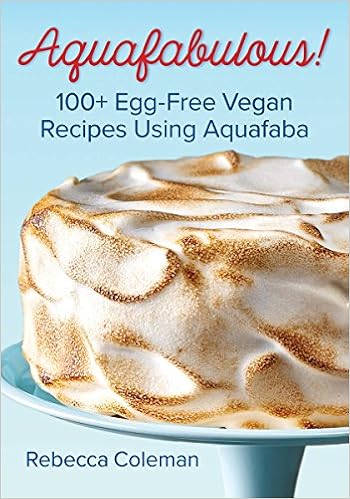
Aquafabulous!

Aquafabulous!: 100+ Egg-Free Vegan Recipes Using Aquafaba
Publisher: (2017)

Vegans and egg-free foodies are singing the praises of a new egg substitute. Aquafaba – also known as bean liquor or the brine found inside cans of legumes like chickpeas or cannellini beans – is versatile, low-calorie and found in almost every home. Instead of draining beans down the sink, aquafaba converts have turned the liquid into meringues, waffles, crepes and even mayonnaise. Rebecca Coleman has compiled a collection of vegan recipes using both aquafaba and the beans that make it in her book Aquafabulous!: 100+ Egg-Free Vegan Recipes Using Aquafaba.

As can be expected from any Robert Rose book, Aquafabulous! begins with a highly detailed introduction to the topic, including manufacturing and storing homemade aquafaba. Coleman also includes a “vegan pantry” listing of ingredients common in her recipes, including miso paste, nutritional yeast and tofu. While the book is exclusively vegan, even cooks new to the cuisine will be able to turn out flavourful and satisfying meals once they peruse the chapter. Each chapter has it’s own table of contents, making browsing through the book simple, and a well-referenced index helps users look up a specific recipe. The chapters are categorized by meal type (e.g. Breakfast, Baked Goods and Mains), although the author mentions her own three classifications of recipes in the introduction. Aquafabulous!, according to Coleman, can first be categorized into vegan “basics” – things like making your own aquafaba, non-dairy milks and other “recipes for recipes” that form components for meals later in the book. Second, there are recipes using the aquafaba itself – either in breading preparations (e.g. Grown-Up Tater Tots (p. 76)), as a binder (e.g. Vegetable Fritters (p. 60)) or for leavening (e.g. Chocolate Mousse (p. 173)). These recipes are what readers generally search for when they pick up a book on aquafaba – it’s one thing to loud the possibilities of this bean liquid, but quite another to put it to use practically. Lastly, Coleman provides recipes to use up the “by product” of aquafaba procurement: the beans themselves. Chickpea Curry (p. 100) is a bright, not-too-spicy main dish that uses exactly 1 (16 oz.) can of chickpeas – although those of us in Canada are more used to the 19 oz. cans, which work just fine.
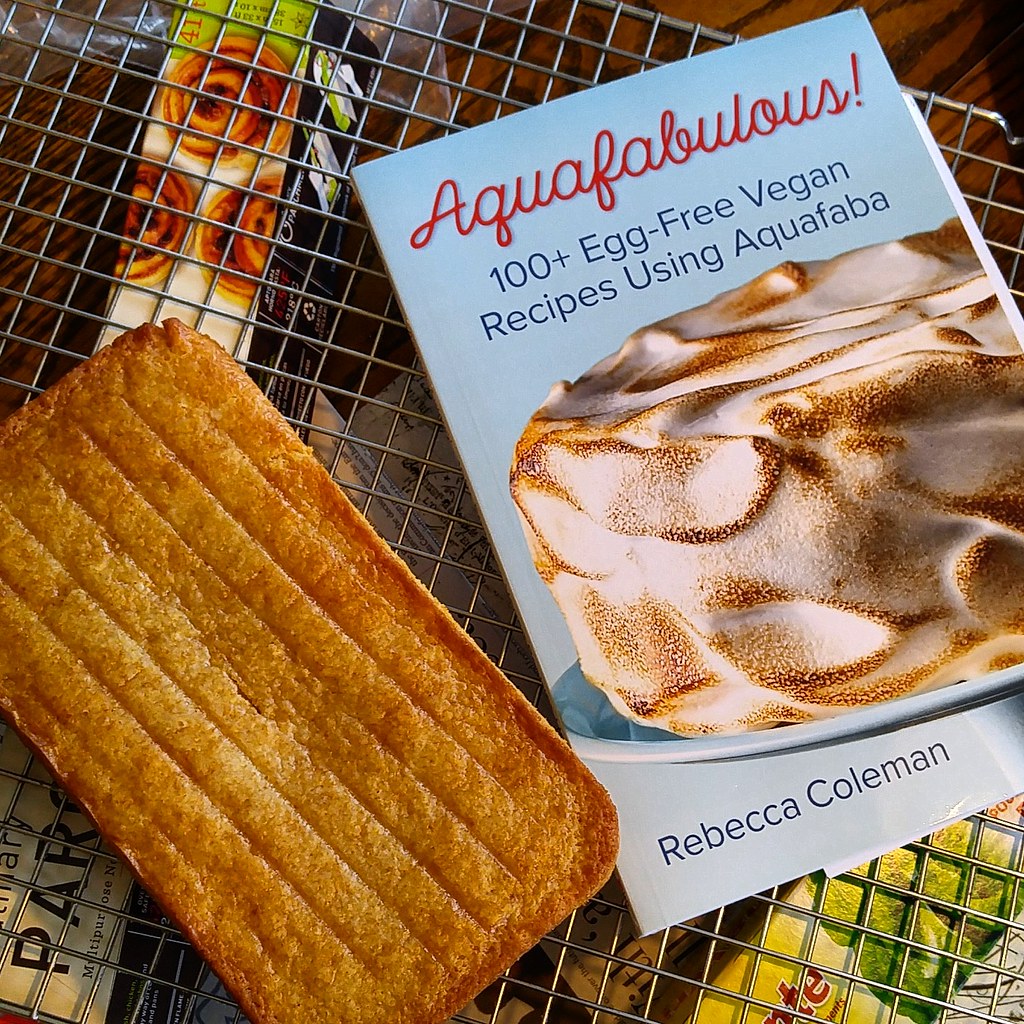
Aquafabulous!

The book is clear about where aquafaba’s strengths are: the baking world. The whipped foam was miraculously like beaten egg whites in cakes and muffins, adding lightness and a rather fine texture in most cases. Meringues (p. 144) were ethereally light – provided they were made on a dry day and not in the middle of a snowy winter day. Heavier batters, like the Lemon Rosemary Polenta Cake (p. 150), just weighed the foam down however, becoming a dense, somewhat oily but nevertheless tasty snack suitable for afternoon tea or as a sweet-savoury dessert after a heavy meal. However, I should note that with simple, relatively one-note flavours such as those in meringues, it is critical that a light, low-flavor bean is chosen. Cannellini and chickpea brine is ideal for most applications, as it adds neither colour nor any perceptible “bean” flavor. Black or kidney bean brine can be used, regardless of what mainstream aquafaba converts say, but they are best suited for richer flavours like chocolate (in Decadent Chocolate Brownies, p. 160) or spices (Carrot Cake, p. 152).
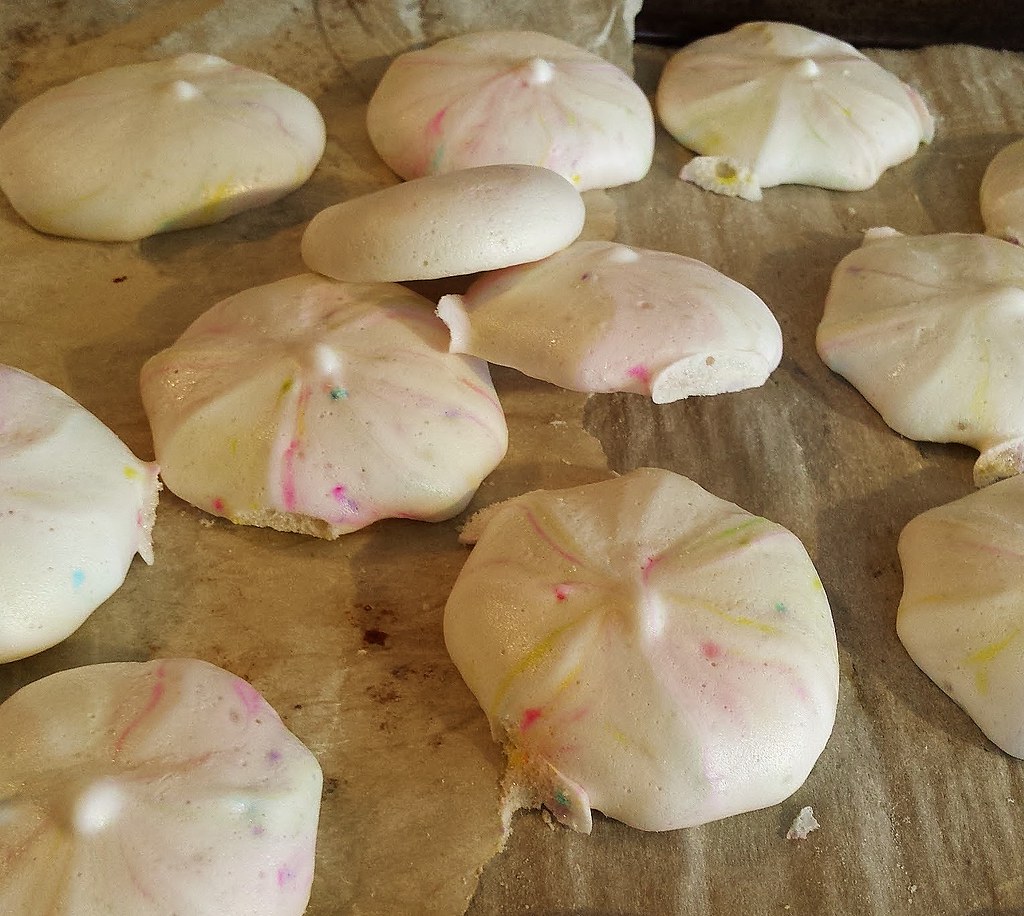
"Cake Batter" Aquafaba Meringues

While there are certainly many aquafaba-containing recipes in this book, the star ingredient can be difficult to locate at times. Some recipes have the aforementioned “basic” components made from aquafaba as a condiment, others have no aquafaba or beans at all, which is highly confusing. If I am going to buy a book about a subject, I would expect a compilation of information and practical applications for the topic at hand. In this respect, Aquafabulous! is best described simply as a vegan cookbook, not one dedicated to the craft of cooking with the title ingredient.

Aquafabulous!: 100+ Egg-Free Vegan Recipes Using Aquafaba is definitely a good buy for those embracing a vegan diet, or who wish to find an innovative way to bake egg-free. There are enough aquafaba recipes to be useful for beginners, but those looking for a more in-depth manual will find the information and innovation lacking. Rebecca Coleman shows promise as a cookbook author and I look forward to seeing further cookbooks from her.

Monday, October 23, 2017

All-in-One Guide to Cake Decorating: Over 100 Step-by-Step Cake Decorating Techniques and Recipes

All-in-One Guide to Cake Decorating: Over 100 Step-by-Step Cake Decorating Techniques and Recipes
Author: Janice Murfitt
Publisher: Fox Chapel Publishing (2017)
From Amazon:

This comprehensive and accessible guide to cake decorating teaches all of the techniques and tricks that aspiring sugarcrafters need to create stunning and impressive cakes. Everyone will think these amazing cakes came from the best bakery in town! First Steps in Cake Decorating reveals dozens of expert cake decorating ideas that are simple to achieve yet look stunning. All the most popular methods of icing and decoration are covered, including buttercream, sugarpaste, chocolate, marzipan and flower paste. Detailed, easy-to-follow instructions explain the basics of preparing and using different types of icing, illustrated with step-by-step color photographs. There is a delicious array of fantastic cakes here to suit adults and children alike. Beginners will pick up the basics fast, and even experienced cake decorators will find inspirational new ideas.
Browsing through this book was like being back in introductory pastry school, but scaled way up. While the instructions are thorough and the photo-by-photo illustrations certainly helpful, this book is overwhelming in it's complexity, especially for someone who perhaps decorates two or three cakes a year for family and friends. The book covers cake shaping and filling as well as fondant techniques, which are interesting and something I would want to be able to do - but the techniques are so involved that I personally felt that hands-on instruction would be needed before I dared to try them at home. However, for those people either in, or contemplating, a pastry or cake decorating course, I highly suggest this book as a supplementary text, as it reinforces the lessons most programs teach.

The book's greatest strength is it's use of photography. Each page is full of full-coloured shots that generally illustrate key points or techniques, although there are some pages where the images are superfluous and somewhat dated. The passion for photography is no wonder, as the author's website is essentially a photography portfolio and states that her projects include working with photographers, advertising agencies and media companies.

While the basics of cake decorating don't really change, I would have been interested to see some of the newer trends covered as well (i.e. Russian tips, ombre). I did thoroughly appreciate the "Basic Recipes and Helpful Hints" chapter, particularly the charts to help you calculate how much fondant / marzipan and royal icing you would require for a certain size cake, as well as the portion guide. The templates are adorable, and would undoubtedly be useful for those unsure about their skills or who are attempting more intricate designs.

Overall, if you are serious about getting into the world of cake decorating, Janice Murfitt's book All-in-One Guide to Cake Decorating: Over 100 Step-by-Step Cake Decorating Techniques and Recipes is a good place to start, and pairs well with "in person" instruction. However, for the everyday baker, it is more of a coffee-table novelty than an instruction manual.

Thursday, July 20, 2017

175 Best Small Batch Baking Recipes

175 Best Small Batch Baking Recipes
Author: Jill Snider
Publisher: (2017)

My family is not huge on sweet things. Sure, they’ll have the occasional cookie or slice of pie on a special occasion, but “dessert” most nights is a bowl of yogurt with honey, cocoa and berries. That said, I love to bake more than anything else – and finding a compromise between assuaging my desires and having the freezer overflow is tricky. That’s why I was excited to try out Jill Snider’s book 175 Best Small Batch Baking Recipes, which claims it makes “[t]reats for 1 or 2”.

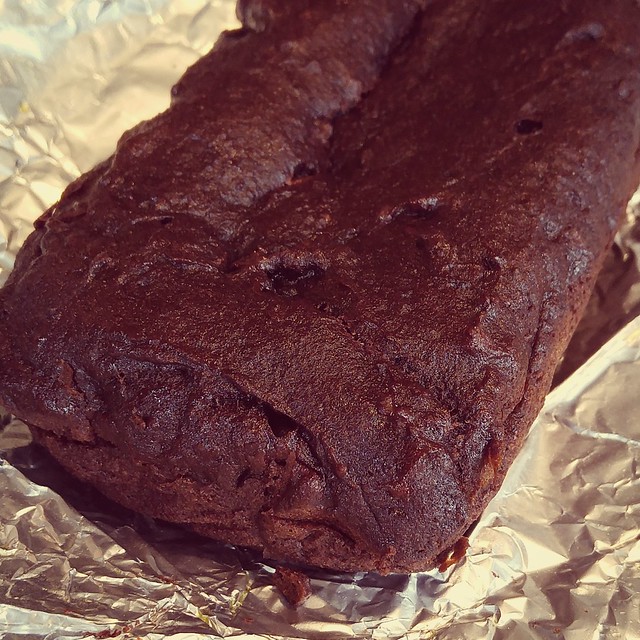
Gluten Free Chocolate Banana Cake
Gluten Free Chocolate Banana Cake (p. 246)
Small Batch Baking has everything a “sweet kitchen” baker could ask for in a cookbook. Myriads of cookies, from biscotti to shortbread, no bake bars to brownies and fruit squares, muffins and loaves are all part and parcel here. There are also mini pies and crumbles, gluten free options, and even cheesecakes are presented in adorable miniature. For the most part, Snider does not ask for specialty baking pans (the cheesecakes, however, need a 6” springform) and the ingredients are common and generally inexpensive. I enjoyed the fact that brownies, bars and cakes here use loaf pans for form, making slicing even easier and making everything look like a “Bûche de Noël” when frosted. The ability to make just 6 or 8 cookies, instead of 40, was also greatly appreciated – and it allowed me to offer more than one variety in a gift basket!

The first treat I made from this book played highly to my love of cooking and baking for specialty diets. The last recipe in the book, Gluten Free Chocolate Banana Cake (p. 246), was easy to put together (even for my mom, a novice in allergy-free baking) and didn’t call for specific flour mixtures that can be tricky to find. Snider even gives a tip on substitution in the sidebar (and experienced gluten free bakers will be able to swap things in and out on their own). Many such sidebars are peppered throughout the book, and are always worth a read. The cake was, in a word, decadent – perfectly chocolatey, with a hint of banana flavour (if I wanted more of the fruit to shine I would roast the banana first) and a moisture that survived freezing, thawing and traveling for hours in the car. I opted not to frost the cake since I was transporting it, but the Banana Butter Frosting (p. 186) that was suggested (again in the sidebar) sounded divine. That frosting was just one of the six frostings and glazes offered in the book, again scaled down to practical use size.

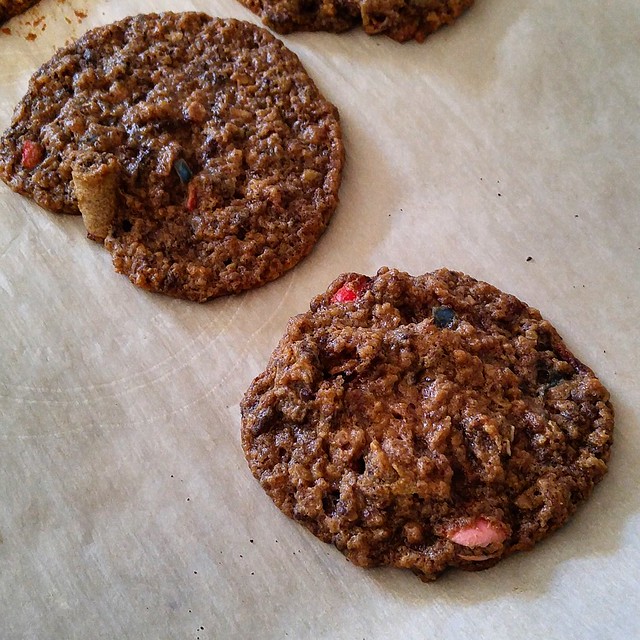
I also tried another unique recipe from Small Batch Baking – Judie’s Chocolate Chip Cookies (p. 63). The recipe called for lard, which I substituted for home-rendered tallow, giving the cookies a slightly “doughnutty” aroma. The author states that the cookies are “soft”, but I found that even at the minimum bake time they spread and became crispy, almost wafer-like. The recipe never called for chilling the dough, as most cookie recipes do these days, and in retrospect I should have given the oats that were also in the batter. The flavour, however, was delicious and rich, if a tad greasy, and they were a hit with both adults and kids alike.

"Judie's Chocolate Chip Cookies"
Judie’s Chocolate Chip Cookies (p. 63)

I’m happy that a baking book exists for small families and people who (like me) just can’t stay out of the kitchen. 175 Best Small Batch Baking Recipes will definitely be put to use during the holiday gift-giving and potluck season, and I look forward to picking out some favourites for my household in the meantime.

Available on Amazon