Friday, February 23, 2024

Wild Sugar: Seasonal Sweet Treats Inspired by the Mountain West

Wild Sugar: Seasonal Sweet Treats Inspired by the Mountain West is a delightful cookbook that captures the essence of the rugged mountain region through its diverse and delicious dessert recipes. Written by chef and food writer, Lindsey Johnson, this book offers a unique take on traditional sweets by incorporating ingredients and flavors commonly found in the Mountain West.

The writing style of Wild Sugar is approachable and engaging, making it easy for home cooks of all skill levels to follow along. Johnson provides clear and concise instructions, as well as helpful tips and tricks to ensure success in the kitchen. Her passion for the Mountain West shines through in her writing, adding a personal touch to each recipe.

One of the standout features of this cookbook is the variety of recipes it offers. From classic favorites like Wild Huckleberry Pie and Rocky Mountain Chocolate Cake to more unconventional treats such as Sage Lemon Shortbread and Juniper Berry Cheesecake, there is something for everyone in this book. I've already earmarked the Vanilla Shortbread Cookies with Pressed Flowers for when my nasturtiums pop up again! Each recipe is thoughtfully curated to make use of seasonal ingredients, showcasing the freshness and abundance of the mountain region.

The photographs in this cookbook are stunning and truly bring the recipes to life. From vibrant photos of fresh berries and herbs to mouthwatering shots of decadent desserts, the imagery in Wild Sugar is sure to inspire cooks to get into the kitchen and start baking. The photography perfectly captures the rustic and natural beauty of the Mountain West, adding to the overall experience of the book.

Wild Sugar: Seasonal Sweet Treats Inspired by the Mountain West is a solid investment for any home baker. Currently available for $28.30 USD on Amazon, this cookbook offers a wealth of unique and delicious recipes that are sure to impress family and friends. With its beautiful photography and thoughtful writing, Wild Sugar is a valuable addition to any cookbook collection.

Overall, Wild Sugar: Seasonal Sweet Treats Inspired by the Mountain West is a must-have for anyone who enjoys baking and wants to explore new and exciting flavors. With its wide range of recipes, engaging writing style, beautiful photography, and reasonable price point, this cookbook is a standout in the world of dessert cookbooks. Whether you're a seasoned baker or a beginner looking to expand your skills, Wild Sugar has something for everyone. Pick up a copy today and bring a taste of the Mountain West into your kitchen.

Available on Amazon

Wednesday, August 25, 2021

The Unofficial Hogwarts Cookbook for Kids

The Unofficial Hogwarts Cookbook for Kids: 50 Magically Simple, Spellbinding Recipes for Young Witches and Wizards
Author: Alana Al-Hatlani
Publisher: Ulysses Press (2021) 

Official Press Release:

Perfect for any young fan of Harry Potter, The Unofficial Hogwarts Cookbook for Kids by Alana Al-Hatlani will have aspiring witches and wizards brewing potions, baking stellar treats, and cooking creative dishes in no time. From breakfast all the way to dessert, this book makes any meal or snack extra special (and educational!), with recipes like:
Rock Cakes
Granola Bars “Owl Food”
Magic Star Fruit Salad
Pumpkin Pasties
Cauldron Cakes
Acid Lollipops
Sticky Toffee Pudding
Butterscotch Beer, and much more!

The Unofficial Hogwarts Cookbook for Kids is the perfect primer to get the young chefs-in-training active in the kitchen with their parents. As a family, you’ll have fun learning cooking terms and kitchen skills with recipes that range in complexity so that all kid chefs and their potions masters (or parents) can whip up something amazing.


Review: 

I grew up with the Harry Potter book and movie series, and one of the most prevalent images woven throughout it is that of food. There is such an emphasis on meals and treats that it made me want to recreate the magical food even as a young adult. But where to start?
Alana Al-Hatlani has compiled 50 recipes inspired by the Harry Potter universe that are geared for children and their parents to make and enjoy together, and this seemed like a good place to start exploring.

Having taught cooking lessons to children ages 5-13 over the last 7 years, I am always on the look out for comprehensive children's cookbooks. To me, it's important that cookbooks geared for children not only have simplified recipes with ample photos (kids are visual beings after all!) but some educational component to them - what does it mean to simmer, whisk, fold? This book contains a section with safety and getting started cooking called "In the Home Kitchen: How to Cook Without a Magic Wand" (p. 10) which is arguably one of the most comprehensive chapters of it's kind that I've seen in any cookbook, let alone a children's one. The tips and guidelines in this section closely mirrored the rule list I gave out in my classes, so that made me smile. The second part of the introduction was Common Recipe Terms (p. 12) which again is well-written in language that children can understand (or parents can easily explain). 

Onto the recipes - here is where it is abundantly clear that this is a children's cookbook, though there are some drastic outliers which brought me pause. The recipes in this book range from the incredibly simple "non-recipes" such as Fruit Skewer Wands (p. 42) - sticking pre-cut pieces of fruit on a wooden skewer - or Orange Juice (p. 122) which (you guessed it) involves juicing oranges -  to those that require extensive use of the stove or oven. For instance, I personally would not be making the Easy Marmalade recipe (p. 27) if I had to keep an eye on a child, let alone letting them take the reins cooking it to a setting point of 220F (the recipe uses the cold-plate set test as well, which adds an extra layer of risk in my opinion). The fact there are instructions to make toast made me chuckle, though I can concede some children do need explicit instructions. The marmalade that I made (without children running around) was good, and simple as far as other marmalade recipes go, but I will dice the peel more should I make it again as "slices" were far too chewy.


Then there are recipes that make no sense at all within the Harry Potter universe, and feel like they were simply page-fillers to get the recipe count to 50. I read the books avidly (as our completely beaten up first edition of Philosopher's Stone can attest) and not in a single one do I remember Grilled Cheese (
p. 50), Pizza (p. 54), Quesadillas (p. 58), Macaroni and Cheese (p. 61) or pretty much anything in the Dinner section being mentioned. I'm not saying the recipes are not worth making - the Macaroni and Cheese as well as the Shepherd's Pie (p. 71) both look quite enticing - but since this is a Harry Potter themed cookbook they just seem thrown in there without reasoning.

The photos in this book are fantastic and draw the eye, though it is important to note that with a few exceptions they are stock images and may not reflect what the recipes actually look like. Side by side, the quality difference is noticeable between the author's photos and the professionally taken and edited ones, though when viewed independently they are still clear and informative. 

In general I would recommend this book as a standard children's cookbook intended for littles to cook alongside their parents, do basic prep work and clean up. I wouldn't say this is truly a Harry Potter cookbook though, since the bulk of the non-snack recipes are not featured anywhere in the series and they seem a little misplaced with the theme. However, for learning to read recipes and dabble in the mundane magic that is the kitchen this book is absolutely worth a look - and who knows, maybe it will inspire a few more kitchen magicians to follow their culinary dreams!

Available on Amazon

Tuesday, December 24, 2019

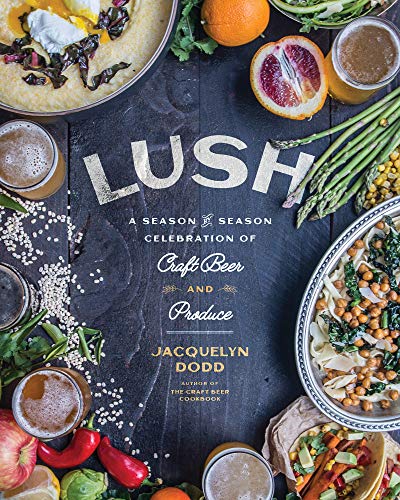
Lush: A Season-by-Season Celebration of Craft Beer and Produce

Lush: A Season-by-Season Celebration of Craft Beer and Produce
Author: Jacquelyn Dodd 
Publisher: Agate Surrey (2019) 


From the publisher:
Beer today is increasingly as seasonal as produce; its ingredients come from the soil and are harvested at peak freshness, just like the offerings at local farmers markets. Lush is perfect for fresh produce lovers and craft beer lovers alike. The cookbook translates complex flavor profiles into easy-to-follow recipes for at-home kitchens. Dodd's beautiful, insightful recipes—which also happen to be vegetarian—open the door to deliciously complex flavors that evolve with the seasons, and respond perfectly to food-world trends, such as the surge of seasonal farm-to-table eating, the push to support local businesses like breweries and farmers markets and, of course, our ever-growing appreciation
great craft beer. 

My review:
In college, beer was my drink of choice (until I discovered my multiple allergies, at least). But aside from in chocolate cake or fish n' chip batter, I never really considered it as an ingredient - beer went with a meal, not in it! However, after reading through Lush: A Season-by-Season Celebration of Craft Beer and Produce, I've changed my tune. This book is not simply a "cooking with beer" volume for college students who yearn to add alcohol to everything (they know who they are!). Rather, this book delves deep into seasonal cooking and eating, and just happens to be using the beer varieties that are appropriate for each. Dodd makes great use of produce that is available (and usually at a great price) for each of the four seasons the book is divided into, from Summer peaches (which are pickled in summer ale (p. 115)) to Winter squash, onions and hearty greens that are stars on top of a stout-infused pizza crust (p. 195). Every course is covered in the book, and recipes are always innovative. Full colour pictures range through the book and entice the reader to try at least one or two a season.

One of my favourite things about this book - even as a non drinker - is the break down of the seasonal produce in each section that is correlated with the various recipes. For instance, Spring is known for artichokes - along with a short paragraph as to how to select and store them, the reader will be able to see that they can find recipes for Beer Braised Artichokes Wrapped in Puff Pastry on page 36 and Beer-Steamed Artichokes with Roated Garlic Hummus on page 38. Every dish in the book is vegetarian, and many can be made vegan with simple substitutions if need be. That said, due to the nature of beer being brewed with barley, gluten-free cooks will likely want to skip this book (I do know there is gluten free beer available, but I can't speak for it's results in the recipes).

For the more experienced home cook, none of the techniques used by the author are strange or complex, but even for the beginner cook the directions are straightforward and broken down into easy to follow steps. Most of the recipes are multi-part, meaning that the reader can pick and choose elements from each to make meals their own. For instance, this holiday season we were looking for a hearty, vegetarian side dish to go with the seafood mains. We loved all the elements that went into Roasted Butternut Squash and Barrel-Aged Stout Caramelized Onion Pizza (p. 195), but thought that pizza would be too messy for a cocktail hour. Instead, we took the topping and folded it into cooked farro (you could also use barley for an extra "nod" to the beer) and used the vinaigrette from the Beer-Braised Leeks with Lemon and Parmigiano-Reggiano Vinaigrette (p. 205) as a dressing (see the photo above). The pizza dough recipe did not go to waste, though - it turned into delicious, chewy-soft breadsticks glazed with egg and sprinkled with Cabernet-infused sea salt (my addition). The combination of flavours worked wonders (and those leeks are on my bucket list), and the dish was one that worked perfectly hot, cold or room temperature (our favourite way to eat it).

I have yet to try any of the sweet recipes from this book in particular, but based off my previous experience from the author's website offerings I doubt I'll be disappointed. The language in this book is easy to comprehend even for non-cooks, and recipes don't call for oddball or hard-to-find ingredients. That said, if you aren't in the habit of buying beer - and especially craft beer - some of the recipes may seem challenging, and at the very least, expensive! I equate it to using wine in a dish, though - you will taste the nuances of the beer where it's being used for the most part, and for special occasions a $4 bottle of local craft ale is worth it. I would not be one to cook from this book weekly, but when I need to pull out a showstopper dish I will have no problem cracking open my copy of Lush: A Season-by-Season Celebration of Craft Beer and Produce.


Available on Amazon

Wednesday, September 26, 2018

YOU CAN HAVE IT! More Than 125 Decadent Diabetes-Friendly Recipes


YOU CAN HAVE IT!
More Than 125 Decadent
Diabetes-Friendly Recipes
by Devin Alexander
New York Times Bestselling Author
March 20, 2018
u Can Have It! by Devin Alexander
Whether you’re managing diabetes, want to lose weight, or just plain want to be fit while eating insanely scrumptious meals, weight-loss expert Devin Alexander is here to assure you, “You Can Have It!” The celebrity chef on the hit series The Biggest Loser and the author of the New York Times bestselling The Biggest Loser Cookbook series and The Most Decadent Diet Ever!, Devin Alexander has created a collection of easy, diabetes-friendly recipes that seem simply too good—and too decadent—to be healthy.
I've cracked the code for how to make decadent recipes that are actually approved by doctors, dietitians,and now the American Diabetes Association! These recipes are not the "diet food" I tried to eat when I first knew I needed to make a lifestyle change. These are recipes that I actually look forward to making and eating! And I know you will too!
                    — Devin Alexander
Using her chef secrets, tips, and techniques that helped contestants on the show lose weight and wowed customers in her restaurants, Devin has crafted easy, diabetes-friendly recipes that bust the myth that eating well means giving up the comfort foods you love. YOU CAN HAVE IT!: More Than 125 Decadent Diabetes-Friendly Recipes includes beautiful photographs, easy-to-follow tips and techniques, affordable ingredients, and mouthwatering meals; this is the cookbook every person who cares about their health (whether they have diabetes or not!) will want to own.
A small sample of the sumptuous recipes inside includes:
  • Gingerbread Overnight Oats
  • Waffle Fry BBQ Bites
  • Scrambled Eggs With Sautéed Shrimp
  • Crockpot Chipotle Steak Simmer
  • Bacon Ranch Flatbread Pizza
  • Pulled Chicken Tacos with Papaya Slaw
  • Cheesy Lasagna Rollups
  • Bánh Mì Burger
  • Sweet & Spicy Pomegranate Pork
  • Perfect Pumpkin Pie-lets
  • Watermelon Cupcakes
  • Passionila Cocktail
YOU CAN HAVE IT!: More Than 125 Decadent Diabetes-Friendly Recipes runs the gamut from savory snacks to delicious desserts with more than 125 recipes that celebrate pizza, burgers, and rich chocolate pudding—and help those who have diabetes live richer, fuller, more delicious lives. Whether you're managing diabetes, heart health, or trying to lose weight, no meal is "off limits" and no favorite is forbidden. With small tweaks and the right approach, Devin is here to tell you: You Can Have It!


vin Alexander
DEVIN ALEXANDER is a media personality, healthy comfort food chef, weight loss expert, and New York Times bestselling author. She was the chef of NBC’s The Biggest Loser and the author of 9 cookbooks including The Biggest Looser Cookbook series and The Most Decadent Diet Ever. Devin’s unique approach to healthy cooking and her motivational personal story have landed her regular appearances on talk, news, and weight loss and fitness shows for over a decade, making her America’s go-to expert for decadence without consequence.

Devin has shared her secrets through frequent appearances on The Today Show, Good Morning America, The Biggest Loser, Dr. Oz, Dr. Phil, The View, FOX, CNN, and others, and through over 500 magazine features including those in Prevention, Men’s Health, and Shape. She’s coached thousands of pounds off others and has maintained her own 70-pound weight loss for close to 30 years. Devin truly lives and eats her message: you don’t have to deprive yourself to be fit and healthy.
About the American Diabetes Association
The American Diabetes Association® is leading the fight to STOP DIABETES® and its deadly consequences for those affected by diabetes. The Association funds research to prevent, cure, and manage diabetes; delivers services to hundreds of communities; provides objective and credible information; and gives voice to those denied their rights because of diabetes. Founded in 1940, its mission is to prevent and cure diabetes and to improve the lives of all people affected by diabetes. For more information please call the American Diabetes Association at 1-800-DIABETES (1-800-342-2383) or visit www.diabetes.org. Information from both of these sources is available in English and Spanish.
Social Media Coordinates
itter   @chefdevin
YOU CAN HAVE IT!
More Than 125 Decadent Diabetes-Friendly Recipes
by Devin Alexander
March 20, 2018
American Diabetes Association

$22.95 Trade Paperback
ISBN: 978-1-58040-683-3

Review: 
I had the chance to test out a few recipes from this book. The lasagna roll-ups were a huge hit, and while nothing was a hue "miss" the pomegranate pork didn't pack the flavour punch I expected with such expensive ingredients. By for the best recipe in my household's opinion was the  Thai Lime Quinoa Salad - bright and fresh, making it perfect for Summer. To make the meal more complete (since quinoa isn't really that rich in protein), I added a block of baked marinated tofu to the mix. It packs well for lunches or picnics and never gets soggy like greens can - I highly recommend dressing it warm so the quinoa can soak up the dressing.

My main complaint with this book was the lack of dessert or sweet options. The diabetics in my family have unabashed sweet teeth, and I was hoping this book would provide some ideas as to how to satisfy them while keeping their health in check. Unfortunately, most of the options were "immediate consumption only", and I was not able to logistically try them in my ever-mobile family.

Tuesday, March 27, 2018

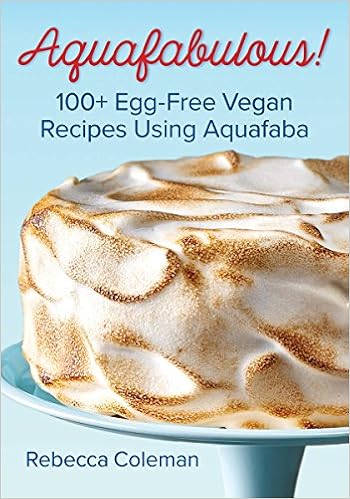
Aquafabulous!

Aquafabulous!: 100+ Egg-Free Vegan Recipes Using Aquafaba
Publisher: (2017)

Vegans and egg-free foodies are singing the praises of a new egg substitute. Aquafaba – also known as bean liquor or the brine found inside cans of legumes like chickpeas or cannellini beans – is versatile, low-calorie and found in almost every home. Instead of draining beans down the sink, aquafaba converts have turned the liquid into meringues, waffles, crepes and even mayonnaise. Rebecca Coleman has compiled a collection of vegan recipes using both aquafaba and the beans that make it in her book Aquafabulous!: 100+ Egg-Free Vegan Recipes Using Aquafaba.

As can be expected from any Robert Rose book, Aquafabulous! begins with a highly detailed introduction to the topic, including manufacturing and storing homemade aquafaba. Coleman also includes a “vegan pantry” listing of ingredients common in her recipes, including miso paste, nutritional yeast and tofu. While the book is exclusively vegan, even cooks new to the cuisine will be able to turn out flavourful and satisfying meals once they peruse the chapter. Each chapter has it’s own table of contents, making browsing through the book simple, and a well-referenced index helps users look up a specific recipe. The chapters are categorized by meal type (e.g. Breakfast, Baked Goods and Mains), although the author mentions her own three classifications of recipes in the introduction. Aquafabulous!, according to Coleman, can first be categorized into vegan “basics” – things like making your own aquafaba, non-dairy milks and other “recipes for recipes” that form components for meals later in the book. Second, there are recipes using the aquafaba itself – either in breading preparations (e.g. Grown-Up Tater Tots (p. 76)), as a binder (e.g. Vegetable Fritters (p. 60)) or for leavening (e.g. Chocolate Mousse (p. 173)). These recipes are what readers generally search for when they pick up a book on aquafaba – it’s one thing to loud the possibilities of this bean liquid, but quite another to put it to use practically. Lastly, Coleman provides recipes to use up the “by product” of aquafaba procurement: the beans themselves. Chickpea Curry (p. 100) is a bright, not-too-spicy main dish that uses exactly 1 (16 oz.) can of chickpeas – although those of us in Canada are more used to the 19 oz. cans, which work just fine.

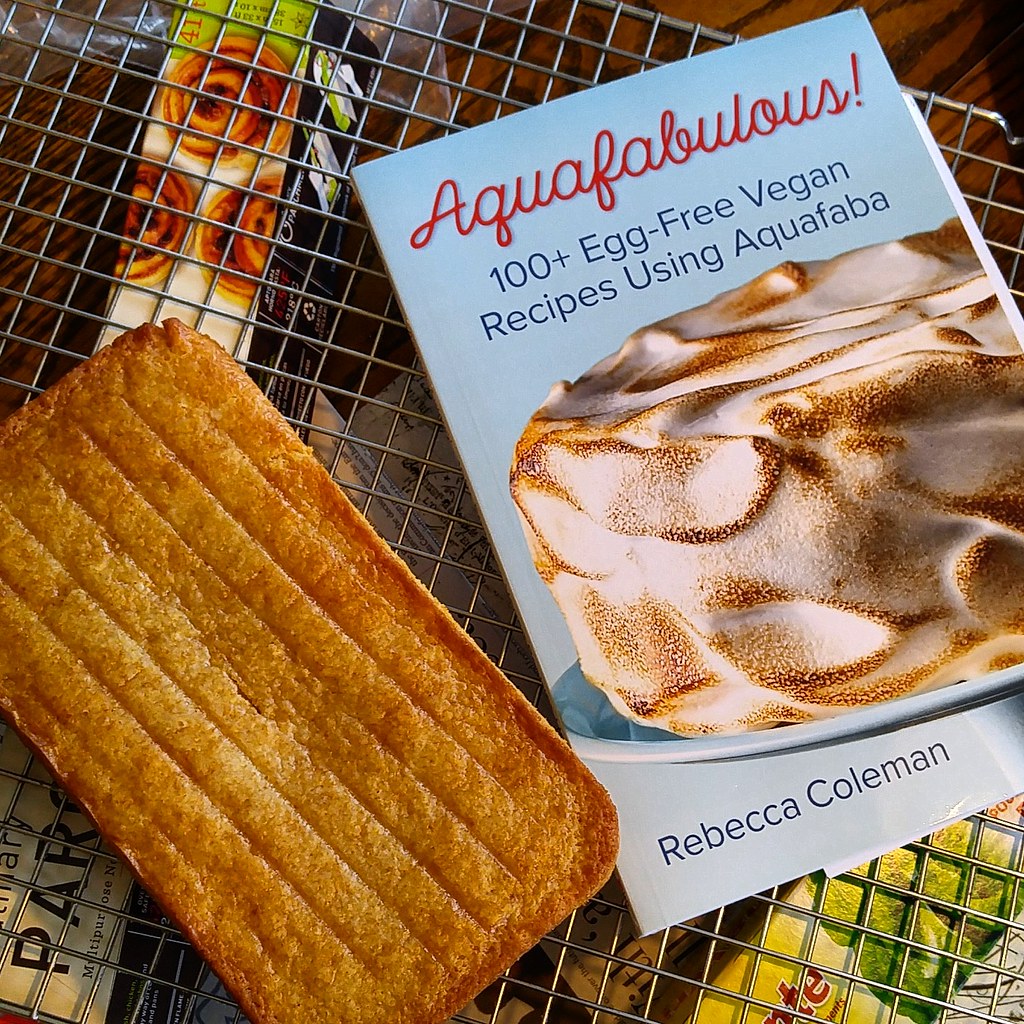
Aquafabulous!

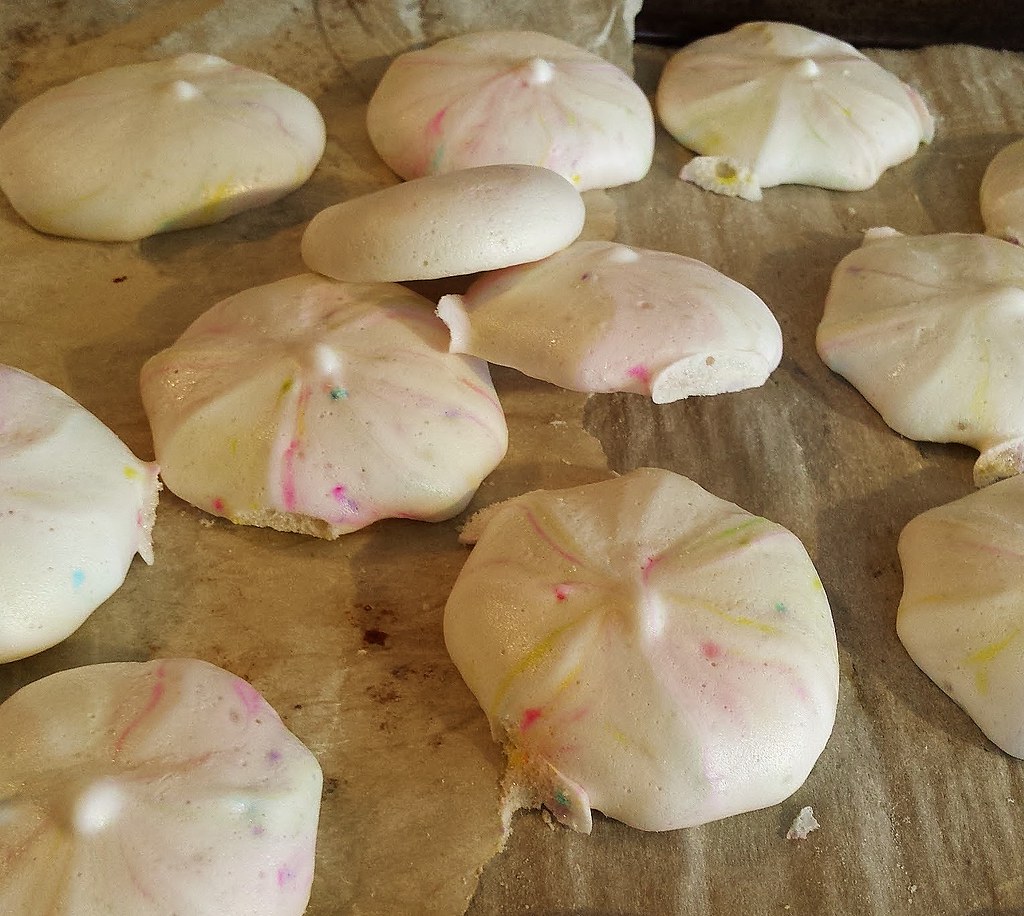
The book is clear about where aquafaba’s strengths are: the baking world. The whipped foam was miraculously like beaten egg whites in cakes and muffins, adding lightness and a rather fine texture in most cases. Meringues (p. 144) were ethereally light – provided they were made on a dry day and not in the middle of a snowy winter day. Heavier batters, like the Lemon Rosemary Polenta Cake (p. 150), just weighed the foam down however, becoming a dense, somewhat oily but nevertheless tasty snack suitable for afternoon tea or as a sweet-savoury dessert after a heavy meal. However, I should note that with simple, relatively one-note flavours such as those in meringues, it is critical that a light, low-flavor bean is chosen. Cannellini and chickpea brine is ideal for most applications, as it adds neither colour nor any perceptible “bean” flavor. Black or kidney bean brine can be used, regardless of what mainstream aquafaba converts say, but they are best suited for richer flavours like chocolate (in Decadent Chocolate Brownies, p. 160) or spices (Carrot Cake, p. 152).

"Cake Batter" Aquafaba Meringues

While there are certainly many aquafaba-containing recipes in this book, the star ingredient can be difficult to locate at times. Some recipes have the aforementioned “basic” components made from aquafaba as a condiment, others have no aquafaba or beans at all, which is highly confusing. If I am going to buy a book about a subject, I would expect a compilation of information and practical applications for the topic at hand. In this respect, Aquafabulous! is best described simply as a vegan cookbook, not one dedicated to the craft of cooking with the title ingredient.

Aquafabulous!: 100+ Egg-Free Vegan Recipes Using Aquafaba is definitely a good buy for those embracing a vegan diet, or who wish to find an innovative way to bake egg-free. There are enough aquafaba recipes to be useful for beginners, but those looking for a more in-depth manual will find the information and innovation lacking. Rebecca Coleman shows promise as a cookbook author and I look forward to seeing further cookbooks from her.

Monday, October 23, 2017

All-in-One Guide to Cake Decorating: Over 100 Step-by-Step Cake Decorating Techniques and Recipes

All-in-One Guide to Cake Decorating: Over 100 Step-by-Step Cake Decorating Techniques and Recipes
Author: Janice Murfitt
Publisher: Fox Chapel Publishing (2017)
From Amazon:

This comprehensive and accessible guide to cake decorating teaches all of the techniques and tricks that aspiring sugarcrafters need to create stunning and impressive cakes. Everyone will think these amazing cakes came from the best bakery in town! First Steps in Cake Decorating reveals dozens of expert cake decorating ideas that are simple to achieve yet look stunning. All the most popular methods of icing and decoration are covered, including buttercream, sugarpaste, chocolate, marzipan and flower paste. Detailed, easy-to-follow instructions explain the basics of preparing and using different types of icing, illustrated with step-by-step color photographs. There is a delicious array of fantastic cakes here to suit adults and children alike. Beginners will pick up the basics fast, and even experienced cake decorators will find inspirational new ideas.
Browsing through this book was like being back in introductory pastry school, but scaled way up. While the instructions are thorough and the photo-by-photo illustrations certainly helpful, this book is overwhelming in it's complexity, especially for someone who perhaps decorates two or three cakes a year for family and friends. The book covers cake shaping and filling as well as fondant techniques, which are interesting and something I would want to be able to do - but the techniques are so involved that I personally felt that hands-on instruction would be needed before I dared to try them at home. However, for those people either in, or contemplating, a pastry or cake decorating course, I highly suggest this book as a supplementary text, as it reinforces the lessons most programs teach.

The book's greatest strength is it's use of photography. Each page is full of full-coloured shots that generally illustrate key points or techniques, although there are some pages where the images are superfluous and somewhat dated. The passion for photography is no wonder, as the author's website is essentially a photography portfolio and states that her projects include working with photographers, advertising agencies and media companies.

While the basics of cake decorating don't really change, I would have been interested to see some of the newer trends covered as well (i.e. Russian tips, ombre). I did thoroughly appreciate the "Basic Recipes and Helpful Hints" chapter, particularly the charts to help you calculate how much fondant / marzipan and royal icing you would require for a certain size cake, as well as the portion guide. The templates are adorable, and would undoubtedly be useful for those unsure about their skills or who are attempting more intricate designs.

Overall, if you are serious about getting into the world of cake decorating, Janice Murfitt's book All-in-One Guide to Cake Decorating: Over 100 Step-by-Step Cake Decorating Techniques and Recipes is a good place to start, and pairs well with "in person" instruction. However, for the everyday baker, it is more of a coffee-table novelty than an instruction manual.

Thursday, July 20, 2017

175 Best Small Batch Baking Recipes

175 Best Small Batch Baking Recipes
Author: Jill Snider
Publisher: (2017)

My family is not huge on sweet things. Sure, they’ll have the occasional cookie or slice of pie on a special occasion, but “dessert” most nights is a bowl of yogurt with honey, cocoa and berries. That said, I love to bake more than anything else – and finding a compromise between assuaging my desires and having the freezer overflow is tricky. That’s why I was excited to try out Jill Snider’s book 175 Best Small Batch Baking Recipes, which claims it makes “[t]reats for 1 or 2”.

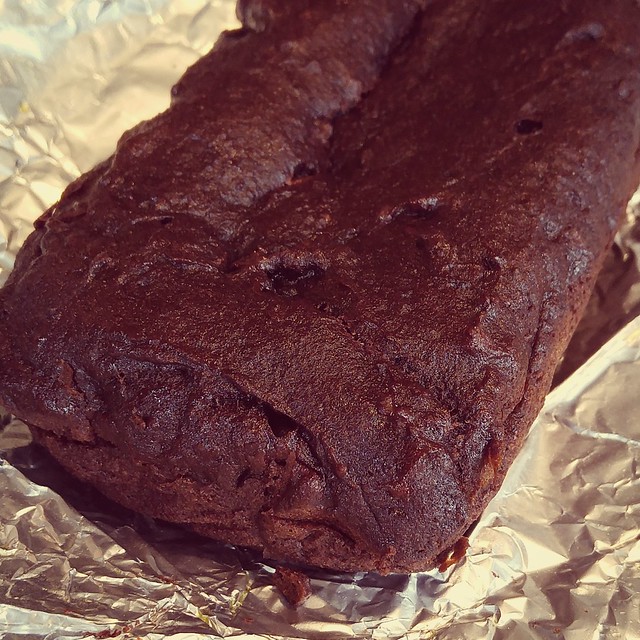
Gluten Free Chocolate Banana Cake
Gluten Free Chocolate Banana Cake (p. 246)
Small Batch Baking has everything a “sweet kitchen” baker could ask for in a cookbook. Myriads of cookies, from biscotti to shortbread, no bake bars to brownies and fruit squares, muffins and loaves are all part and parcel here. There are also mini pies and crumbles, gluten free options, and even cheesecakes are presented in adorable miniature. For the most part, Snider does not ask for specialty baking pans (the cheesecakes, however, need a 6” springform) and the ingredients are common and generally inexpensive. I enjoyed the fact that brownies, bars and cakes here use loaf pans for form, making slicing even easier and making everything look like a “Bûche de Noël” when frosted. The ability to make just 6 or 8 cookies, instead of 40, was also greatly appreciated – and it allowed me to offer more than one variety in a gift basket!

The first treat I made from this book played highly to my love of cooking and baking for specialty diets. The last recipe in the book, Gluten Free Chocolate Banana Cake (p. 246), was easy to put together (even for my mom, a novice in allergy-free baking) and didn’t call for specific flour mixtures that can be tricky to find. Snider even gives a tip on substitution in the sidebar (and experienced gluten free bakers will be able to swap things in and out on their own). Many such sidebars are peppered throughout the book, and are always worth a read. The cake was, in a word, decadent – perfectly chocolatey, with a hint of banana flavour (if I wanted more of the fruit to shine I would roast the banana first) and a moisture that survived freezing, thawing and traveling for hours in the car. I opted not to frost the cake since I was transporting it, but the Banana Butter Frosting (p. 186) that was suggested (again in the sidebar) sounded divine. That frosting was just one of the six frostings and glazes offered in the book, again scaled down to practical use size.

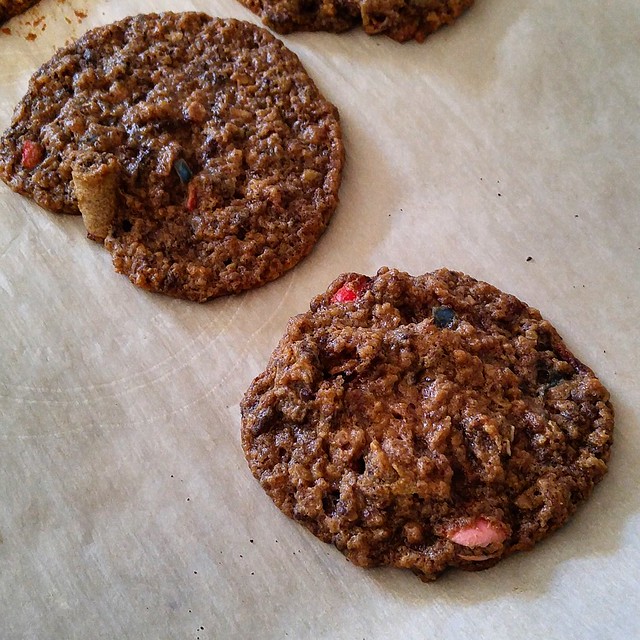
I also tried another unique recipe from Small Batch Baking – Judie’s Chocolate Chip Cookies (p. 63). The recipe called for lard, which I substituted for home-rendered tallow, giving the cookies a slightly “doughnutty” aroma. The author states that the cookies are “soft”, but I found that even at the minimum bake time they spread and became crispy, almost wafer-like. The recipe never called for chilling the dough, as most cookie recipes do these days, and in retrospect I should have given the oats that were also in the batter. The flavour, however, was delicious and rich, if a tad greasy, and they were a hit with both adults and kids alike.

"Judie's Chocolate Chip Cookies"
Judie’s Chocolate Chip Cookies (p. 63)

I’m happy that a baking book exists for small families and people who (like me) just can’t stay out of the kitchen. 175 Best Small Batch Baking Recipes will definitely be put to use during the holiday gift-giving and potluck season, and I look forward to picking out some favourites for my household in the meantime.

Available on Amazon

Tuesday, April 4, 2017

The Essential Home-Ground Flour Book

The Essential Home-Ground Flour Book
Author: Sue Becker
Publisher: (2016)

As someone working off a teaching assistant (and soon to be university student)’s income, I don’t often go out of my way to purchase tools with only a single use or purpose. I grew up making bread at my mother’s hip, and since I was blessed with a high powered professional stand mixer as a gift, making bread (almost) every week has remained my passion. I’ve always loved artisan-crafted baked goods, and used to buy stone-ground flour from a local mill – which tasted fantastic but commanded a hefty price. When Sue Becker’s book The Essential Home-Ground Flour Book arrived on my doorstep, I was intrigued – although devoid of a mill. Luckily, this book managed to help solve that problem (and many others) along the way, all while offering inspirational recipes I couldn’t wait to try.

So, you’ve decided to mill your own flour. Why, what type of mill should you choose, and just how do you go about it? Part One of Home Ground Flour is 93 pages worth of information on the subject, from the benefits of doing it at all (read: cost, nutrition and flavour) to the history of milling, suitable grains and finally the actual devices themselves. It was Chapter 4 – Tools and Equipment for Home Flour Milling (p.37) – that intrigued me the most. I knew about burr mills for coffee and spice grinding, but never used micronizing ones. If I win the lottery, one of those super-powered, lightning fast beasts is definitely on my wishlist! Instead, I lucked out with a great deal on a Mockmill, a stone-grinder style of attachment for my mixer – and the purchase of a (relatively) high priced tool is something no cookbook, blog or cooking show has ever convinced me to consider.

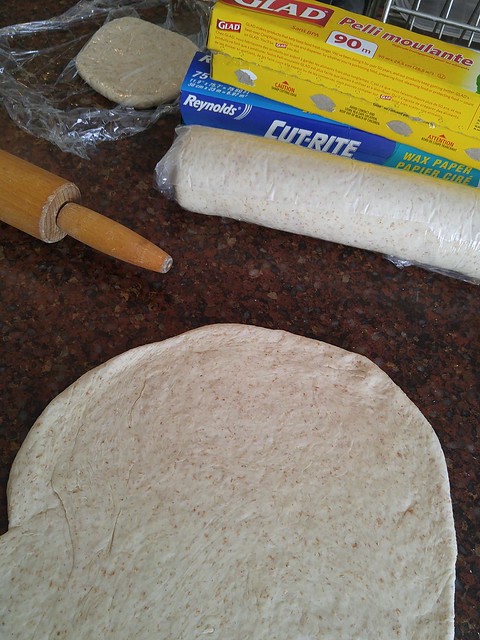
Home Ground Flour Pizza Dough
Basic Whole Grain Pizza Dough (p. 174)
Once equipped, and having read the entire first part (including the incredibly beneficial tip boxes lining the margins), I armed myself with a kilo of barley grains and got to work. According to Becker, I had enough grain to mill 6 cups of flour – which was almost dead on. I also tried my hand at grinding farro, spelt, brown rice and even lentils (note: don’t grind anything not approved by your mill’s manufacturer!). I transformed a bunch of the barley flour into various loaves of bread that weren’t found in this book, but immediately noticed a difference in the way the dough behaved and tasted. Freshly milled flour, provided the grains aren’t stale, made for a slightly sweeter, more tender loaf in my experience, and with cookies you could really taste the nuttiness of the grain all the way through (perfect with oatmeal doughs!).

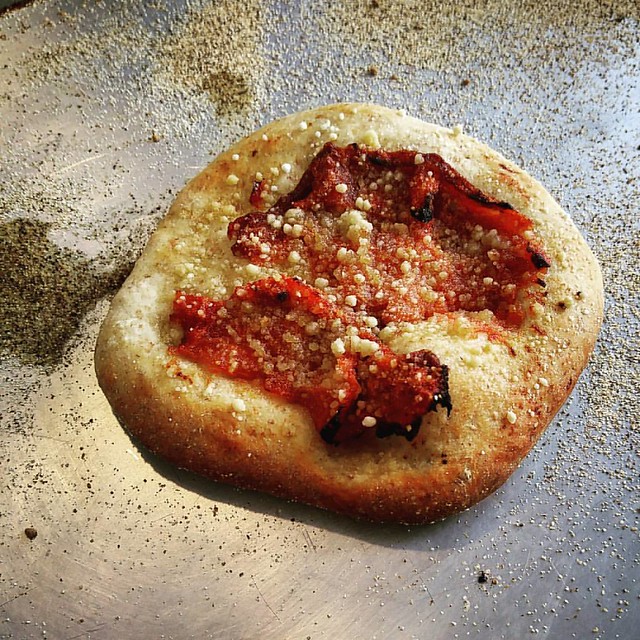
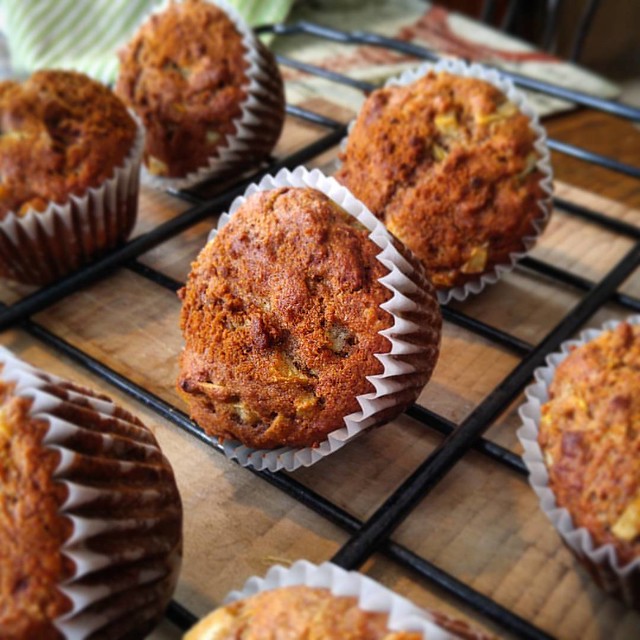
Finally, I got around to a few of my ear-marked choices in Home Ground Flour. The first was a batch of Apple Cinnamon Muffins (p. 182). I used a combination of locally milled sprouted wheat flour and home ground farro, which was a lovely complement to the flavours of the (again, local) honey that exclusively sweetens them. Each bite was peppered with bits of apple and the spice wasn’t overwhelming, which is always refreshing for a muffin recipe! Next, as a preparation for one of my upcoming Home Economics classes, I made a few batches of Basic Whole Grain Pizza Dough (p. 174). If you need convincing as to how much yeast loves freshly exposed endosperm, this is the recipe – the dough rises impressively fast, and doesn’t taste unpleasantly “yeasty”. Even though there’s no sugar in the dough, the baked crust had a hint of malty, almost honey-like flavour. Definitely a keeper in my book.

Tomato Confit Mini Pizza
Mini-Pizza with Basic Whole Grain Pizza Dough (p. 174)

I can’t wait to keep experimenting with Sue Becker’s The Essential Home-Ground Flour Book. It has not only provided a solid base of information to start me off on my home grinding journey, but also opened my eyes to the true differences between the bag from the store and right from the grain. If you appreciate bread (making and eating), want to support local grain farmers or simply have a desire to eat more nutritiously, check this book out. You will not be disappointed.


Apple Cinnamon Muffins
Apple Cinnamon Muffins (p. 182)

Tuesday, March 14, 2017

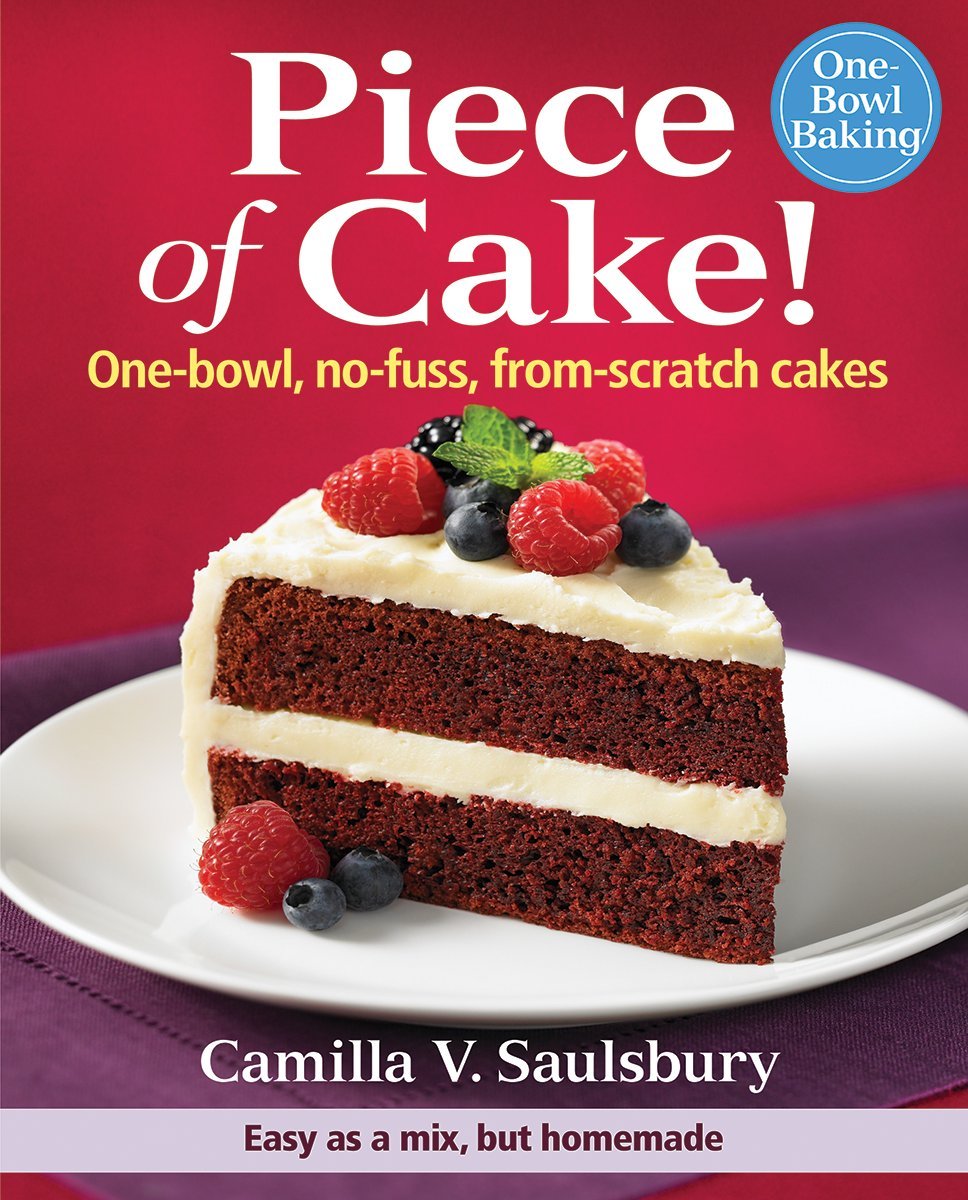
Piece of Cake!: One-Bowl, No-Fuss, From-Scratch Cakes

Piece of Cake!: One-Bowl, No-Fuss, From-Scratch Cakes
Publisher: (2011)

I pride myself on making cakes from scratch. A few times a year, I’m able to get really fancy and go all-out with an elegant layer cake with homemade frosting, or a super-rich cheesecake that fills a craving with only a sliver. The rest of the year, though, I like to bake low-fuss, low-mess cakes with minimal adornment – and no box mixes. Camilla Saulsbury seeks to fill this niche with her book Piece of Cake!: One-Bowl, No-Fuss, From-Scratch Cakes.

This book claims to alleviate many of the sticking points that prevent home bakers from making cakes from scratch – recipes here don’t need multiple bowls, creaming, separating eggs, alternating dry and wet addition or sifting. In fact, the roughly 240 pages of recipes in Piece of Cake kick off with the classic, almost never-fail Wacky Cake (p. 12). The cakes are, for the most part, designed to be incredibly simple in their presentation, although Saulsbury does include over 50 recipes for various topping (i.e. icings, glazes, and sauces). For the truly new cake-bakers, this book contains a lengthy introduction covering ingredients, equipment and techniques. Reading this section is 100% optional for those who have baked at least a few times in their lives, but if not, I strongly suggest a perusal.

My favourite part about this book is that Saulsbury includes homemade cake mixes for both “conventional” and “vegan” cakes. While almost any cake can be converted into a dry mix (just by mixing the dry ingredients in a bag separately), Saulsbury’s recipes also include the solid fat component, so much like a conventional baking mix all you’d have to do is add eggs, milk and a touch of oil to have cake any time. I tried the Yellow Cake Mix (p.42) and have to say a food processor is definitely the best way to go here. I did find the cake a little denser than storebought mix, and it took a little more time in the oven than I’m used to – I think this is the result of the book’s mix only calling for 2 eggs instead of three.

My problems with the cake outcomes continued when I went to make a classical favourite here: lemon cake. Titled grandly as Luscious Lemon Loaf (p.73), I had high hopes for this as a perfect accompaniment to tea with guests. Unfortunately, all the liquid in the cake (3 eggs, 1 cup of sour cream and ½ cup of oil) simply caused the “luscious lemon cake” to turn into mush, which burned on the outside while never baking through. After that failure, and my previous experience with the cake mix, I was very wary about trying anything else from this book as I don’t want to waste ingredients. However, I will continue to use the recipes as bases for my own modifications and ideas, as they are plentiful here.

While I may not have found cooking from this book to be easy, Piece of Cake!: One-Bowl, No-Fuss, From-Scratch Cakes does contain solid knowledge of basic baking techniques and plenty of fodder for would be bakers to build on. I highly suggest learning what batters and ratios should look like before attempting anything in this book so as to avoid disappointment.

Available on Amazon