Showing posts with label Ulysses Press. Show all posts

Wednesday, August 25, 2021

The Unofficial Hogwarts Cookbook for Kids

The Unofficial Hogwarts Cookbook for Kids: 50 Magically Simple, Spellbinding Recipes for Young Witches and Wizards
Author: Alana Al-Hatlani
Publisher: Ulysses Press (2021) 

Official Press Release:

Perfect for any young fan of Harry Potter, The Unofficial Hogwarts Cookbook for Kids by Alana Al-Hatlani will have aspiring witches and wizards brewing potions, baking stellar treats, and cooking creative dishes in no time. From breakfast all the way to dessert, this book makes any meal or snack extra special (and educational!), with recipes like:
Rock Cakes
Granola Bars “Owl Food”
Magic Star Fruit Salad
Pumpkin Pasties
Cauldron Cakes
Acid Lollipops
Sticky Toffee Pudding
Butterscotch Beer, and much more!

The Unofficial Hogwarts Cookbook for Kids is the perfect primer to get the young chefs-in-training active in the kitchen with their parents. As a family, you’ll have fun learning cooking terms and kitchen skills with recipes that range in complexity so that all kid chefs and their potions masters (or parents) can whip up something amazing.


Review: 

I grew up with the Harry Potter book and movie series, and one of the most prevalent images woven throughout it is that of food. There is such an emphasis on meals and treats that it made me want to recreate the magical food even as a young adult. But where to start?
Alana Al-Hatlani has compiled 50 recipes inspired by the Harry Potter universe that are geared for children and their parents to make and enjoy together, and this seemed like a good place to start exploring.

Having taught cooking lessons to children ages 5-13 over the last 7 years, I am always on the look out for comprehensive children's cookbooks. To me, it's important that cookbooks geared for children not only have simplified recipes with ample photos (kids are visual beings after all!) but some educational component to them - what does it mean to simmer, whisk, fold? This book contains a section with safety and getting started cooking called "In the Home Kitchen: How to Cook Without a Magic Wand" (p. 10) which is arguably one of the most comprehensive chapters of it's kind that I've seen in any cookbook, let alone a children's one. The tips and guidelines in this section closely mirrored the rule list I gave out in my classes, so that made me smile. The second part of the introduction was Common Recipe Terms (p. 12) which again is well-written in language that children can understand (or parents can easily explain). 

Onto the recipes - here is where it is abundantly clear that this is a children's cookbook, though there are some drastic outliers which brought me pause. The recipes in this book range from the incredibly simple "non-recipes" such as Fruit Skewer Wands (p. 42) - sticking pre-cut pieces of fruit on a wooden skewer - or Orange Juice (p. 122) which (you guessed it) involves juicing oranges -  to those that require extensive use of the stove or oven. For instance, I personally would not be making the Easy Marmalade recipe (p. 27) if I had to keep an eye on a child, let alone letting them take the reins cooking it to a setting point of 220F (the recipe uses the cold-plate set test as well, which adds an extra layer of risk in my opinion). The fact there are instructions to make toast made me chuckle, though I can concede some children do need explicit instructions. The marmalade that I made (without children running around) was good, and simple as far as other marmalade recipes go, but I will dice the peel more should I make it again as "slices" were far too chewy.


Then there are recipes that make no sense at all within the Harry Potter universe, and feel like they were simply page-fillers to get the recipe count to 50. I read the books avidly (as our completely beaten up first edition of Philosopher's Stone can attest) and not in a single one do I remember Grilled Cheese (
p. 50), Pizza (p. 54), Quesadillas (p. 58), Macaroni and Cheese (p. 61) or pretty much anything in the Dinner section being mentioned. I'm not saying the recipes are not worth making - the Macaroni and Cheese as well as the Shepherd's Pie (p. 71) both look quite enticing - but since this is a Harry Potter themed cookbook they just seem thrown in there without reasoning.

The photos in this book are fantastic and draw the eye, though it is important to note that with a few exceptions they are stock images and may not reflect what the recipes actually look like. Side by side, the quality difference is noticeable between the author's photos and the professionally taken and edited ones, though when viewed independently they are still clear and informative. 

In general I would recommend this book as a standard children's cookbook intended for littles to cook alongside their parents, do basic prep work and clean up. I wouldn't say this is truly a Harry Potter cookbook though, since the bulk of the non-snack recipes are not featured anywhere in the series and they seem a little misplaced with the theme. However, for learning to read recipes and dabble in the mundane magic that is the kitchen this book is absolutely worth a look - and who knows, maybe it will inspire a few more kitchen magicians to follow their culinary dreams!

Available on Amazon

Tuesday, July 1, 2014

Simply Sugar & Gluten Free

Simply Sugar & Gluten Free
Author: Amy Green
Publisher: Ulysses Press (2011)

It’s no secret that our society is in bad shape when it comes to eating habits. Ever looking for cheap ways to flavour and bulk up their offerings, food companies load their processed goods with sugar, salt, fat and other starch-based fillers. It’s easy to market them, too – they have a consistently reliable taste and texture that we’re used to, they’re quick and easy and hey, if you throw in 10% of apple juice concentrate you can claim your sugary, blueberry-pomegranate flavoured candy contains real fruit! As a result, we’re led to believe that the only options are what’s peddled to us, and our health (not to mention our waistlines) are taking the hit. Author and food blogger Amy Green (of simplysugarandglutenfree.com/) was in the same boat for years, growing up in the time of “fat free” everything (which is loaded with sugar) and living an up and down rollercoaster with her weight. Eventually, on the advice of a naturopath and with a lot of determination, she developed a way of life that worked with her body – no sugar, no gluten. Simply Sugar & Gluten Free developed out of her blog of the same name and contains 180 recipes designed to be made in 20 minutes or less.

SSGF begins with a rundown of why Green chose this lifestyle as well as a short list of “tips” for using this book to your advantage. It is in this How to Use This Book (p. 4) section that the “20 minute” timestamp comes into question – recipes don’t take into account time to take out or prepare ingredients, baking or unattended cooking, nor do they account for extra time needed if you don’t own certain equipment (namely stand mixers and food processors). That said, Green also directs readers beginning the sugar- and gluten-free journey to browse through The Simply Sugar & Gluten Free Kitchen Guide (p. 211), which also includes a vital “mini-recipe” for her Basic Flour Blend (p. 212). The list is exhaustingly thorough for the average reader, but thankfully, most of the items are available in bulk food stores (and at the very least, the health food sections of grocery stores). What I found interesting is that the very first section of the Guide is “White Sugar Alternatives”, which ironically contains sweeteners like agave and honey that are commonly just as refined as white sugar. Palm sugar is also included, but not unrefined cane sugar which also contains nutrients such as iron. Green incorrectly notes too that maple syrup has less calories than table sugar (a tablespoon of maple actually contains 6 more than sugar), and neglects to mention that it’s only 60% as sweet as sugar, meaning you need to use more for the effect you’re used to. A more apt title for this book should be Simply Refined Sugar & Gluten Free, so as not to mislead would-be readers.

Banana Walnut Cake
Banana Walnut Cake (p.169)

Nitpicking aside, I can say as a whole that I was extremely pleased with the variety and adaptability of the recipes in SSGF. Chapters include Breakfasts (missing from the Table of Contents); Starters & Snacks; Spreads & Condiments; Soups; Salads; Mains; Sides; Cookies & Bars; Cobblers, Crisps, & Pies; Cupcakes & Cakes; Frostings; Puddings and Frozen Desserts. In each section omnivorous readers are essentially spoiled for choice, however most of the Main Dishes rely on chicken and/or dairy products (there are four vegetarian selections and only one vegan option – Socca Pizza (p.84)). As well, a hefty portion of the baking relies on eggs and/or dairy for consistency, which isn’t unusual in a gluten free book. In most cases, cooked recipes are easily adapted to more restricted diets (for instance the Chicken Cacciatore (p. 96) is delicious with cubed tofu or even rehydrated TVP chunks, and leaving the bacon out of the Swiss Chard and Mushrooms with Linguini (p. 104) doesn’t hurt the dish at all), and baked ones are just as simple to modify by using egg and dairy replacements tolerable to your system. There are no photos in SSGF, but the amount of stunning photography on Green’s website more than makes up for the lack of visual inspiration (and has a ton of other delicious recipes to boot – I can’t wait to make her Peanut Butter Hot Fudge Cake (p.166)).

Eager to get into the baking kitchen after enjoying some of the savoury options, I decided to try a veganized version of Green’s Banana Walnut Cake (p.169). This recipe relies on agave nectar, palm sugar and ripe bananas for sweetness, and doesn’t use any sort of gums for binding (shocking for most baked gluten free recipes). Since the recipe already used almond milk as the “dairy”, I only had to use an egg replacer to fit the vegan label. While we were running low on agave nectar (it’s not something our family uses generally) I combined what we did have with maple syrup and used that, which lent a wonderful flavour. I also found the need to add a few tablespoons of psyllium husk fibre to help bind it a bit more, which has become my usual course of action when baking gluten free and vegan. The cake turned out beautifully, packed with flavour and with a respectable 13.7g of sugars per 1/12th of the cake (a good sized chunk). It was devoured within a few days, and everyone agreed that it didn’t need frosting at all.

Buoyed by this success, I tried Green’s twist on a classic favourite – Carrot Cupcakes (p. 159). Again, these relied on agave nectar, but used it as the exclusive sweetener. In addition, there is a deceptively tiny amount of dry ingredients for the amount of carrots, eggs, oil and agave, which can lead you to doubt (as I did) that the recipe would actually turn out. Not only did the cupcakes bake, but they were the sleeper hit of the book. I made them three times in the course of a week, and only once did I get the chance to top them with Whipped Cream Cheese Frosting (p. 172), a decadent combination of agave, cream cheese and heavy cream. In fact, we preferred a simple mixture of cream cheese, yoghurt and a touch of honey as a topping, or simply enjoyed the cupcakes “naked”.

Gluten Free, Refined Sugar Free Carrot Cupcakes
Carrot Cupcakes (p. 159)

Whether you need to be gluten free or refined sugar free for diagnosed medical conditions, are trying to find a “happy body” balance or simply want to control the impact that Big Food has on your family, you’re likely to find something delicious in Simply Sugar & Gluten Free. That said, gluten and sugar themselves are not the only demons in modern lifestyle, and I encourage readers to ensure their dietary needs are met before adopting this as standard practice in your life.

Available on Amazon

Saturday, March 15, 2014

Homemade Condiments: Artisan Recipes Using Fresh, Natural Ingredients

Homemade Condiments: Artisan Recipes Using Fresh, Natural Ingredients
Publisher: Ulysses Press (December 3, 2013)

Most people can’t bear the thought of being without their condiments. The ability to doctor up the taste of relatively bland foods like chicken, tofu, pasta and rice, or disguise unwanted flavours (think of children and their vegetables) opens up a world of possibilities. With a simple change of sauce, a dish can travel from the United States to Russia, Germany, Thailand, France and Argentina without ever leaving the ground. However, most sauces and seasonings you find in the stores these days are laden with ingredients you’d rather not have – from long-maligned MSG to HFCS and a host of other acronyms and chemicals, it’s a wonder we haven’t all turned into the pickles we enjoy on our burger. In response to our super-processed life, a new trend has started towards homemade ingredients. Food writer Jessica Harlan is one of the promoters of this movement and dishes up 75 delicious, wholesome alternatives to the grocery store in Homemade Condiments: Artisan Recipes Using Fresh, Natural Ingredients.

Homemade Condiments is definitely not a book dedicated to doctoring up storebought food, nor is it limited to simple fare. The 123 pages run the gamut from Ketchups (p. 9) to Salad Dressings (p. 77), Sweet Sauces and Spreads (p. 103) and even Ethnic and Specialty Ingredients (p. 89). In each chapter are a multitude of recipes – for example, eight different ketchups (from Fresh Tomato (p.10) to Southwestern Tomatillo (p. 19)) and six types of mustard (my favourite being the Grainy Porter (p. 37)) are all unique in their ingredients and methods and all suit different purposes. Readers may discover a new love where the idea never existed before, or be able to re-create an old standby remembered from the Mom & Pop shops, before mass processing took away many of the small producers. Like all responsible “canned food” cookbook authors, Harlan includes an Appendix with notes on Food Safety and Canning (p. 116), Resources (p. 122) and Conversion Charts (p. 123). She also provides a brief but highly useful Introduction with sections regarding Setting Up Your Pantry (p. 3) and A Well Equipped Kitchen (p. 5), something that should be required reading for all budding home sauce-makers.

One of the best things about this book is that Harlan is realistic in terms of ingredients. Even in my small-town grocery store, I was able to find all the components I needed to make Asian Quick Pickles (p. 52) and Hoisin Sauce (p. 97), and it only took a quick trip to the Asian grocery one town over to find mirin (rice wine) for the Teriyaki Sauce (p. 96) recipe. However, if I was unable to find mirin, or found the fresh produce used throughout Homemade Condiments lacking in terms of quality, quantity or economy (which often happens in the winter!), Harlan offers substitutes that may be easier to find or more cost effective while maintaining the best flavour possible – including the use of high-quality canned tomatoes or individually quick frozen fruit. Thanks to those options, there is no reason to put off trying a recipe in Homemade Condiments that piques your interest.

If you’ve been longing to find that “secret ingredient” to jazz up your weeknight meals, take a browse through Jessica Harlan’s book Homemade Condiments: Artisan Recipes Using Fresh, Natural Ingredients. You’ll be sure to find at least one new fridge staple to call your own, and check off your shopping list permanently.

Available on Amazon

Sunday, March 9, 2014

Vegan Desserts in Jars

Vegan Desserts in Jars
Author: Kris Holechek Peters
Publisher: Ulysses Press (2013)

It’s hard to resist the allure of tucking into your own little dessert. Something about being able to eat all of something, not simply a slice or a scoop, draws us in and gives us a feeling of guilty pleasure and comfort. A treat made for you – just for you – to enjoy allows you to recreate the touches of home, where Mom would pack you a cookie for lunch, and indulges that little nugget of selfishness we all possess. Desserts in jars are not new, but most recipes contain eggs, dairy or other animal products, forcing vegans to substitute (which can lead to success or failure). Enter Vegan Desserts in Jars by Kris Holechek Peters, a vegan author and food blogger at nomnomnomblog.com, who brings perfectly portioned  treats that can fit into almost any lifestyle.

You certainly don’t have to be a vegan or vegetarian to love Vegan Desserts. If sweets are your thing, the pages will tempt you with crisps, cupcakes and puddings – all decadent and rich without being “stereotypical vegan” food. Even mixes for making your own goodies fill a small chapter, not to mention recipes for jams, toppings and fillings. I really appreciated the “Treats for Two” section (p. 83) – filled with weakness-instigating things like PB Banana Cake for Two (p. 87) – which eliminates the temptation (and fridge-clutter) of leftovers, but families will definitely find use for this book as well. Recipes are designed to create perfect individual portions of larger recipes, often serving 4-6, and most of them store well as well given the Mason jar’s handy lid.

Apple Crisp in a Jar
Apple Crisp Cups (p. 50)
Being the author of a vegan recipe book for the masses, Peters does have to include a short discussion on the nuances of vegan cooking and baking. The most challenging aspect of converting any recipe to vegan is by far replacing the eggs. However, in Vegan Desserts’ opening chapter readers will find a handy chart that can also be used for recipes outside those 124 pages. While this method of cooking may be “old hat” for long-practicing vegans and those with egg allergies, for those used to the standard 1-2-3-4 cake method this section is invaluable. The largest section of Vegan Desserts is “Cakelettes” (p. 20), which contains not only your Basic Chocolate Cake (p. 21) but goodies like Spotted Dick (p. 31) and Tiramisu (p. 37). The whimsically titled Elvis in a Jar (p. 38) will capture the heart of any peanut butter and banana fan, but I have to say that the Rustic Rhubarb Cakes (p. 36) with flash-frozen homegrown rhubarb made our late-Autumn dinners. “Pie and Friends” (p. 42) was definitely where I spent the majority of my time with this book though, since I fell in love with the newfound portability of Peters’ Apple Crisp Cups (p. 50). Those have since become a favourite “visiting” gift that not only takes care of a sudden glut of apples in Fall (speaking from a family of zealous apple pickers) but is also perfect year round. I must confess that I essentially ignored the “No-Bake Treats” chapter (p. 5), simply because neither I nor my family are huge fans of the raw food scene and really do lean towards pie or cake rather than ice cream or pudding.

Apple Crisp in a Jar
Apple Crisp Cups (p. 50)
Whether you or someone you love abstain from animal product due to religious, ethical, environmental or health reasons, there is no reason to abstain from delicious food and the occasional sweet treat. From pies and cakes to pudding and trifles, nothing is off limits in Kris Holechek Peters’ book Vegan Desserts in Jars. Who knows – dessert could just be the greatest culinary equalizer out there!

Available on Amazon

Friday, February 21, 2014

Copykat.com's Dining Out At Home Cookbook 2

Copykat.com's Dining Out At Home Cookbook 2: More Recipes for the Most Delicious Dishes from America's Most Popular Restaurants
Publisher: Ulysses Press (2013)

Going out to eat is a treat we all enjoy – sometimes a bit too often. Sitting down to a meal at a restaurant often means gargantuan portions and mystery ingredients we’d rather not know about. Then there’s the price – at $10 and up a head, your dining budget can be blown by Wednesday. While molecular gastronomy is a bit beyond the reach of common home kitchens, traditional fare is far more accessible – not to mention cheaper, faster and fresher. “Copy-cat” cooking is even easier these days thanks to books like Stephanie Manley’s Copykat.com's Dining Out At Home Cookbook 2: More Recipes for the Most Delicious Dishes from America's Most Popular Restaurants. It’s her second compilation of the best of the restaurant classics and favourites, building on her successful website and the ever-present demand for the “secret recipes” we crave. 

Dining Out is perfect for those of us who enjoy casual or family restaurants as well as popular takeout or fast food spots. Items from Panera Bread and Starbucks are featured as well as favourites from IHOP and Outback Steakhouse. The biggest issue for international readers like myself is the fact that the restaurants are exclusively American-based (and usually) chains. While it may taste phenomenal, without the familiar point of reference the charm of enjoying a perfect slice of Luby’s™ Pecan Pie (p. 154) for example is slightly lost. Luckily, (or unluckily!) chains like Starbucks, KFC, Taco Bell and McDonalds are popular worldwide and have more or less standardized menus. Favourite standard and seasonal items (like KFC’s Coleslaw (p. 114) and Starbucks™’ Pumpkin Spice Latte (p. 17) will tempt readers all over the globe, and once readers taste those copies the urge to make other (more or less foreign) foods will be irresistible.

Dining Out is an all inclusive book with respect to the meal options and ethnic diversity. Readers will be able to make and enjoy Lettuce Wraps from PF Chang’s China Bistro™ (p. 38) for a Chinese-inspired lunch or light dinner, cozy up to a bowl of Pesto Pasta from Alonti’s™ (p. 69) for an Italian supper and dig into good old American-style Banana Bread French Toast from IHOP® (p. 174) for Sunday breakfast. Desserts fit snugly into the book’s 312 pages too, so if you have a sweet tooth you certainly won’t be left behind! Sadly, there are no photos to tempt the visual cooks out there – inconvenient, although most readers will know what the finished products will look like anyway. Another thing to note about this book is that the recipes are formulated to be true to their namesakes – not healthier remakes. There is lots of fat and sugar floating around, which speaks to the richness of the final products as well as indicate what the restaurants really do to make their dishes menu-worthy.

That said, I initially struggled to find a recipe or two in this book to test for this review. Not only are a good portion of the restaurants US-based as mentioned before, but as a whole my family doesn’t eat out often and tend to stick to leaner fare. However, the Boiled Shrimp and Avocado Salsa (p. 41) from Saltgrass Steakhouse® was a hit with my co-workers, the Homemade Taco Seasoning (p. 191) became a boon to my household for our regular “taco nights” especially because it’s salt free (though for my vegetarian mix I added a touch of smoked salt, which was a definite plus). Of course, you can’t argue with the classic (and often craved) Pumpkin Spice Latte (p. 17), which is easily veganized (and honestly better tasting when you use unsweetened vanilla almond milk!) and not overly sweet. For those I shared the recipe with, it was the clincher that sold them on copy-cat recipes.

While we may not have the luxury of going out to eat every night, we can emulate the best of what we crave in our own kitchens. All we need is the “secret recipe” – and with Copykat.com's Dining Out At Home Cookbook 2: More Recipes for the Most Delicious Dishes from America's Most Popular Restaurants, you’re sure to find a treasure trove of them.  

Sunday, September 8, 2013

The Leafy Greens Cookbook

The Leafy Greens Cookbook
Publisher: Ulysses Press (2013)

Everyone knows that dark leafy greens are a nutritious, low-calorie option that should be included more often than not in our diets. However, their positives – vitamins, minerals, antioxidants and varieties – are often overshadowed by their “negatives”. In this day of over-sweetened, over-oiled, over-salted meals, our palates are trained to perceive the taste of a beautiful leaf of rainbow chard, a head of kale or a pancake-like collard as too bitter to eat. As a result, many home cooks no longer know how to cook them well, or cook them at all. Chefs that put the greens on their menus are divided between the “raw vegan” camp and those who adhere to the Southern style of cooking, adding copious quantities of pork meat and fat before stewing for hours. There is a happy medium in all of this, though, and it’s one that Kathryn Anible strives for in The Leafy Greens Cookbook.

Leafy Greens has 100 recipes ranging from smoothies to salads, soups and suppers. Some are relatively tame and “conventional”, like the Arugula Salad with Strawberry Balsamic Vinaigrette (p. 8) and the currently haute Kale Chips (p. 50) – both excellent introductions to the world of culinary greenery. More adventurous palates are catered to as well, with offerings like Sautéed Radicchio and Endive with Quinoa and Capers (p. 52) and Arugula Hummus (p. 34). Those who are well accustomed to the taste and (somewhat strange) composition of green juices and smoothies will find no shortage of inspiration, with 14 concoctions such as Super Greens Juice (p. 93) – made with spinach, kale, parsley and cucumber amongst other things – and a Spinach, Peanut Butter and Banana Smoothie (p. 96). I was let down slightly by the fact that there was no use of the greens in sweet applications, as they can work quite well and many parents (and picky adults) would find these a good way to “sneak in” some extra nutrition. Each recipe is accompanied by a brief introduction, and while there are no photos (a sad oversight) the recipe titles are eye-catching and descriptive enough to warrant a look. Unfortunately, the photos on the cover are not of actual recipes in Leafy Greens, but rather shutterstock purchases – something I discovered when scouring for the kale-pine nut- and cranberry dish on the back (called Sautéed Kale by Andi Berger).

For anyone brand new to eating more than iceberg lettuce salads, Leafy Greens comes complete with a detailed introduction and glossary covering the types of edible leaves as well as a few paragraphs on their health benefits as a whole. I particularly liked the practical details of the vegetables’ appearances (handy when shopping!) as well as the note that “[w]hile not every green will become a favourite, they are all worth trying” (p. 5). This is good advice for any new ingredient and definitely worth remembering in the kitchen!

My favourite thing about this book is that the recipes are so varied that it’s impossible to say you hate all forms of all greens. I still detest any green in smoothies, but give me a plate of Spinach and Ricotta Stuffed Shells (p. 65) or a side of Roasted Shaved Brussels Sprouts with Parmesan (p. 42) and it is gone in a flash. Likewise, my mother would never serve up a bowlful of Black Bean, Corn and Kale Salad (p.17) for lunch, but I finally convinced her that the green was delicious in African Peanut Stew (p. 29). The stew recipe is not for those sensitive to heat, however, since even after accidentally quadrupling the peanut butter and using a milder chili than the habanero called for, my curry was just barely edible. I can’t imagine what it would be like as written, but I doubt there would be a discernible flavour after all that powerful flame. The Saag Paneer (p. 69) was far more palatable – spicy but flavourfully so – even though it looked less than appetizing on the plate. It was also a dish easily made lighter by using skim milk for the cheese in the recipe or purchasing pressed non-fat cottage cheese and skipping the cheese-making altogether.

African Peanut Stew
African Peanut Stew (p. 29)

Needless to say, there is something for everyone to be found in The Leafy Greens Cookbook. Whatever your preference, the book makes it easy – and tasty – to add the nutrient-dense produce to your table in forms from the predictable to the outlandish, and Kathryn Anible’s recipes will turn many preconceived notions of bitter leaves on their heads. It just goes to show you that it can be easy being green!

Available on Amazon

Wednesday, July 31, 2013

The No-Cook No-Bake Cookbook: 101 Delicious Recipes for When It's Too Hot to Cook

The No-Cook No-Bake Cookbook: 101 Delicious Recipes for When It's Too Hot to Cook
Author: Matt Kadey
Publisher: Ulysses Press (2013)

It’s hard to believe that we’re almost into August. Generally known as the hottest, most humid and least comfortable of the Summer months, it’s a time when everyone would rather be outside swimming, gardening, or golfing – definitely not inside heating up the oven. That said, we all have to eat whether we’re confronted by the mid-summer heat or chilled to the bone in February. Matt Kadey tackled the “Summer supper” conundrum in his new cookbook: The No-Cook No-Bake Cookbook: 101 Delicious Recipes for When It's Too Hot to Cook. For the purposes of this review, I’ve abbreviated the title to NCNB.

NCNB takes the classic staples of Summer cooking – fresh produce, quick-mix condiments and cooling dairy – and adds pantry items like canned beans and fish, nuts and breads to transform them into gourmet-looking fare. Far from your standard salads and ice cream, Kadey instead suggests Watermelon Jicama Salad (p. 39), Shrimp and Noodles with Sweet and Sour Sauce (p. 72) and Cherry Granita (p. 113). If a recipe calls for something cooked (like a cereal or pasta), a combination of boiling water and ingredients like oats, rice noodles and couscous does the trick. The occasional shrimp called for in NCNB is purchased in precooked, frozen form, while tuna or salmon is canned – not only are these cook-free options, but even organically purchased they are economical ways to include seafood in the diet. The few chicken-based recipes make use of the readily available rotisserie chickens from the supermarket, and after Kadey finishes with them it’s hard to tell they weren’t made in your own home. Most of the protein options in NCNB are actually the most convenient and nutritious items in the pantry and fridge – beans, lentils and tofu. Nuts and dairy add some variety as well, so the “un-cook” need never worry about boredom or nutrition deficiencies! Despite the decadent and hearty looking recipes in this book, the nutrition aspect of them is in good standing thanks to Kadey’s nutrition background (he is a registered dietitian, nutrition writer and recipe developer). Luckily, the food itself doesn’t necessarily taste “healthy” – just delicious!

One of the things I particularly liked about this book was that it wasn’t a “raw food” or “health food” collection. While there are a few recipes that appear to be culled from the raw foodist circle (Carrot Cake Muffins (p. 137), Applesauce Pie (p. 139) and a few other desserts in particular), the majority of items are more assembly jobs of ready-to-eat elements. I wouldn’t suggest this book for a strict vegan (there is a lot of dairy and other assorted animal products), nor would I recommend it to someone with nut allergies, but most vegetarians will be able to make most of the recipes in NCNB by either swapping in vegetable proteins or simply leaving out the meat in favour of more vegetables (a favourable option for most, as the amount of protein in a typical diet is generally far too much). My personal favourite in the collection is the sushi bar-esque Cucumber Seaweed Salad (p. 45), which made a fantastic meal topped with marinated tofu. The Smoked Tofu Wraps (p. 98), another vegan option, are on my to-try list as well, and is flavourful enough that it would be a good option for anyone regardless of dietary preference. Unfortunately I wasn’t as impressed with the Pizza Stacks (p. 92), which tasted too oily and salty for what should have been a relatively light meal.

Whether you are coming home sweating from a run, retreating from weeding duties or simply not in the mood to heat up the kitchen, you will likely find an option in Matt Kadey’s The No-Cook No-Bake Cookbook: 101 Delicious Recipes for When It's Too Hot to Cook. Filled with fresh twists on cooling fare for every meal of the day, the dog days of Summer have become the best excuse to get back to the kitchen... and out again! 

Available on Amazon

Friday, June 28, 2013

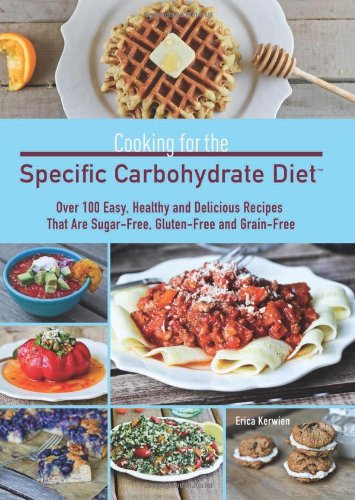
Cooking for the Specific Carbohydrate Diet: Over 100 Easy, Healthy, and Delicious Recipes that are Sugar-Free, Gluten-Free, and Grain-Free

Cooking for the Specific Carbohydrate Diet: Over 100 Easy, Healthy, and Delicious Recipes that are Sugar-Free, Gluten-Free, and Grain-Free   
Author: Erica Kerwien  
Publisher:Ulysses Press (2013)

There are a lot of diets out there – vegan, low fat, paleo, organic... but few of them are truly designed to bring the body back to a world of balance. The body is constantly walking a tightrope, and the lifestyle you have and the food you eat can pull you right off the wire. But what if you were eating all the “good” stuff – 2-3 glasses of milk a day, a whole wheat pita with hummus for lunch, sweet-potato oven fries with a dollop of lycopene-rich ketchup – but not absorbing it? Worse, what if those same foods were actually hurting you further? That is often the case with Crohn’s Disease – a devastating condition in which the body tears itself apart on the inside. An often overlooked treatment (there is, sadly, no cure) is a proper diet... and it may not be the Food Pyramid-style one you think. Elaine Gottschall became a revolutionary leader in digestive health when she developed the Specific Carbohydrate Diet, a program that has since led to thousands of would-be invalids with any number of GI conditions (namely Inflammatory Bowel Disease, celiac, colitis, food intolerances and even cystic fibrosis) experiencing full, enjoyable lives. A simple list of “dos” and “don’ts”, however, can be challenging for the lay person to translate into realistic meals and snacks, especially since the foods on the SCD can be unusual for some. Erica Keriwen lives the SCD life for the benefit of her son, who was diagnosed with Crohn’s Disease in 2005. She turned her life experiences and kitchen experiments into a comprehensive website and blog (http://comfybelly.com/) and compiled the best of her recipes into Cooking for the Specific Carbohydrate Diet: Over 100 Easy, Healthy, and Delicious Recipes that are Sugar-Free, Gluten-Free, and Grain-Free.

Specific Carbohydrate Diet (SCD) is filled with a host of meals and snacks designed to be not just safe for the patient to eat, but tasty enough for the whole family (and any guests) to enjoy. The book starts off with 12 pages of in-depth SCD information – history, science and a little hand-holding in terms of “allowable” and “banned” foods all feature in the introduction. Be forewarned, though, that some of the “science” written in this book’s pages are a little biased, and that this dies has not been tested and approved as “official” treatment for any GI condition by the regulating bodies, nor does it work for every patient or situation. As with anything health-related, it is worth checking with your doctor before embarking on any diet program, whether it’s for weight loss or (like the SCD) to treat an underlying condition. Keriwen is, however, good at downplaying some of the more radical appeals of diet supporters, focusing on the basics without becoming too technical. While the book has a well-laid out table of contents, I wish the book also included an alphabetical index at the back as it would greatly facilitate using this book. The photos, taken by Keriwen, are stunning and their captions do contain page numbers for reference. This is something readers will be thankful for, since not being able to try the Stuffed Bell Pepper (p. 125) recipe after it is presented so beautifully would be a form of culinary torture.

Cashew "Oatmeal Raisin" Cookies
“Oatmeal” Raisin Cookies (p. 146)
The recipes in SCD are varied, but not all of them are what I call “easy” – nor are they necessarily inexpensive to make. Many of the recipes in the later portions of the book require you to have one of the “basic” recipes from the second chapter already on hand. A tasty-looking Ranch Dressing (p. 73) needs both Mayonnaise (p. 68) and SCD Yogurt (p. 24), a process that is at least a 24-hour venture. Almost anything requiring cooking in fat uses Ghee (p. 28), which while not entirely foreign to Western palates is not something I can foresee myself just whipping up to make dinner. Still other recipes utilize Almond Milk (p. 16) and Coconut Milk (p. 19), which can be readily purchased provided you pay attention to the “dos and don’ts” on the list (p. 4-5). As most of the recipes also require the use of almond or coconut flours, nut butters and whole nuts, they can carry a hefty price-tag , and with honey as the sole form of sugar in the entire book those with sweet teeth will soon find themselves crying over their latest grocery bill. Given that this book is in no way vegan (fresh meat and fish, eggs and aged cheeses are allowed and encouraged), testing out this “unproven” lifestyle to cure any digestive woes requires a significant re-prioritizing of food spending. That said, for people at their wit’s end, the chance to achieve health is worth any price. While I have yet to figure out how any vegan could subsist on this diet (fruit and nuts?), with time and planning adhering to the SCD can be made slightly more cost effective through creative use of allowable legumes, eggs, fruit and vegetables, using canned fish and only eating meat on occasion.

Cost and convenience aside, what do the recipes in SCD taste like? I tried a few of the book’s offerings and I have to say I am impressed by Keriwen’s culinary talent. It was actually a struggle for me to find recipes in this book that I could safely eat, given that the SCD’s mainstays of nuts, coconut, meat, eggs and oil are my IBD triggers and allergies. However, with a few modifications I really enjoyed the Beet Chips (p. 50) sprinkled with a sprinkle of coarse sea salt. The Roasted Cauliflower Rice (p. 115) was also fabulous and surprisingly filling paired with some basic, spicy black beans (one of the few allowed beans). On the sweet side of things, my non-GI-affected mom and grandma fawned over the “Oatmeal” Raisin Cookies (p. 146), and remarked at how closely the shredded coconut emulated the forbidden grains. I had my doubts when I was mixing the batter (I used cashew butter as I’ve heard it better emulates the “cookie dough” taste), as it seemed too wet and I couldn’t imagine the coconut concoction holding together – but lo and behold the recipe not only baked up perfectly, but it smelled identical to my mom’s standard cookie recipe in the oven! For a few of my gluten- and dairy-free friends, I had to whip up a batch of Keriwen’s famous coconut flour-based Cinnamon Bun Muffins (p. 96). It’s a good thing the recipe only makes 8 at a time, because they made my house smell maddeningly like the famous mall franchise. Apparently, they tasted just as good – if a bit on the eggy “French toast” side (the recipe uses 4 eggs per 8 muffins). The muffins did take longer than stated to bake through, however, and sunk a bit in the centre, but with such a wet, starch free batter that’s to be expected. Even sunken, the texture was akin to a lighter-style pound cake or a sour cream coffee cake with a baked-in topping. I can’t wait to try the same topping on a “normal” pound cake to see the result!

Cinnamon Bun Muffins
Cinnamon Bun Muffins (p. 96)

If a life with debilitating gut issues has turned you off the thought of ever cooking again, or if you are simply looking to eat fewer grain products, you can certainly do worse than a recipe in Erica Keriwen’s Cooking for the Specific Carbohydrate Diet: Over 100 Easy, Healthy, and Delicious Recipes that are Sugar-Free, Gluten-Free, and Grain-Free. Full of delicious, unique and (generally) nutritious ideas, everyone at the table will be able to have the Comfy Belly they deserve.