Showing posts with label gardening. Show all posts

Tuesday, July 2, 2013

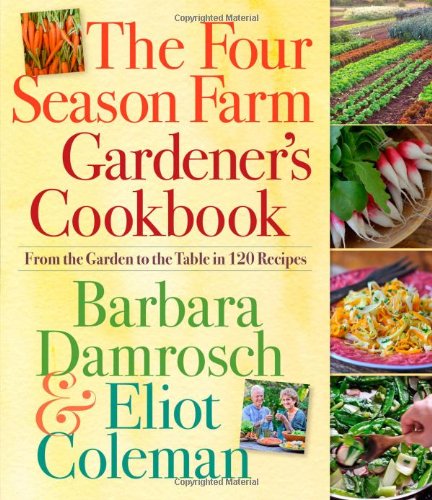
The Four Season Farm Gardener's Cookbook

The Four Season Farm Gardener's Cookbook
Authors: Barbara Damrosch and Eliot Coleman
Publisher: Workman (2013)

Gardening can be a tricky thing. Between choosing what and when to plant, what type of soil you have, how much water, sun, fertilizer and space the seedlings need and how to deal with all those darned weeds, what should be a relaxing pastime can quickly turn into a neurotic episode. Of course, even if all the variables are in your favour, your garden harvest may fail horribly... or you may find yourself with more tomatoes and peppers than you know what to do with! The Four Season Farm in Harborside, Maine, does though – and authors Barbara Damrosch and Eliot Coleman are ready to share their knowledge in their book: The Four Season Farm Gardener's Cookbook.

Gardener’s Cookbook is actually two books in one – the first 250 of the almost 500 pages (Part One) are dedicated to everything related to growing your own food. From the best layouts for proper growing and easy harvests (p. 33), to gardening in tiny spaces (p. 32), crop rotation (p. 43-52) and even the annual vs. permanent produce varieties, no practical detail is spared. A bit of soil science is also included in the first chapter, which for any new gardener (and even some seasoned pros) proves to be a useful and informative read. Note, however, that since the Four Season Farm is on the East coast of Maine, the notes that Damrosch and Coleman include are attuned to that climate (humid continental) and topography (rocky). However, with the solid knowledge that this book provides on a general scheme, readers will be able to apply the necessary adaptations for their own zones.

Purple Oregano

My favourite section of Part One is The Crops (p. 63), as it comprises suggested plans for all types of gardening. From the Salad Garden (p. 64) to the Winter Garden (p. 87) and even a Hard Times Garden (p. 75), whatever your need or desire you can find one (or many) forms of inspiration. The suggestions of produce are not only astoundingly diverse, but are inspirational for even a summertime casual gardener like me. Things I didn’t even realize were accessible to the home gardener (like artichokes and Asian greens) came onto my radar, and now I’m probing their possibilities in my garden next year. Given that the authors have over 40 years of experience in the field of agriculture, readers can rest assured that spending the time to peruse Part One of this book is well worth it!

Filbert Torte with Rich Chocolate Frosting
Hazelnut Torte (p. 437)
For those shopping for a recipe bible, the title of Gardener’s Cookbook is a little bit of a misnomer. In fact, the actual “cookbook” is in Part Two, and while it does contain 120 recipes it is by no means a comprehensive “usage guide” for the produce that tempted gardeners in Part One. Many of these recipes are heavy on the butter, cream, cheese and meat too (dieters and vegetarians beware), sometimes to the edge of excess. That said, many of these recipes are still delicious examples of why we need to eat more vegetables, fruits and herbs! My mom (a bona fide leek lover) fawned over the Baked Leeks (p. 392), even though we both agreed it didn’t need the butter to taste rich. The “Thinnings” Salad with Asparagus (p. 304) has been bookmarked since I received the book as well, since both my mother and I love asparagus and we have plenty of beet greens, lettuce, arugula and endive at our disposal in the backyard! With a few modifications for dairy allergies (and a different, chocolatey filling for taste preferences), almost everyone I served the Hazelnut Torte with Summer Berries (p. 437) to adored the rich, nut- and egg-based crumb (especially with fresh raspberries). That said, while the title of Roast Chicken with Potatoes and Sage (p. 421) tempted me, upon reading the ingredients (containing a cup of heavy cream in a “gravy”), I was turned off by how such a simple, comforting meal like roast chicken and potatoes was being drowned in a rich sauce. Making the Red Thai Curry with Fall Vegetables (p. 404) was an experience I won’t soon forget either – from having to hunt for the red curry paste to the volumes (of both ingredients and finished product) and cook times being drastically off, I was sure the end result would be horrid. Luckily, on the taste and (eventual) texture front, it was a winner – just make sure that if you do attempt this recipe that you break out the absolute largest pot in the house, double the curry paste and add an extra can of coconut milk! The curry is also a great example of a perfectly adaptable recipe. Don’t have sweet potato? Use carrots. No cauliflower? Use broccoli, green beans, parsnips... whatever your fancy! We actually made a second batch of this recipe with almost every vegetable under the sun as well as cubed tofu for extra protein, and it was definitely the hit of the evening.

Thai Vegetable Curry
Red Thai Curry with Fall Vegetables (p. 404)
Even if you don’t think you have a green thumb or culinary bone in your body, it’s never too late to start. As long as you have the desire for fresh, homegrown food – like perfectly crisp lettuce, still warm tomatoes, or just-pulled carrots – at your beck and call, some dirt, seeds and a kitchen are all you need to use The Four Season Farm Gardener's Cookbook.

Available on Amazon

Saturday, September 29, 2012

Home-Grown Harvest

Home-Grown Harvest
Editor: Rebecca Woods
Publisher: Ryland Peters & Small (2011)


Showcasing seasonal food is one of the tastiest and most nutritious ways to eat. The flavours of peak season peaches in a crispy cobbler, a medley of late Summer vegetables in a ratatouille or the bright green pop of tender asparagus and spring peas in a creamy risotto are hard to pass up – and when the produce comes from your own backyard or local farm, the benefits are even greater. Home-Grown Harvest, edited by Rebecca Woods, is a mouthwatering collection of recipes and stunning photography that will be sure to lure even the most skeptical cook into a fresh new world.

Harvest is a unique book in that it is not authored by one particular individual. Rather, it is a compilation of recipes by several cookbook authors such as Ross Dobson, Laura Washburn and Brian Glover. The recipes are organized brilliantly into categories of plant type: Root Vegetables, Bulbs and Stems, Fruiting Vegetables, Podding Vegetables, Greens, Zucchini and Squash, Mushrooms, Tree Fruits, and Soft Fruits. Almost every inclusion in this book is accompanied by stunning, full colour photography; both of the “raw” ingredients and the finished dishes. Offerings range from the more “standard” Caesar Salad (p. 108) to the unique Tenderstem Broccoli, Shiitake & Tofu Omelet (p. 97). All courses are represented in one way or another, from starters such as the classic Tomato, Mozzarella and Basil Salad (p. 73) to decadent desserts like the Frosted Pear, Zucchini & Carrot Cake (p. 146).

Readers of Harvest will be quick to discover that many of the contributing authors are not American in origin. While the measures are given in Imperial units, the phrasing and titles of recipes, as well as their preambles, hint at European heritage. Certain ingredients, too, will be more unfamiliar to American eyes and palates. Tenderstem broccoli, for example, is commonly marketed as broccolini and occasionally (though erroneously) broccoli rabe. Items such as golden syrup and crème fraîche are less popular in US and Canadian markets (though they can be found if you look hard enough), and so many would-be cooks may find themselves researching a substitute.

Leek & Potato Soup (p. 41)
Thankfully, the language style in Harvest does not detract from it’s recipes. Instructions for meals like Triple Tomato & Basil Risotto (p. 69) are clear and concise enough for the most casual home cook to attempt their creation. Conversely, the wording is in no way “dumbed down” or trivializing, and is sophisticated enough that more skilled individuals won’t feel out of place.

Given that my hemisphere is transitioning into Autumn, my family is moving towards heartier, more warming fare like soups and stews made with root vegetables. I opted to use up the last of our local new potatoes in the Leek & Potato Soup (p. 41) by Tonia George, which is one of my mom’s favourite varieties. I made two modifications based on what I had on hand – I added a diced parsnip to the buttery steam-sauté of leeks, onions and potatoes, and for the “milk” (the recipe doesn’t state a specific fat level) I used a 370 mL can of evaporated 2%. The finished soup got a hint of rosemary and chives stirred in, and tasted creamy, smooth and rich without being cloying. It made a fantastic starter for the meal we served to company, and my mom took leftovers for lunch the next few days.

Potato & Coconut Soup with Thai Pesto (p. 16)
I also made a second soup from Harvest, the more exotic Sweet Potato & Coconut Soup with Thai Pesto (p. 16) by Ross Dobson. Since I knew it would likely only be packed for my mom’s lunches during the week, I stirred the modified pesto (I had no fish sauce or basil, so used tamari, chives and mint as well as a hint of shredded coconut) into the puree instead of dolloping it on top. Even without having the Thai curry paste (I used a pinch-hitter of Sriracha, garlic and ginger), this recipe was the epitome of all the things Thai food is known for – a perfect marriage of flavour, texture and heat. While the puree itself, made with local sweet potatoes, red onion and coconut milk, is mild and sweet, akin to a typical Asian pumpkin soup, the pesto utilizes green chile peppers and if eaten alone (especially without prior warning) is a painfully nuclear concoction, albeit delicious pain. Together, though, the sweet and spicy aspects of the recipe, paired with a delicate sourness from the pesto’s lime, meld into a stick-to-your-ribs whole that is neither too sugary not mind-blowingly hot. The benefit of keeping the pesto separate when cooking this for the family is that everyone can then adjust the spice level to their own preference. Most children will leave their bowls unadorned, but those with a passion for heat will be adding tablespoons. I did have to add another can’s worth of water to get the soup to a spoonable consistency and used half and half toasted sesame and coconut oil for the initial sauté. It’s not a recipe for those with a limited pantry or grocery availability, and if you aren’t sure you like Thai (or generally Asian) food, chances are you’ll pass on this one. However, for the fans of the Orient, it’s a delicious way to bring a taste of Asia to the table.

Probably the biggest hit of the book with my taste testers were the Mini Chocolate, Beet & Cherry Cakes (p. 33) by Sarah Randell. I’ve long been a fan of beets and chocolate together, and by adding home-dried sour cherries to the mix I was sure the flavours would be stellar. Even after veganizing it with a slurry of ground flaxseed and hot coffee in place of the eggs, using whole wheat pastry flour and a combination of pureed raspberries and beets for half the oil, the giant muffins I made (in lieu of buying mini loaf pans) were moist, decadent and were snatched up in minutes. None of the tasters believed that there was anything healthy about them, much less that the star ingredient was beets! The bittersweet chocolate in the recipe, along with the cocoa powder, add a touch of “grown up” flair to a dessert commonly associated with the younger crowd, and I’d be hard pressed to find a child who would pass up a taste!

Mini Chocolate, Beet & Cherry Cakes (p. 33)

If you’re passionate about tasting the best of the backyard, or trying something new at the farmer’s market, Home-Grown Harvest is worth taking a look at. No matter what your palate, your season or your family dynamics, something is sure to catch your eye and deliver on it’s promise of full bodied wholesome flavour. It is gorgeous enough to share space on the coffee table, useful enough for the kitchen library, and a wealth of inspiration for entire years to come. 

Thursday, September 20, 2012

Tomato: A Fresh-from-the-Vine Cookbook


Tomato: A Fresh-from-the-Vine Cookbook
Publisher: Storey Publishing (2010)

When it comes to produce at it's prime, Summer means one thing and one thing only: tomatoes. It's hard to argue that anything tastes better than a fresh, sun-kissed beefsteak or handful of cherry tomatoes sliced onto toast, tossed with a simple salad or simply fresh off the vine. However, if you have ever grown tomato plants yourself, you know the inevitable glut that comes near the middle of August when you just can't think of another way to use them. Meeting this need for late-season (or any time) inspiration is Lawrence Davis-Hollander, founder of the Eastern Native Seed Conservancy and Director of Horticulture at the Berkshire Botanical Gardens, with his latest book Tomato: A Fresh-from-the-Vine Cookbook.

Tomato is packed with 150 recipes from all over the globe, including those from famous chefs like Massimo Capra (of Toronto's Mistura), Daniel Boulud and Rick Bayless. Every course is incorporated into the pages - sauces & salsas, starters, soups, salads, pizzas & sandwiches, vegetable mains, meat and fish mains, sides and even desserts like the strangely appetizing Candied-Tomato Tart with Five-Spiced Hazelnut Crust (p. 220). Davis-Hollander even includes a critical chapter of preserves (p. 227), with information on freezing, drying, juicing, pickling, canning and even confiting your harvest for the long winter ahead. Ideas for using your preserved (or storebought canned) tomatoes are also entwined with the book's recipe collection, from a Sun-Dried Tomato and Olive Bread (p. 132) (which coincidentally goes wonderfully with the Green Tomatoes on Toast on the next page) to canned diced tomatoes in Tomato, Lentil and Almond Soup (p. 86) and the juice (of course) in the Bloody Bull (p. 65) and Spicy Tomato Cocktail (p. 66). A guide to saving tomato seeds to plant next year is also included on page 259.
Confit Tomatoes (p. 251)

Mouthwatering photography in this book is provided by Sabra Krock - I just wish there was more of it, and incorporated into the flow of the book itself. As a reader I look for photos accompanying the recipes, and while I appreciate the inclusion of photos at all, searching for an example of a stellar-sounding dish in only 8 pages is often a letdown.

The recipes in Tomato themselves are generally nothing short of spectacular - I have made the Confit Tomatoes (p. 251) three times this season, and packed some home-dried cherry tomatoes in olive oil (p. 250) for holiday gift giving. The beginning and end of the season (when the tomatoes in our backyard were not quite at their peak ripeness) saw impromptu half- and quarter-batches of the Roasted Heirloom Tomato Sauce (p. 20), which capitalized on the available sugars in the fruit but was too sweet for our palates. Luckily, modifying the acidity and salt is a simple technique for any cook, and when the basic recipe is as foolproof as this Market Kitchen offering I even ventured to roast the onions and garlic as well. This modification proved to be a great boon to the outcome, adding a slightly bitter edge to the candy-sweet tomatoes, and a kiss of lemon juice with a dash of salt rounded out the flavours.

Roasted Heirloom Tomato Sauce (p. 20)
For those less inclined to fire up the oven or stove who enjoy absorbing a wealth of food knowledge, Tomato is also filled with information on the crop's heirloom varieties (p. 253, as well as throughout), growing in containers (p. 7), choosing the best variety for the recipe (p. 9) and even the economics of the food and it's associated products. I loved reading the article "America's Love Affair with Tomatoes" (p. 69), where I learned that almost 22 pounds of fresh (and 72 pounds of processed) tomatoes are consumed per capita in the USA, but that China, not a western country, is the largest producer of them! For the truly tomato-crazy, Davis-Hollander shares some of the festivals around the USA, and for those interested in the chefs behind some of Tomato's recipes, biographies are included near their offerings.  "Top 10" lists of various foodie's favourite varieties also lace the book, which is a great resource when selecting a cultivar to plant or buy.

While the season in the northern hemisphere may be drawing to a close, the treats and information in Lawrence Davis-Hollander's book are timeless. Whether you are looking for a use-up for an over-productive garden, trying to jazz up a can from the store or searching for ideas as to what next year's crop will be, you'll find something of use. For tomato lovers (and those who cook for them) Tomato: A Fresh-from-the-Vine Cookbook is an easy to savour addition to the culinary library.

Wednesday, August 1, 2012

The Beginner’s Guide to Edible Herbs: 26 Herbs Everyone Should Grow and Enjoy

The Beginner’s Guide to Edible Herbs: 26 Herbs Everyone Should Grow and Enjoy
Publisher: Storey Publishing (2010)
Borage (p. 29) Blossoms
My family is fortunate enough to have a large and varied backyard garden providing us with months of organic produce every year. From heirloom tomatoes, carrots and beets to my stepdad's favourite hot peppers and Romano beans, we run the growing gamut as it were - we even have a vineyard, strawberry patches, and both fig and Meyer lemon trees! When it comes to appreciating this bounty, we try to keep things as simple as possible, but after a while we fall into a rut with our flavour pairings. Sure, salt and freshly ground black pepper on still-warm tomatoes is fantastic, and hot peppers are wonderful on sandwiches and pizza, but fresh herbs have the ability to elevate even the most pedestrian, store bought items to new heights. While we often buy our herbs at the grocery store, they are easy and certainly more economical to grow at home - whether in the garden or in planters on the windowsill. What to choose for your kitchen herb garden, how to grow it and - most importantly - how to use it are the tenets of Charles WG Smith's book The Beginner’s Guide to Edible Herbs: 26 Herbs Everyone Should Grow and Enjoy.

Oregano (p. 107)

Smith's book is small and succinct in that it only contains 26 of the hundreds of culinary herbs available. However, this 143-page manual contains everything a gardener could need to know about those herbs, and the ones chosen for inclusion in Edible Herbs really are some of the most quintessential in classical European and North American cooking. The beautifully photographed images in this book lend assurance to the reader that they are buying the correct item once at the nursery, and I have brought this guide with me on occasion so that the staff could help me find a particular plant. This was incredibly helpful, especially in the case of herbs like calendula (p. 36), borage (p. 29), bee balm (p. 26) and the hyssops (pgs. 11, 80), since these plants are more often grown for their gorgeous blossoms than for their culinary applications. Some readers may even find that a flavour goldmine is sitting in their own backyards!

Catnip (p. 46) Leaves and Blossoms
Once the herbs for this season (at least) are chosen, Smith really begins his strongest work. If the reader is unsure about growing anything at all (I know several "black thumbs" out there), the introduction to Edible Herbs addresses the best places to plant in general, "companion" herbs and vegetables, preventing the common "herb sprawl" (with a clever little piece titled Beware the Garden Huns (p.3)) and general care and tending. There is even a handy "yield guide" (p. 6) to prevent the gung-ho gardener having to give away (or worse, throw out) armfuls of mint or lemon balm halfway through the season. I only wish I had read this book sooner, since with only two catnip plants I've been giving away tons of it, not to mention "doping up" our three cats almost every day! Each herb in the book is given it's own chapter, which is divided into "garden" and "kitchen" sections. The "In the Garden" sector covers seeding, final planting and harvesting techniques, as well as providing a simple-to-read chart of ideal soil and  light for that particular plant, as well as whether it is considered an annual or perennial.
Dried Calendula (p. 36) Petals

Once the bounty of herbs is harvested, the "In the Kitchen" component of each of Edible Herbs' chapters comes through, providing ideas as to just what to do with each part of the plant that is considered edible, flavour pairings to try, and general tips on usage. These tips are along the lines of when to add an herb to a dish for best flavour (beginning, midway through or as a finishing touch), if the herbs should be cooked with the other ingredients or only used raw, and whether it's best to choose a fresh or dried version in a recipe. After reading that calendula (p. 36) was considered a saffron substitute, I immediately bought three plants for my own herb garden with grand plans for paella. Unfortunately, the combination of unseasonably warm weather and our hungry backyard wildlife meant I only managed two harvests before they all perished or were eaten, but what I could save I dried, now I can't wait for my first batch of rice pilaf with "Canadian saffron".

Drying Calendula (p.36)

The thing I find confusing with this book is that the recipes and culinary guides are not always cohesive with the herb chapter they appear in. For instance, Making Herbal Vinegars (p.101) is nestled between Marjoram and Mint, yet neither of the two recipes offered contain either of those herbs. Also, while I don't expect complete innovation in terms of recipe suggestions, I did hope for something slightly more than a pizza (p. 110) for oregano and pickles for dill (p. 65). That said, the recipes themselves are good, solid formulae, and once our vegetables catch up I'm looking forward to enjoying the spicy-sweet Red Onion, Mango and Chile Salsa (p. 60) and bowls of the hearty Beta Soup (p. 25) well into the fall and winter.

A "Lemon" Variety of Thyme (p. 137)
For so few herbs included in the pages of Edible Herbs, the level of inspiration available to the reader is astounding. From budding gardeners to old pros in the dirt, kitchen newbies to seasoned gourmands, one of the twenty-six is likely to find a niche in your household. Some herbs may be completely foreign to your eye and palate, while others will be old favourites, but Charles W.G. Smith brings them all together in an accessible, approachable guidebook. With The Beginner’s Guide to Edible Herbs: 26 Herbs Everyone Should Grow and Enjoy, there is no excuse for not going green in your diet and your yard.  

Available on Amazon

Wednesday, June 27, 2012

The Old Farmer's Almanac Garden-Fresh Cookbook

The Old Farmer's Almanac Garden-Fresh Cookbook
Compiler: Heidi Stonehill
Publisher: Houghton Mifflin Harcourt (2011)

Most of us have a few reference books that we can turn to reliably for information on happenings around us. Garden planners, cookbooks, star charts – all these are well and good, but there is no book that comprises gardening, weather, health, cooking, astrology, astronomy, fishing and just general life skills quite like The Old Farmer’s Almanac. A book many grandmothers swear by for it’s reliable, practical information, the Almanac has become a calendar, a children’s version, an e-book, a garden guide and even a jigsaw puzzle.  In The Old Farmer's Almanac Garden-Fresh Cookbook, the best pieces of gardening and culinary wisdom combine into an easy to read, reliable resource that is a welcome addition to any homeowner’s bookshelf.

Along with over 340 recipes in its full-colour, attractively illustrated pages, Garden-Fresh Cookbook is also filled with information on growing your own key ingredients. Guides on fresh herbs, edible flowers, berries and even beginning a vegetable garden have their own special sections, while a “Reference” chapter is packed with information on frost dates, hardiness zones, health and food safety, ripeness indicators, preserving, measurements and pan sizing and even ingredient substitution. For those wishing to get a jump-start on their growing season, the book includes a page of sources for mail order seeds and gardening supplies as well.
Roasted Lemon-Balm Chicken (p. 175)

The recipes in Garden-Fresh Cookbook are categorized into 14 sections: Breakfast and Brunch; Appetizers, Dips and Spreads; Soups; Salads; Vegetable Dishes; Canning and Preserving; Poultry; Meats; Fish and Seafood; Pasta and Rice; Sauces and Condiments; Breads; Desserts; and Beverages. Offerings in each range from the classics (Tabbouli Salad (p. 87) or Shepherd’s Pie (p. 201)) to new twists on old favourites (Black Bean Soup with Grapefruit (p. 45) and Roasted Lemon-Balm Chicken (p. 175)) and completely new ideas for your homegrown produce (Chicken with Avocado and Almonds (p. 174) and Sweet Onion Watermelon Salsa (p. 238)). Almost anybody’s tastes will be satisfied by the selections in Garden-Fresh Cookbook, be they vegetarian, low-calorie, carnivore or old-school comforts. Recipes with a key ingredient often have a “tip box” where information as to growing, harvesting or shopping for that produce is shared. Something I appreciated in this book was the listing of each chapter’s recipes at the beginning of their respective sections, as well as a complete cross-referenced index at the back.

Blueberry Butter (p. 166)
I thoroughly enjoyed cooking from Garden-Fresh Cookbook – the recipes are complete, easy to follow and approachable by even the most novice cooks. Crafting a meal from one or more of this book’s offerings is akin to being back in Mom’s or Grandma’s kitchen, if they had a full garden in the backyard and a pantry of wholesome foods that would become dinner every night without fail. A fresh organic bird (although a supermarket hen would suffice as well), coupled with backyard herbs and rich butter became Roasted Lemon-Balm Chicken (p. 175), only enhanced by a quartered lemon in the cavity. The resulting chicken was devoured by our family of five, including my skeptical stepbrother who always claims poultry is too dry. While some may balk at the large amount of butter called for (¼ cup per 4-lb chicken), the majority of it renders out, and if you opt to remove the skin as well it is a filling and relatively lean option for a Sunday dinner. The remaining bones – in the spirit of The Old Farmer’s Almanac philosophy – made a stock that Grandma would be proud of. 

Pear Butter (p. 166)
A simple slice of toast or bowl of oatmeal was elevated by one of the long-cooking but incredibly easy to make fruit “butters” I made from the “Canning and Preserving” chapter. Blueberry Butter (p. 166) scaled down beautifully to use the amount of ingredients I had, and the combination of allspice and nutmeg with the tart blueberries and my (accidental) use of vanilla-infused sugar instead of standard granulated was nothing short of divine. Pear Butter (p. 166) was completely sugar free, although the caramel hue, rich sweetness and “just enough” spicing would never give it away. Both of these spreads take well to canning, although they are so delicious that we finished them in about a week.

While the food in this book is not designated “light” or “diet” in any way, the ingredients are natural and whole, and  the recipes are healthful in the sense that they can be enjoyed and relished without needing gargantuan portions or extra condiments. For anybody wishing to regain the spirit of the family dinner, just learning to cook, or is the proud owner of either a new or well-established garden, this is a valuable resource to have at your disposal. Helpful, informative and in no way pretentious, The Old Farmer's Almanac Garden-Fresh Cookbook is one that I will keep on my shelf for a long time and cook from often.

Available on Amazon

Sunday, August 28, 2011

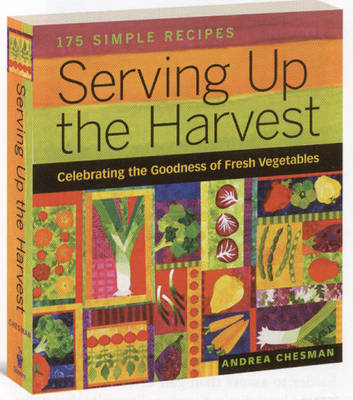
Serving Up the Harvest: Celebrating the Goodness of Fresh Vegetables

Serving Up the Harvest: Celebrating the Goodness of Fresh Vegetables
Author: Andrea Chesman
Publisher: Storey Publishing, LLC (2007)

For those who follow my food blog, What Smells So Good?, it goes without saying that my family and I are big gardeners. Where we excel at organizing, spacing, weeding and digging, we fall short in terms of using our bounty to it’s full potential. Those who wait eagerly for the first farmer’s market to open, or the ground to thaw enough to put in those first few seedlings, are often beset by gluts of produce which without proper attention rot and become compost. Thankfully, with the upswing of gardening and local eating’s popularity has also resulted in a rise in the number of guides – not for growing the foods, but for eating them. One of these welcome additions to the bookshelf is Andrea Chesman’s piece Serving Up the Harvest: Celebrating the Goodness of Fresh Vegetables, a 512-page guide to almost everything veggie-lovers need (or want) to know.
 
Chesman takes a thoroughly seasonal approach to the inclusions in Harvest, using not simply the four “standard” quadrants of the year but the transitional periods – Spring into Summer, Early to Mid-Summer, Mid- to Late Summer, and Fall into Winter – to organize the crops by “readiness”. Within each chapter readers will find produce in alphabetical order, from more commonly available vegetables like carrots (p.360) and zucchini (p. 168) to fairly obscure Jerusalem artichokes (p. 386) and fennel (p. 258). Even the ugly celery root (p. 202) and much maligned okra (p. 266) find a place in Harvest, with recipes that will entice even the strongest skeptic to look for them on their next grocery run. A piece titled “Height of the Season” completes each season, a veritable menu of recipes that make use of prime combinations from that period. Chesman opens each individual crop’s section with a quick reference page, featuring information on seeding and harvesting, preparation techniques, cook times and nutrition. The most beneficial inclusion on this page is arguably the “math” – or equivalency – of volume to weight to actual units of vegetable – helping any cook to convert recipes based on what they have on hand regardless of owning a scale. Mouthwatering recipes follow, from simple “Roasted Brussels Sprouts” (p. 343) to a gourmet, Gruyere-laden “Roasted Leek Tart” (p. 408) and the unusual but delicious “Zapplesauce” (p.182).  Thanks to the four “Well-Stocked Pantry” pages making up the first chapter, no recipe is made unapproachable, even for everyday “home” cooks who don’t grow their own.

Chesman even manages to address the most basic of cooking methods in Harvest, along with “Master Recipes” for gratinée, roasted, sautéed, grilled, stir-fried, tempura and various noodle applications for the vegetables to follow.  For the tail end of the growing year, when gardeners are most often beset by too much of a bounty, a handy guide to “Preserving the Harvest” (p. 473) includes pointers on drying, canning, freezing and cold-storing. All the recipes are enclosed at the end of the book in a vast index, along with a resource guide and supplier list. I only wish that an index of the types of recipes was also included in Harvest’s pages, as it would make it that much easier to embrace the seasonal wealth.

Harvest is also a compilation of personal stories from Chesman and those she admires. Far from being a textbook, her non-recipe articles include a piece on “Plant a Row for the Hungry” (also called “Grow a Row, Give a Row”) (p. 280), the use of a home garden as a dating tool (p. 390) and a Massachusetts’s CSA as a produce source for both paying consumers and the local Food Bank (p. 74). For those who never gave gardens a second thought, these tales are inspiring, and for seasoned green thumbs will re-ignite the passion that started their hobby.

It shows in Serving Up the Harvest: Celebrating the Goodness of Fresh Vegetables that Andrea Chesman is undoubtedly a mistress of both garden and writing. Her thorough, creative and engaging exposure to the delights of gardening is more than welcome in a world with a struggling economy. Her equally varied and useful approach to choosing and enjoying the fruits of your land and labour is the gateway to a way of eating that any and everyone should embrace: more produce, more often, in any way possible.

Available on Amazon

Thursday, June 30, 2011

Superfoods from the Garden

Superfoods from the Garden
Author: Michael van Straten
Publisher: Cico Books (2011)

Gardening is big these days. It’s for good reason – the sluggish economy, the ever-stronger locavore movement, vegetarian and vegan diets becoming the new “perfect” way of eating and the universal desire for everyone to simply feel healthy all play right into the greening of thumbs worldwide. While the desire to “grow your own” may be as strong as the zucchini crops every summer, there is always the dilemma of what to grow, what will grow, and what will you do with all those tomatoes and zucchini once they explode in August? Michael van Straten addresses these, and much more, in his gardening and cooking manual Superfoods from the Garden.

Superfoods is an eye catcher right from the get go – a bright, colourful cover opens to pages of full-colour temptations. Nine chapters are devoted to everything from roots to leaves, squash, fruit and herbs, and each item van Straten includes is carefully researched, well worded and a delight to read. There are no pretentious selections or complicated instructions for growing your own: the focus is on helping the everyday person grow good, delicious and nutritious produce in a way that’s as simple as the food itself. One of my favourite parts about the “gardening” portion of this book is the little harvesting, nutrition and cooking notes that van Straten incorporates in separate sidebars. For the gardener or foodie that just wants to quickly check when is best to pull beets or can’t stand another salad to deal with their lettuce crop, this is an invaluable resource. Not only will that gardener see that orange-sized beets are ideal and that the crowns will give you an idea of when that is, but that steaming or baking them is the best way to cook them unless you enjoy them raw in salads first (p. 74). The cook will find that not only can lettuce become soup or even be braised with peas (van Straten includes his recipe on page 101), but that it’s also full of B vitamins, folic acid and manganese (p. 92). Each vegetable, fruit or herb page is accompanied by stunning photography, and the few things that do need a bit more explanation to grow well (like scarlet runner beans, p. 56 or potatoes, p. 70) have photo-by-photo instructions that would convince even the most cynical home grower to try it out.

And then there are the recipes. Van Straten’s book is a gardening manual, first and foremost, but at the end of each chapter a few relevant recipes are included, many with gorgeous photos of the prepared dish. While not every recipe has an accompanying photo and most are without much detailed in
structions (unfortunate, since the rest of the book is so rich with these), those that do will make you hungry for more. Some elements for the recipes, too, are not overly common additions to the American or Canadian menu – crème fraiche and rabbit, for example – which take some exploration (and would occasionally require online purchases in less urban areas). A couple assumptions are also made that readers of this book know offhand how to make components like béchamel, bread-like ginger cake and phyllo pastry crusts with their eyes closed. That said, the skilled or determined cook will take delight in treats like Honey and Apricot Pizza (p. 166) and Garlic, Onion and Tomato Chutney in a “Mille-feuille” of Sliced Tomato (p. 47). The photo of the latter is enough to make the average gardener yearn for their tomatoes to balloon to flavourful baseballs overnight. Seafood, beef, chicken, pork, duck, quail, pheasant, lamb and even blood sausage make appearances throughout the book, though there are many vegetarian (bean-or egg-based) and vegan inclusions as well. Vegans would need to supplement the recipes in this book with protein based sides for dinner, but a lunch of van Straten’s Timbale of Beets (p. 80) or Barbecued Summer Squash Salad (p. 144) would win anybody’s vote. This book is also friendly to those needing to keep gluten-free, who will find most of the recipes either inherently so or easily modified.

The tail end of Superfoods is likely the greatest appeal to the nutritionist in everyone – while it is understandably devoid of photos, van Straten makes up for it by listing two pages of “vital vitamins and essential minerals” (p. 187), a section of “useful addresses” for recipes and seed supplies and even a dedicated half-page of information regarding what he terms ORACs, or Oxygen Radical Absorption Capacity units (p. 189). These ORACs are antioxidants that exist only as synergistic compounds in whole foods whose effects are destroyed by segregating the individual compounds into refined supplements or processed foods. A score of 10/10 was awarded by van Straten to the notorious prunes, which provide 5770 per 100 grams, and the author includes many other of the “buzzworthy” superfoods on the list as well. Where the recommendation for the highest protection against heart disease, most cancers, artery damage and even aging put forth by the Human Nutrition Research Centre on Aging at Boston’s Tufts University is 5000, taking a look at this new measurement of food’s “goodness” is not only interesting but health-promoting too.

There is a reason that Michael van Straten chose to title his latest work Superfoods from the Garden. Like any good garden, this book takes the healthy seeds of desire and love for good food and lets them grow. The passion, knowledge and drive that van Straten brings to his craft creates “super foods” from even the most mundane vegetables and fruit, and his decadent way of preparing your harvest turns these individual foods into medleys of flavour. While some of them may be unfamiliar, odd-looking or even scary to grow, and some of the recipes may be for things you would never dream of cooking, this book is worth picking up – it may just turn your brown thumbs a bit greener.